Picking the right month for Antelope Canyon matters more than people realise. The same canyon at 7 am in February and at 12 pm in July is two very different experiences: one has you alone in a quiet slot, the other has you in a queue under beams of light next to fifty other phones. After two on-site visits in July (peak monsoon, peak beams) and an earlier shoulder-season trip, this is the timing guide I wish I had had on the first one.
Light-beam season
Late Mar – mid-Oct
Peak beams
Apr – Aug, 11 am–1 pm
Monsoon flash-flood risk
Jul – Sep afternoons
Quietest months
Jan – Feb
Highest temperatures
Jul – Aug (38–40°C)
Closed days
Thanksgiving + Christmas Day
What's the absolute best time to visit?
If you can pick any week of the year, I would book either the last week of April or the second week of October. Both fall inside their respective shoulder seasons, both have stable weather (low monsoon risk in spring, monsoon already over in autumn), both have manageable crowds, and the late-April week catches the start of strong light beams in Upper while the mid-October week catches the warmest soft-light photography in Lower.
If you specifically want the iconic vertical light beams in Upper Antelope, push the date toward mid-May to mid-July: that is when beams are at their physical peak, sharpest and longest-lasting. You trade better beams for hotter temperatures, larger crowds and a non-zero monsoon risk in the back half of that window.
Month-by-month breakdown
| Month | Beams (Upper) | Crowds | Weather | Verdict |
|---|---|---|---|---|
| January | Weak / dusty sunbeams only | Lowest of the year | Cold (5–12°C), clear | Quiet but reduced hours |
| February | Weak / dusty sunbeams only | Very low | Cold (7–14°C), clear | Quiet but reduced hours |
| March | Begin in late March | Building | Mild (12–20°C) | Spring shoulder begins |
| April | Strong, broaden through month | Manageable | Mild (15–24°C) | Top sweet spot |
| May | Peak begins | Rising into summer | Warm (20–30°C) | Sweet spot, latter weeks busy |
| June | Peak | High | Hot (28–35°C), dry | Beam hunters: yes. Others: too crowded |
| July | Peak | Highest of the year | Hot (32–40°C), monsoon starts | High beam risk + flash-flood risk |
| August | Peak through mid-month, fades | Highest of the year | Hot (32–38°C), monsoon peak | Avoid if possible |
| September | Fading after mid-month | Drops sharply after Labor Day | Warm (24–32°C), monsoon tapers | Best after Sep 15 |
| October | Done after first week | Low to moderate | Comfortable (15–25°C), clear | Top sweet spot (no beams) |
| November | None | Low (Thanksgiving spike) | Cool (8–18°C) | Quiet, reduced hours, closed Thanksgiving |
| December | None | Low (Christmas spike) | Cold (5–14°C) | Quiet, reduced hours, closed Dec 25 |
When are the light beams?
The light beams are exclusive to Upper Antelope and are caused by the inverted-V shape of that section: at midday in the right months, the sun is high enough to drop direct light through the narrow opening above the canyon floor and produce sharp vertical shafts. The geometry only works when the sun is high enough at solar noon to reach the canyon floor: at Page's latitude (36.9°N) operators confirm beams begin in late March, peak from April through early September, and fade in early October.
Within those months, the daily window is 11 am to 1 pm local time, give or take fifteen minutes depending on date. Tour operators sell “light-beam slots” specifically inside this window and they are the most expensive and most booked-out tours of the day. If you are travelling between June and August and you specifically want beams, book at least four to six weeks in advance. Outside that window (say a 2 pm tour in May), the beams are already weakening; outside the months (a January tour at noon) the sun is too low and you get diffuse warm light without the sharp shafts.
Two practical notes from my July 2025 visit: (a) the guides will throw fine sand into the air at each beam to make it visible to phone cameras (it is part of the show, not a trick); (b) nine other people in your group are doing the same thing at each beam, so factor in a 30-second window per stop to get a clean phone shot.
Monsoon season: when flash floods are real
From early July through mid-September, the Southwest enters its annual monsoon: short, intense thunderstorms that develop over the Colorado Plateau in the afternoon and dump significant rain over small geographic areas. Antelope Canyon sits in a wash, and a thunderstorm 50 miles upstream (with blue sky directly overhead) can send a wall of water through the slot canyon hours later. This is not theoretical. On 11 August 1997, eleven hikers died in Lower Antelope Canyon when an upstream thunderstorm sent a flash flood through the slot during their tour. It is the worst tragedy in the canyon's recorded history and the reason every modern operator runs the safety protocols they run today.
Those modern protocols are robust: operators monitor National Weather Service flash-flood watches, the Navajo Nation Parks department issues canyon-specific closures during high-risk windows, and tours are cancelled, sometimes mid-day, without negotiation when conditions develop. Refunds are standard for weather cancellations. Your job as a visitor is simple: do not argue with a cancellation, do not try to enter the canyon during a closure, and treat blue sky overhead as no guarantee during monsoon weeks.
If you have to travel in July or August, two pragmatic moves: (a) book morning tours rather than afternoon tours, since monsoon storms typically build after noon; (b) have a one-day buffer in your itinerary so a closure does not kill the whole canyon plan.
For the full seasonal picture (rainfall data, monsoon timing by week and how weather affects Horseshoe Bend and Lake Powell on the same trip), see the Page, Arizona weather guide.
A practical note before you book
Antelope Canyon tours sell out weeks ahead in peak season. Most operators offer free cancellation, so locking in a slot now costs nothing if your dates change.
Browse available tours →Time of day matters as much as month
Most timing advice for Antelope Canyon focuses on month, but the time of day can change the experience just as dramatically. A 7 am tour and a 12 pm tour in the same week of June feel like two different canyons.
- 7 am – 9 am (first tours of the day): The quietest slot in any month. Light is warmer and lower; beams are not yet present in Upper. Best for photographers who want texture without crowds.
- 9 am – 11 am: Crowds build steadily. Light is improving for photography but still pre-beam in Upper.
- 11 am – 1 pm (the beam window in Upper): Peak crowds, peak prices, peak beams. Both Upper and Lower fill up because Lower is the second-stop choice for everyone who already booked Upper.
- 1 pm – 3 pm: Beams are fading in Upper. Lower is still busy but starts to thin. The light in Lower at this hour is the warmest of the day.
- 3 pm – 5 pm (last tours of the day): Crowds drop. Upper is past beams. Lower can be lovely: dim, deep, almost private on weekdays. Reduced monsoon risk because storms have usually passed.
The biggest mistake I made on my first visit was booking the 11 am tour in Lower because it “sounded sensible.” That is the worst slot in Lower because everyone who failed to get an Upper beam ticket converges on Lower at 11. The 7 am or the 4 pm slot is a different experience entirely.
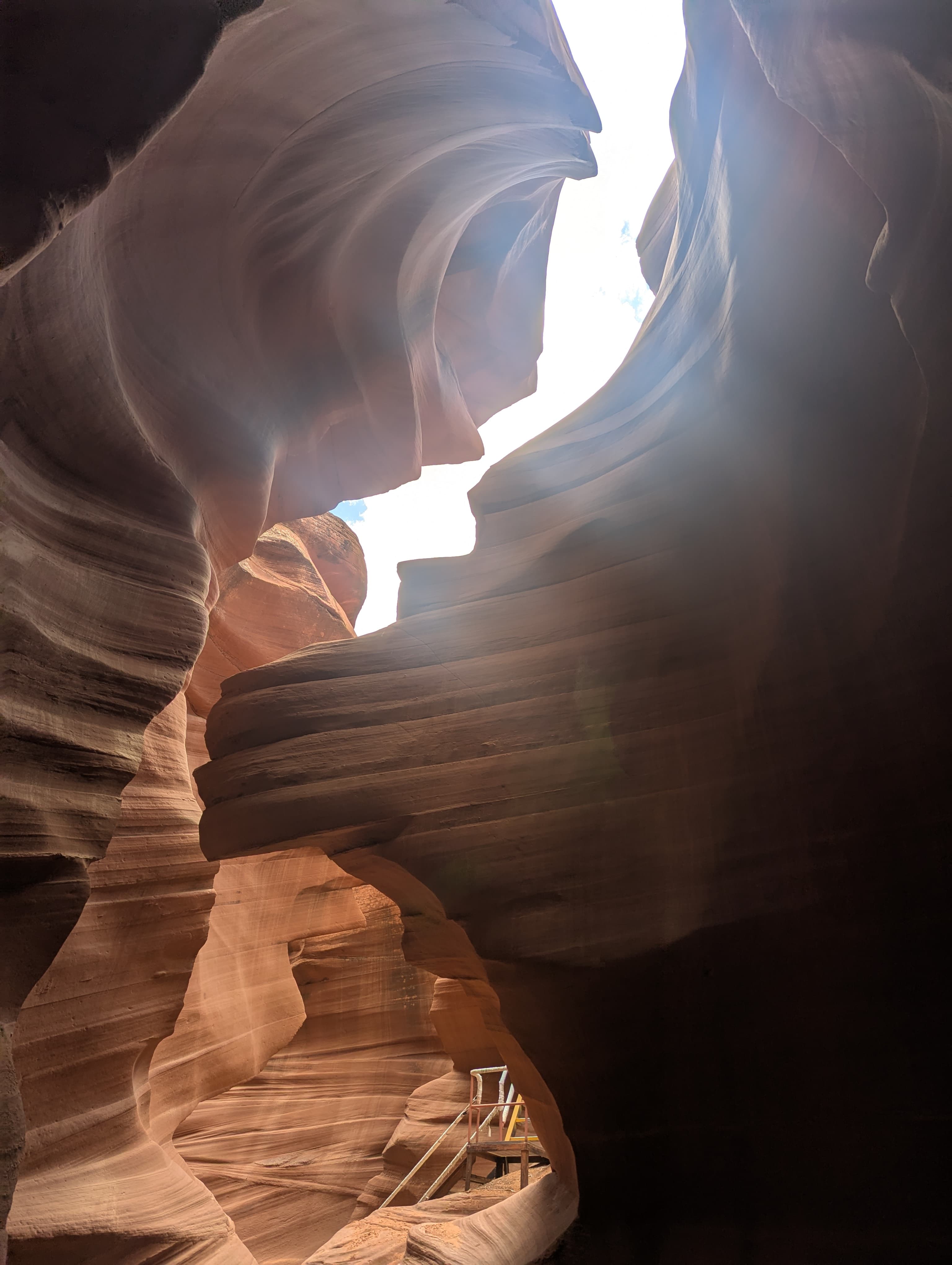
Visiting Antelope Canyon in September
September is a transition month and the timing within it matters considerably. The first two weeks of September are still peak season: the monsoon is usually still active, crowds are high, and light beams in Upper Antelope are fading but technically still present at midday slots.
From mid-September, the picture changes significantly. After Labor Day (the first Monday of September), tour group volumes drop sharply as the American school calendar resumes and the summer tourist wave ends. The monsoon typically finishes its most active period by mid-September, so flash-flood risks ease. Temperatures in Page drop from the August peak of 38–40°C to a far more comfortable 24–30°C.
The practical sweet spot for September is the last two weeks: same good light, shorter queues, and you can often book two to three days ahead instead of four to six weeks out. Lower Antelope is the stronger pick in September: without reliable light beams, the Upper premium is hard to justify. Book the 9 am or 10 am slot rather than the 11 am–1 pm window.
Visiting Antelope Canyon in October
October is one of the two best months of the year to visit Antelope Canyon, alongside late April. The monsoon is completely over, temperatures are comfortable (15–25°C), the canyon walls are in their autumn palette of warm orange and deep red, crowds are low-to-moderate, and tours are available on much shorter booking windows than summer.
Light beams in Upper Antelope are effectively done by mid-October. The sun angle at Page's latitude (36.9°N) drops too low to produce sharp vertical shafts by roughly the first week of October. Early October can still yield weak beams on midday slots, but do not book an October trip for the light beams. Book it for everything else.
Practical notes for October:
- Lower Antelope is the pick. No reliable beams means no reason to pay the Upper premium. Lower in October (cooler, quiet, with rich warm afternoon light) is one of the best versions of an Antelope Canyon tour available at any price.
- Book 5–10 days ahead, not five weeks. October availability is far more forgiving than July or August; same-week bookings are possible in most years.
- Best time of day: midday to early afternoon (12 pm – 3 pm). The canyon light is warmest in this window in autumn.
- Check operator hours before booking. Some operators reduce their last tour slot from 5 pm to 3 pm or 4 pm from late October onward. Confirm the day before.
What about winter? (November–February)
Winter is the contrarian pick. There are no light beams, hours are reduced, and the canyon is cold: typical morning temperatures of 0–5°C, daytime highs around 10–14°C. But the upside is real: roughly a third of summer visitor numbers, same-day availability for tours that book out weeks ahead in summer, and on cold clear days a phenomenon some guides call dusty sunbeams: softer, broader shafts of light that paint the canyon walls in a different palette than the sharp summer beams.
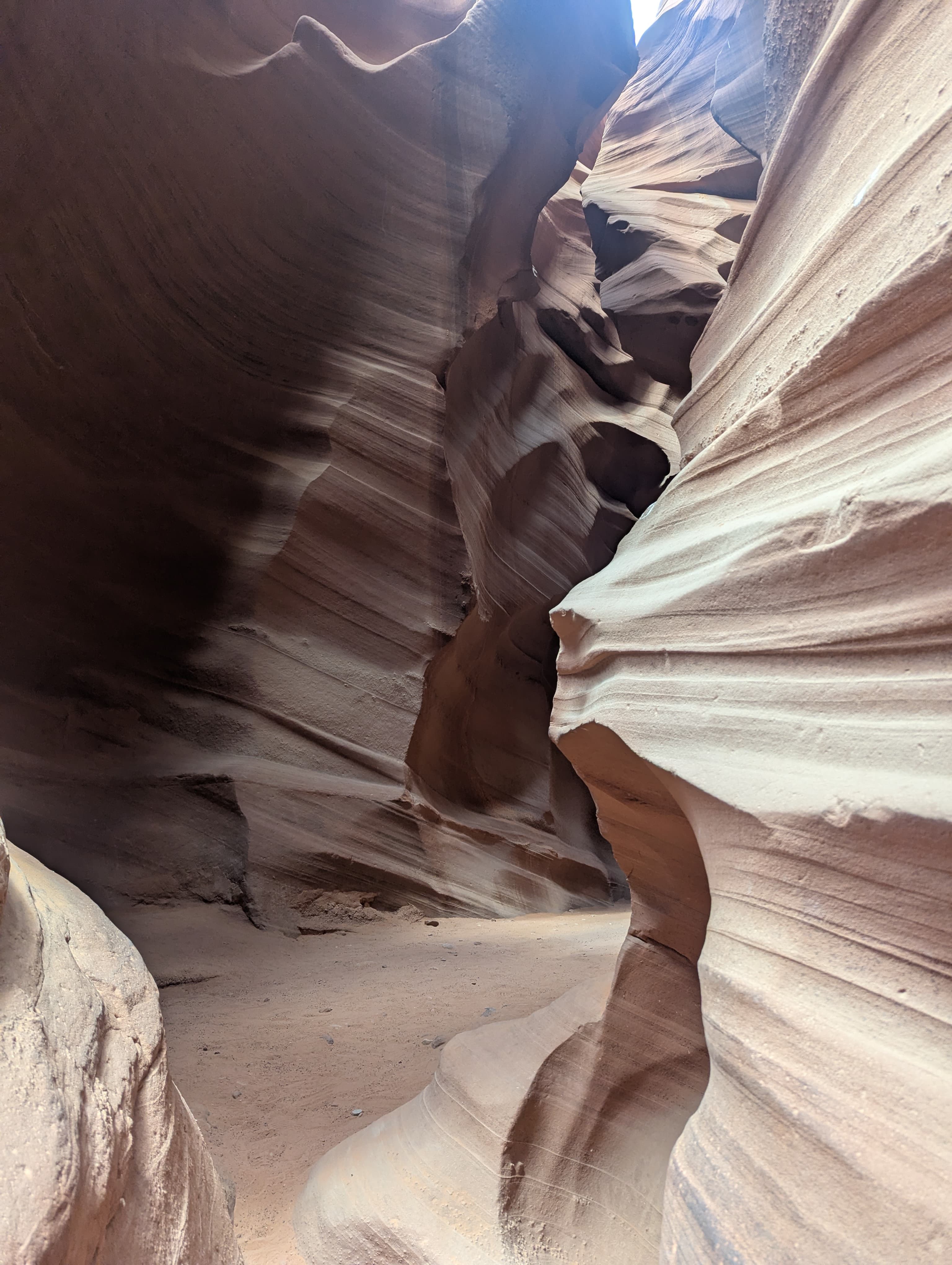
Logistical notes for winter visits:
- Operating hours typically run 9 am – 3 pm, not 7 am – 5 pm. Tour frequency is lower, so confirm the day before.
- Closed: Thanksgiving Day and Christmas Day. The Friday after Thanksgiving is open and surprisingly quiet.
- Bring layers. The canyon floor sits in shade most of the day and is consistently 5–8°C colder than the parking lot.
- Lower Antelope is the better winter pick than Upper. Without beams, there is no reason to pay the Upper premium, and Lower's descent feels more like an adventure when the canyon is cold and quiet.
Combo timing with Horseshoe Bend
If you are doing the standard Page combo of Antelope Canyon plus Horseshoe Bend in one day (which most visitors are), the timing constraints stack rather than cancel. Antelope Canyon is best at midday in beam season; Horseshoe Bend is best in the late afternoon (the river inside the bend only catches direct light from roughly 4 pm onwards). That gives you the natural day plan: Antelope Canyon 11 am slot, lunch in Page, Horseshoe Bend 4:30 – 6:00 pm.
For the full same-day combo with parking, walking time and the two biggest mistakes people make:
Antelope Canyon to Horseshoe Bend: the perfect one-day combo →
Frequently asked questions
In which months can you see the light beams at Upper Antelope Canyon?
Late March through early October, with the strongest beams from April to early September. The geometric requirement is that the sun must be high enough at midday to drop direct light through the narrow opening above the canyon floor: that happens roughly between 11 am and 1 pm during those months. Outside this window the sun is too low at solar noon and beams either do not form or are weak.
Is it safe to visit Antelope Canyon during the monsoon season?
Yes, with caveats. From early July through mid-September, the Navajo Nation Parks department, the National Weather Service and individual operators monitor flash-flood watches in real time and cancel tours when conditions are dangerous. The risk is not at your tour location: it is upstream, sometimes 50+ miles away, where a thunderstorm can dump water into the wash that reaches Antelope Canyon hours later under blue sky. Modern protocols (developed after the 1997 Lower Antelope tragedy) make a tour safe; ignoring a cancellation does not.
Is Antelope Canyon open in winter?
Yes, with reduced hours. Most operators run a shorter daily schedule from November through February: typically 9 am to 3 pm rather than the 7 am to 5 pm of high season. Both Upper and Lower close on Thanksgiving Day (fourth Thursday of November) and Christmas Day. Tour frequency is lower because demand is lower, so book one or two days ahead rather than weeks.
What time of day is best to visit?
Depends on what you are after. For Upper Antelope light beams: 11 am – 1 pm during the late-March-to-early-October window. For the quietest experience in either canyon: the first tour of the day (typically 7 am or 8 am in summer). For warm late-light photography in Lower: roughly 1 pm – 3 pm, when softer light reaches deeper into the slot. Avoid the 10 am – 12 pm window if you are not chasing beams: it is the peak crowd hour.
When are crowds lowest?
January and February are the quietest months by a wide margin: roughly a third of summer visitor numbers. Within the high season, the first tour of the day in any month is the quietest slot of that day, often by half. Mid-week in any month is quieter than weekends, especially in shoulder season (late March through April, mid-September through October).
When does Antelope Canyon close?
Thanksgiving Day (fourth Thursday of November) and Christmas Day are the only two scheduled annual closures. Outside of those, individual operators occasionally close for cultural ceremonies or emergency conditions (flash-flood watches, severe weather). Always confirm the day before by checking the operator's booking page or calling: Navajo Nation Parks does not maintain a single public closure calendar.
Written by Diego Fresno, travel writer and independent publisher specialising in the American Southwest. This guide draws on a July 2025 visit to both Upper and Lower Antelope (peak monsoon and peak beams), an earlier shoulder-season trip in 2023, plus current Navajo Nation Parks operating hours and US National Weather Service monsoon advisories cross-checked in April 2026. Verified quarterly: last review April 2026. About the author →
Related guides
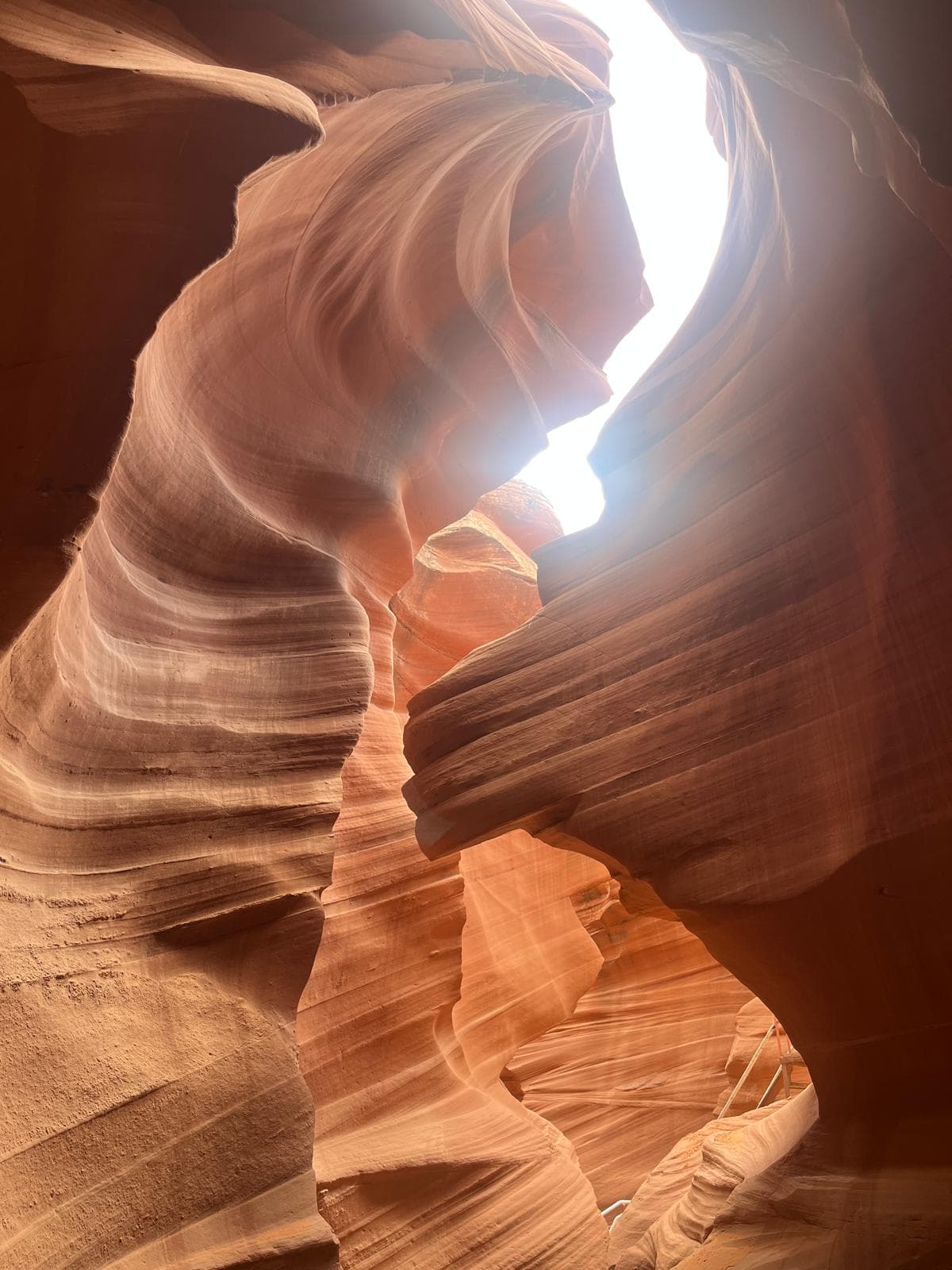
Antelope Canyon: the complete 2026 guide
The full guide to Upper, Lower and Canyon X: sections, prices, current rules, and which one fits your trip.
Read more →
Upper vs Lower Antelope Canyon: which one to pick
Section-level comparison: prices, light beams, staircases, crowds and who should pick which.
Read more →
The 6 Navajo-authorised operators compared
Operator-by-operator review with prices, group sizes and the pick for each visitor profile.
Read more →
How much does Antelope Canyon cost in 2026?
Per-section breakdown, the $15 Navajo permit, tips and how prices have changed 2020–2026.
Read more →