For most first-time visitors, Lower Antelope Canyon is the better tour: it costs 30% less, feels less crowded, and the staircases create a more immersive experience. Upper Antelope is the right choice if you specifically want the famous light beams (available midday, late March–early October), cannot manage stairs, or are travelling with children under five.
The single most-asked question about Antelope Canyon is which section to book: Upper or Lower. They sit about 3 miles apart on Navajo Nation land east of Page, Arizona. They photograph similarly enough on Instagram that most travellers cannot tell them apart at first glance. They cost different money, run different operators, and feel like noticeably different experiences once you are inside. After visiting both in 2023 and again in July 2025, this is the comparison I wish I had had on the first trip.
Upper price
$90–120 / adult
Lower price
$60–85 / adult
Tour length
~1 h Lower · ~1.5 h Upper
Stairs
No (Upper) · Yes, several staircases (Lower)
Light beams
Upper only · late Mar–early Oct, 11 am–1 pm
Permit
$15 Navajo Nation (included)
What's the actual difference between Upper and Lower?
Both canyons were carved by the same flash floods through the same Navajo Sandstone, on opposite sides of the same wash. They are visually similar but architecturally inverted, and that single fact drives everything else about the experience.
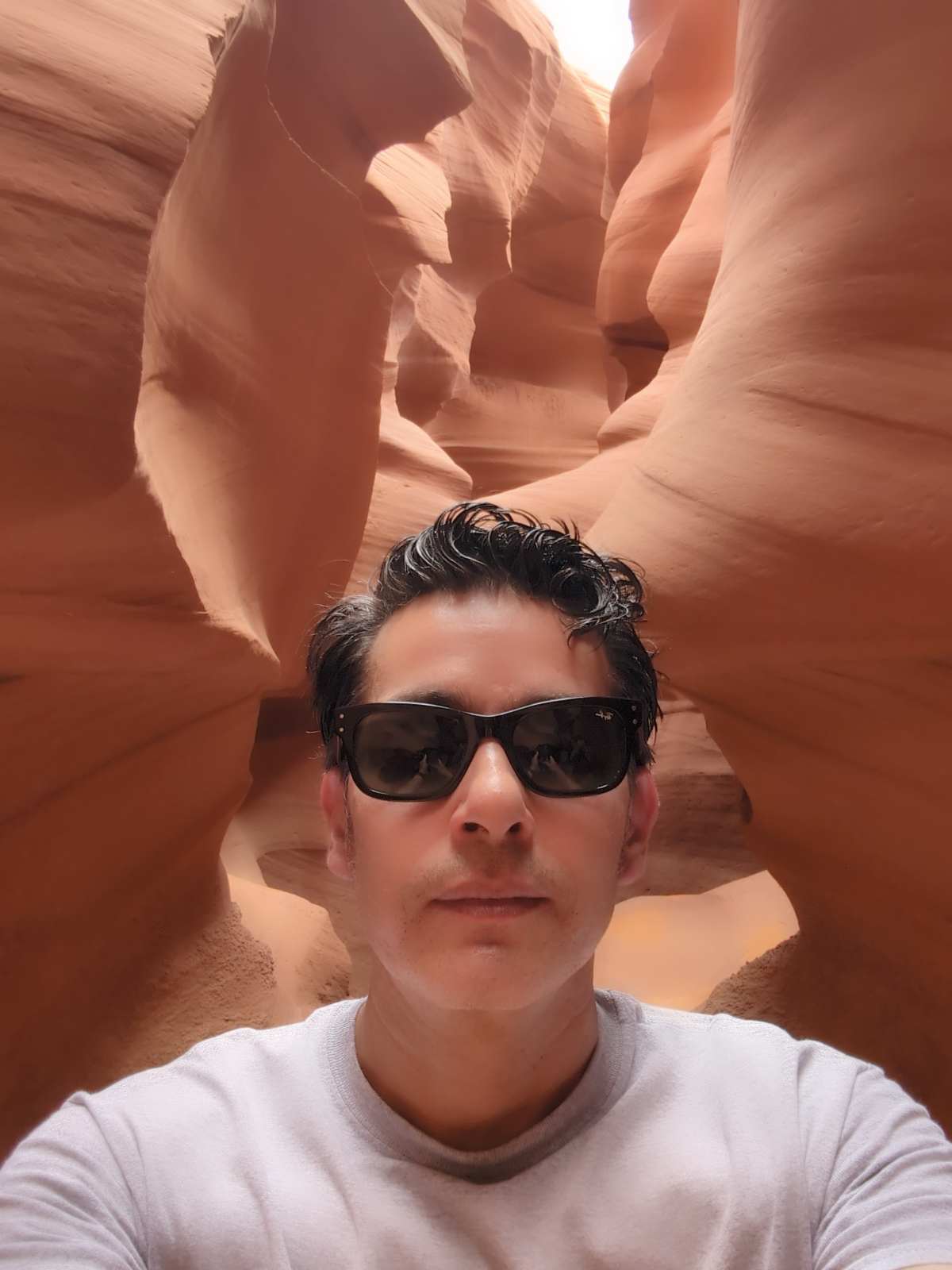
Upper Antelope is shaped like an inverted V. You walk in from the sandy floor at ground level (no stairs, no climbing) and the canyon walls open upward toward a narrow slit of sky overhead. Because the entrance is at ground level and the floor is roughly flat sand, the walk is genuinely accessible: a wheelchair wouldn't make it through every passage but a steady walker of any age can. The shape also means that around midday, when the sun is high enough to reach down through the slit, beams of direct light hit the sandy floor and produce the famous vertical shafts of light.
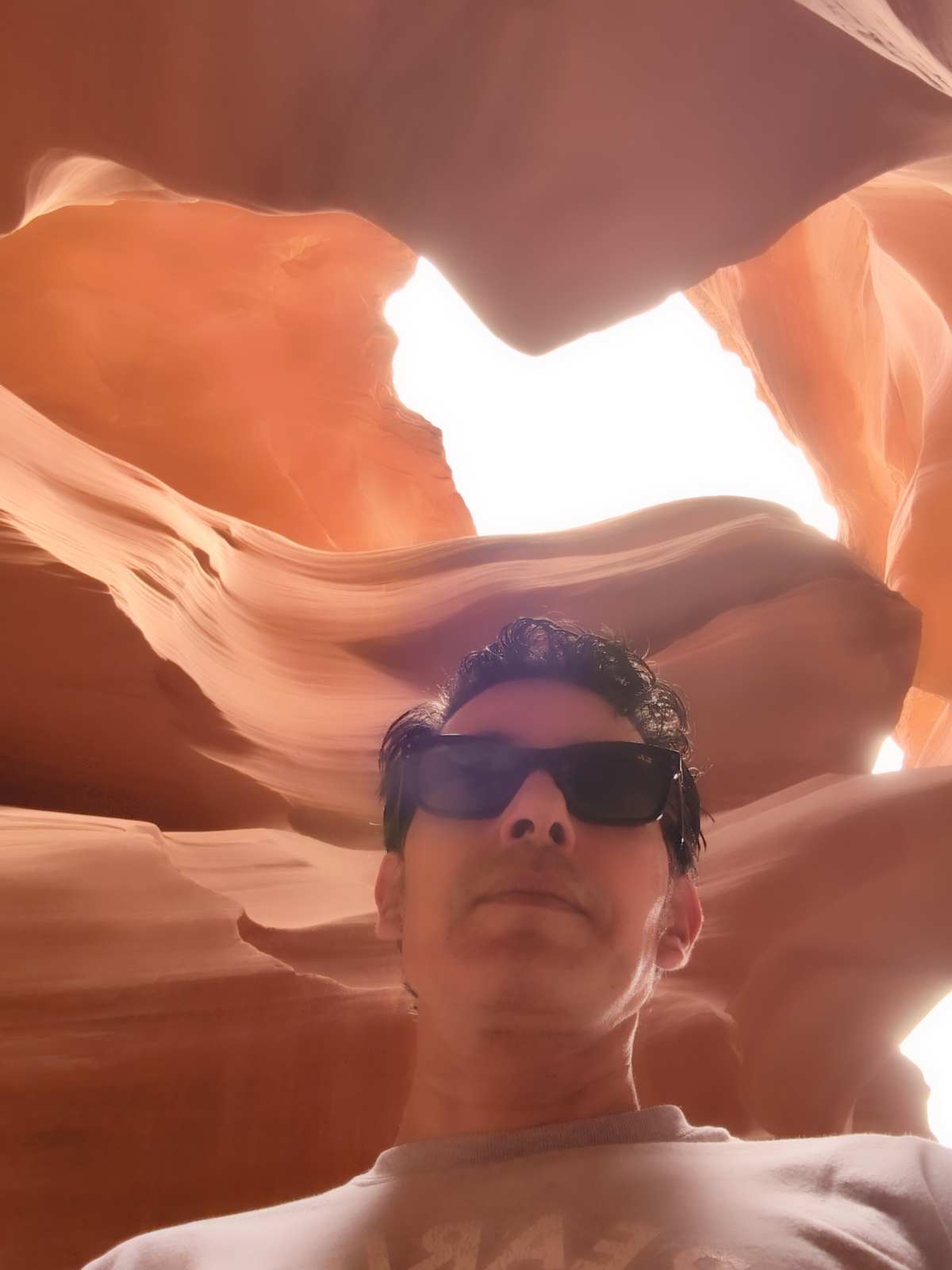
Lower Antelope is the opposite shape: a V opening downward into the ground. Entry is via a series of metal staircases down through the rock, and you exit at the far end up another set of stairs. Once you are inside, you are walking in a much narrower, more tortuous slot than Upper. The walls feel closer. Light enters as soft washes that paint different sections at different hours, but never as the sharp midday beams of its sibling. The whole thing feels more like descending into the earth, which it literally is.
Upper vs Lower at a glance
| Upper Antelope | Lower Antelope | |
|---|---|---|
| Price (adult) | $90–120 | $60–85 |
| Tour length | ~1.5 hours | ~1 hour |
| Entry style | Walk in at ground level | Several metal staircases down |
| Light beams | Yes: Mar–Oct midday | No (broad light washes only) |
| Crowds | Higher, busier all day | Lower, especially early/late |
| Mobility | Walkable for almost anyone | Stairs required, no exceptions |
| Best for photos | Light beam shots | Texture, colour, depth |
| Operators | 6 (Ekis, Adventurous, Slot Canyon Tours + 3 others) | 2 (Ken's Tours, Dixie Ellis') |
| Best for | Light-beam seekers · limited mobility · families with young kids or older relatives | Most first-time visitors · photographers who want texture · budget-conscious |
Quick decision: Upper or Lower?
If you want the answer in three lines and no further reading:
- Pick Upper if any of these are true: you want the light beams, a member of your group cannot manage multiple staircases, you have kids under five, or you are travelling with someone in their seventies or older.
- Pick Lower if none of the above apply. You will pay less, see a more adventurous canyon, and avoid the heaviest crowds.
- Pick both, in the same day, if you can. They are six minutes apart by car, the timings are compatible (Lower in the morning, Upper at midday for beams), and the cumulative experience is genuinely different from either alone.
What about the famous light beams? Are they worth it?
The light beams are real, they are striking, and they are the reason Upper Antelope is the more famous of the two: virtually every viral Antelope Canyon photograph you have seen on social media is a light beam in Upper. They appear when the sun is high enough to drop direct light through the narrow opening above the canyon floor, which happens roughly between 11 am and 1 pm from late March through early October. Outside that window the beams either don't form (sun too low) or are weak and short-lived.
Whether they are worth the extra money depends on what you came for. If your bucket list is "see the canyon Instagram made famous," the beams are worth the premium and the extra crowds. If your bucket list is "experience a slot canyon," Lower delivers more canyon for less money. On my July 2025 visit the beams were strong and beautiful, but I also remember thinking that the nine other people in my Upper tour group meant I had about thirty seconds at each beam before being moved along. The Lower group was bigger but the canyon was longer, so the density of bodies was lower throughout.
How much does each one really cost?
Sticker prices are easy to find but the real spend after fees and tips lands a bit higher than what most travellers budget. As of August 2026, the realistic per-person cost looks like this:
- Lower Antelope: $60–85 base · ~$10 tip · realistic total $70–95 per adult.
- Upper Antelope (standard tour): $90–120 base · ~$15 tip · realistic total $105–135.
- Upper Antelope (light-beam slot, peak summer): $115–140 base · ~$15 tip · realistic total $130–155.
All prices include the $15 Navajo Nation permit, which is collected by the operator on your behalf. Children typically pay 50–70% of the adult rate. Cancellation policies vary by operator; most refund up to 48 hours out, which is short for an experience that often books up four weeks in advance. For a full breakdown of current prices by operator, see the Antelope Canyon cost guide.
Crowds, time of day and what actually changes
Both canyons are crowded between 10 am and 3 pm in summer. There is no way around this: Upper's light-beam window is a specific 90-minute period that everyone converges on, and Lower fills up shortly after Upper does because it's the second-stop choice for tourists who already booked Upper.
What does change between sections at peak hour is how the crowding feels. Upper is essentially a single long passage where guides have to coordinate the tour groups in a single direction at a single pace: when the canyon is full, you are in a queue that moves through it. Lower is more open at certain points and is walked in a looser convoy; even when busy, you can usually find a 30-second pocket of nobody-in- frame for a photograph by waiting for the group ahead to move.
The earliest tour of the day in either section is the quietest. The 7 am or 8 am slot trades better light intensity for genuine quiet: you may be the only group in the canyon for the first 15 minutes. If your trip allows it, this is the single biggest quality-of-experience lever you have.
Photography: which is better?
For the canonical Antelope Canyon photograph (a vertical column of light cutting through dust in a deep red corridor), Upper is the only choice. Outside that specific image, Lower is arguably the more rewarding section to photograph. The corridor is narrower and more sculptural, the colours cycle more dramatically from section to section, and the staircases offer top-down compositions you cannot get in Upper.
Tripods, monopods and selfie sticks are not allowed in either canyonsince the photography-permit programme was discontinued in late 2019. Phone cameras and standard handheld cameras are fine. Most modern phones in night-mode will produce a usable image inside both canyons; a mirrorless camera with a fast wide lens (24–35 mm equivalent at f/2.8 or wider) is the practical sweet spot for serious photographers. Bring a microfibre cloth: the airborne sand is fine and it gets on every lens within a few minutes.
Accessibility, stairs, kids and claustrophobia
Upper is by far the more accessible of the two. The walk is on roughly flat sandy floor, no climbs, no descents. People in their seventies and eighties manage it without issue. Strollers can be carried but not rolled. People with mild mobility limitations who can walk 400 metres on uneven ground can do this canyon.
Lower requires several metal staircases down on the way in and a similar set of stairs up at the exit, with the exact route varying by operator and water-flow conditions. The staircases are metal, well-maintained, and have handrails on both sides, but they are steep, closer to ladders than to stairs in places. Kids over six handle this fine; under-fives are a struggle and usually not permitted by operators. Anyone with knee issues or balance problems should pick Upper.
On claustrophobia: both canyons have narrow sections, and Lower's narrowest passages are tighter than Upper's. People who are mildly claustrophobic (uneasy in lift queues but otherwise fine) generally manage either. Anyone who has had a panic response in a confined space should choose Upper, and tell the guide so they can position you near the front of the group.
Which Navajo-authorised operators run each?
Both sections are on Navajo Nation tribal land and can only be visited with an authorised Navajo-owned operator. There are exactly five for these two sections: three for Upper and two for Lower. Booking outside these five is either trespassing or paying a re-seller mark-up.
- Upper Antelope: Antelope Canyon Tours (Roger Ekis, the largest and longest-running, since 1983), Adventurous Antelope Canyon Tours (smaller, photo- focused groups) and Antelope Slot Canyon Tours (a quieter family-run alternative).
- Lower Antelope: Ken's Tours and Dixie Ellis' Lower Antelope Canyon Tours. Both are reputable family-run operators; Ken's tends to be slightly busier, Dixie Ellis' slightly quieter.
Full operator-by-operator review (including Canyon X) →
Adventurous Antelope Canyon Tours (Upper)
Smaller group sizes than the larger Antelope Canyon Tours operation, with guides who plan stops around photography. The right pick if you are visiting Upper specifically for photographs and want time at each light beam.
Ken's Tours (Lower)
The larger of the two Lower Antelope operators, with the highest review count of any Antelope tour. Reliable, well-run, slightly busier than Dixie Ellis but with more frequent departures.
For the full ranking of all six Navajo-authorised Antelope Canyon operators across Upper, Lower and Canyon X, with criteria, price comparison and where each one actually shines:
See the 6 Navajo-authorised operators compared →
What about Canyon X? The third section compared
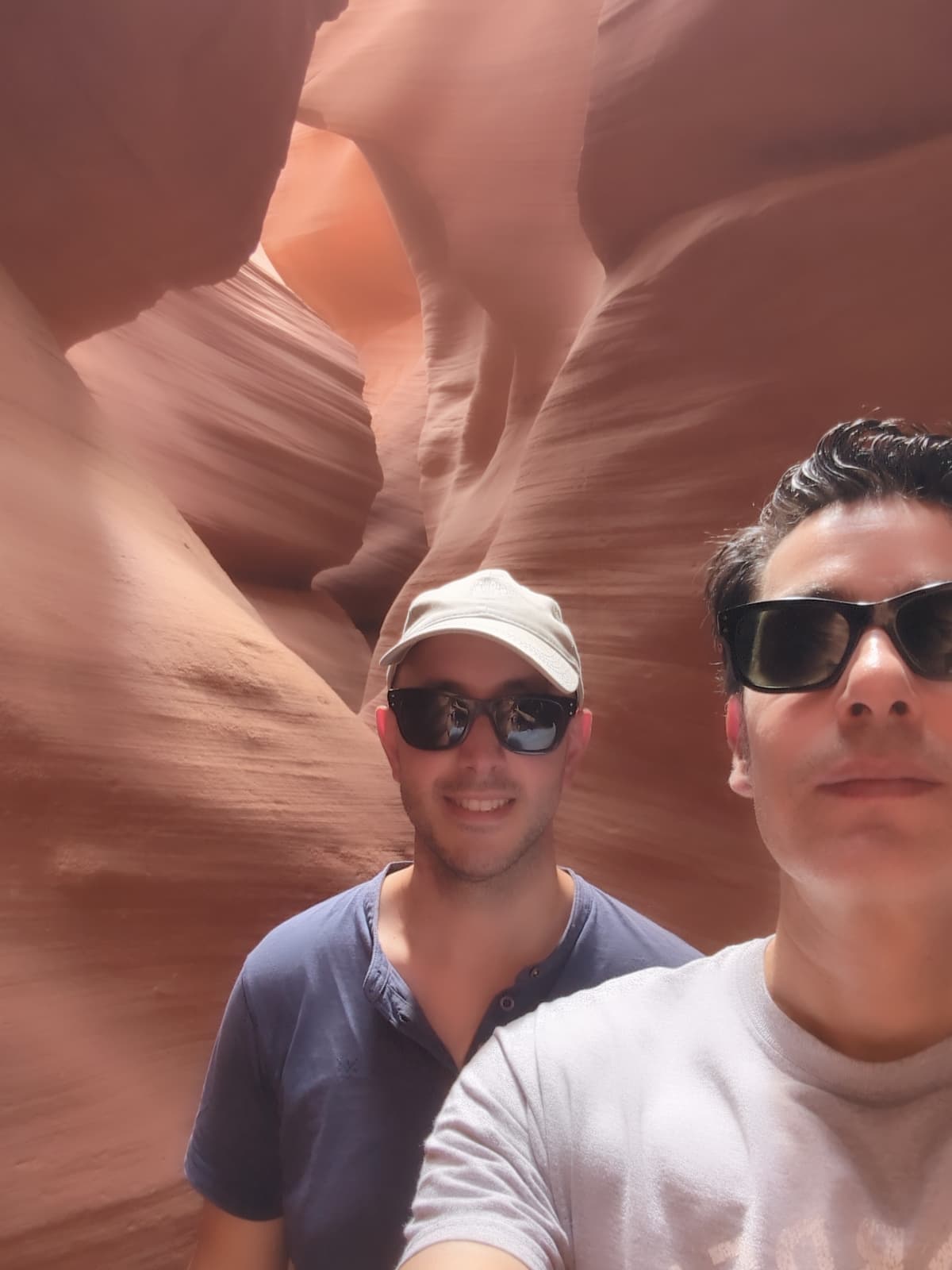
Upper and Lower are the two canyons everyone knows, but there is a third section on the same Navajo Nation land east of Page: Canyon X. Only one operator holds the access permit, Taadidiin Tours, and they intentionally run far fewer departures per day than any other Antelope Canyon operator. Travel forums call it the “least-crowded alternative” to Upper and Lower, which is an accurate description.
| Lower Antelope | Canyon X | |
|---|---|---|
| Price (adult) | $60–85 | $105–160 |
| Group size | ~15–25 people | ~8–12 people |
| Light beams | No (broad light washes) | No (broad light washes) |
| Crowd level | Moderate | Lowest of all three sections |
| Operators | Ken's Tours · Dixie Ellis' | Taadidiin Tours (only operator) |
| Best for | Budget-conscious first-timers, families | Return visitors, photographers wanting solitude |
Canyon X prices from Taadidiin Tours via Viator, August 2026. Navajo Nation permit ($15) included.
Canyon X costs significantly more than Lower ($105–160 vs $60–85) for a broadly similar experience: no light beams, a more natural trail entry rather than metal staircases. The premium buys smaller groups and intentionally limited visitor numbers; on a peak summer day Taadidiin runs a fraction of the departures of either Lower operator. If you have already done Lower (or Upper) and are returning to Page, Canyon X is the natural next step. If crowd avoidance is worth the $40–75 premium on a first visit, Canyon X works for that too. For most first-time visitors choosing between the three, however, Lower remains the better starting point.
Canyon X full guide: Taadidiin Tours, pricing, what to expect →
Frequently asked questions
Is Upper or Lower Antelope Canyon better?
For most first-time visitors, Lower. It's cheaper, less crowded, and the metal staircases make the descent into the slot feel more like a real canyon hike. Upper is the right pick if you cannot manage stairs, are bringing very young children or older relatives, or specifically want the famous light beams between late March and early October at midday.
Can I visit both Upper and Lower in the same day?
Yes. Tours are 1 to 1.5 hours each, and the two parking lots are about 7 minutes apart by car. The tight version of a same-day plan is Lower at 9–10 am, lunch in Page, Upper at 12–1 pm for the light beams. You'll need to book each separately with two different operators.
How much does Upper vs Lower cost?
As of August 2026: Lower Antelope tours run roughly $60 to $85 per adult including the $15 Navajo Nation permit. Upper Antelope tours run $90 to $120. Light-beam slots in Upper are at the top of that range. Children pay a reduced rate at most operators (typically 50-70% of the adult price).
Are there light beams in Lower Antelope Canyon?
Not the famous vertical beams. Upper Antelope is shaped like an inverted V with sand on the floor that catches the midday sun as a sharp beam: the photo everyone has seen. Lower opens upward more gradually, so light enters as broader washes of colour rather than a single beam. Beautiful, just not the same effect.
Are tripods allowed in either canyon?
No, not in either since the photography-permit programme was discontinued after the 2019 season. You will be asked to remove a tripod if security spots one. Phones and standard handheld cameras are fine: no special permission needed.
How far in advance should I book?
For Upper Antelope between April and October, four to six weeks ahead is the safe window for summer weekends. For Lower, two weeks is usually enough outside July and August. Light-beam slots in Upper sell out first; if you are travelling in June or July and want the 11 am–1 pm window, book as soon as your dates are set.
Which is nicer, Upper or Lower Antelope Canyon?
Most visitors who do both say Upper Antelope is more dramatic from a pure visual standpoint, especially with the light beams between 11am and 1pm from late March through early October. But Lower Antelope is considered nicer by most photographers and repeat visitors: the formations are more sculptural, the walls spiral tighter, and the experience of descending 35 metres underground through staircases adds a sense of adventure Upper lacks. Upper is wider, easier, and more famous. Lower is more intimate and better value. If you can only do one: Lower, unless light beams are the specific goal.
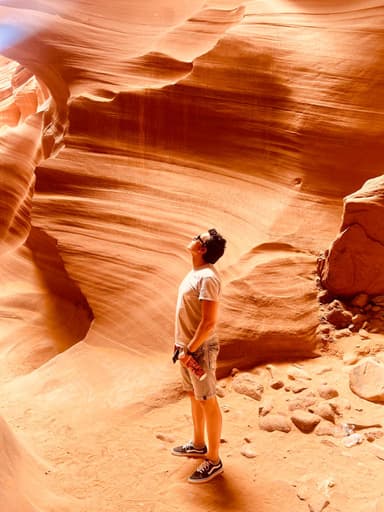
Written by Diego Fresno, travel writer and independent publisher specialising in the American Southwest. This comparison draws on tours of Upper Antelope (Antelope Canyon Tours, July 2025) and Lower Antelope (Ken's Tours, July 2025), plus an earlier visit to both sections in 2023 with different operators for cross-reference. Verified quarterly: last review April 2026. About the author →
Ready to book? Browse all available tours by section →
Related guides
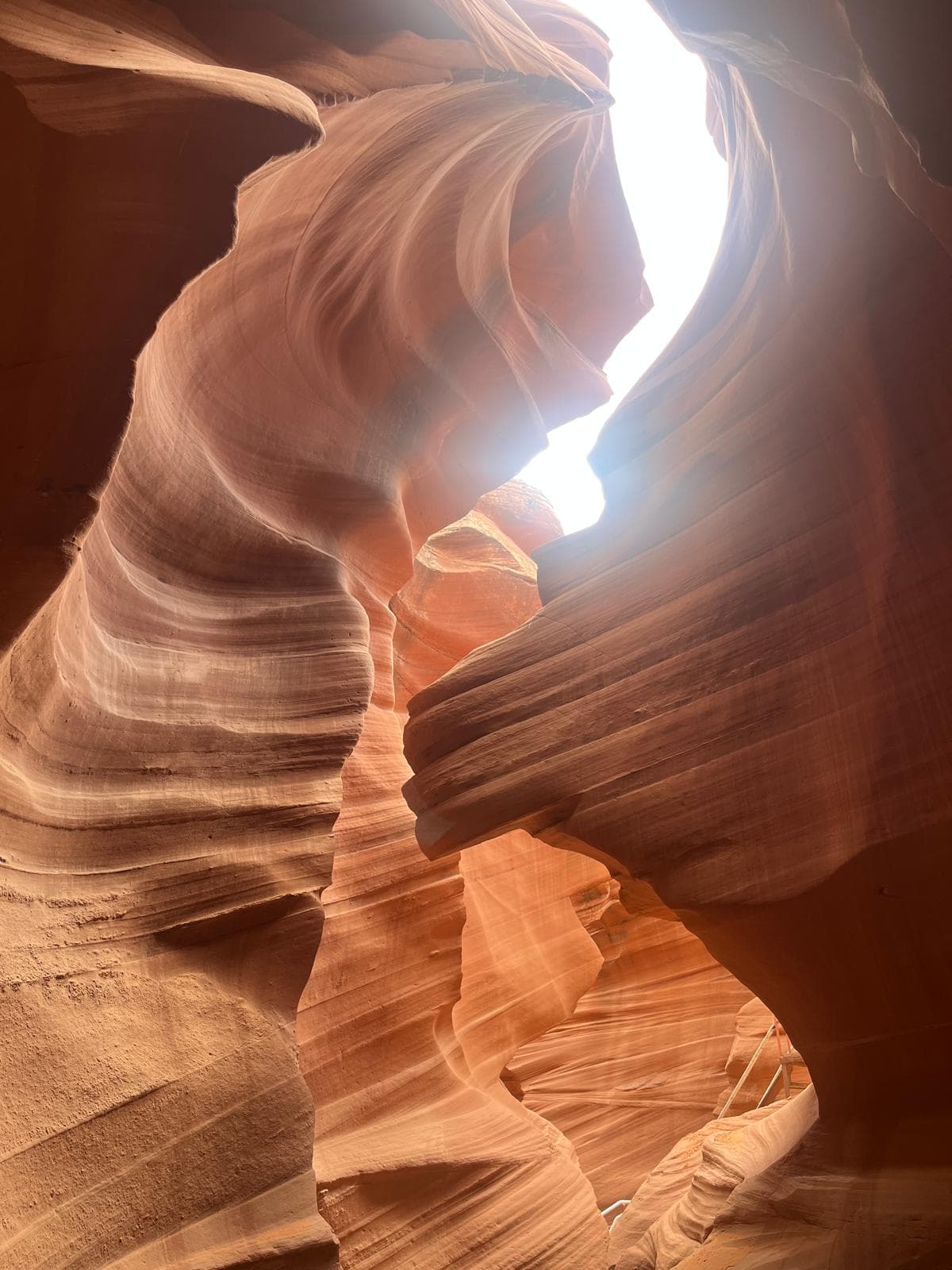
Antelope Canyon: the complete 2026 guide
Upper, Lower and Canyon X compared at the section level, plus operators, timing and current rules.
Read more →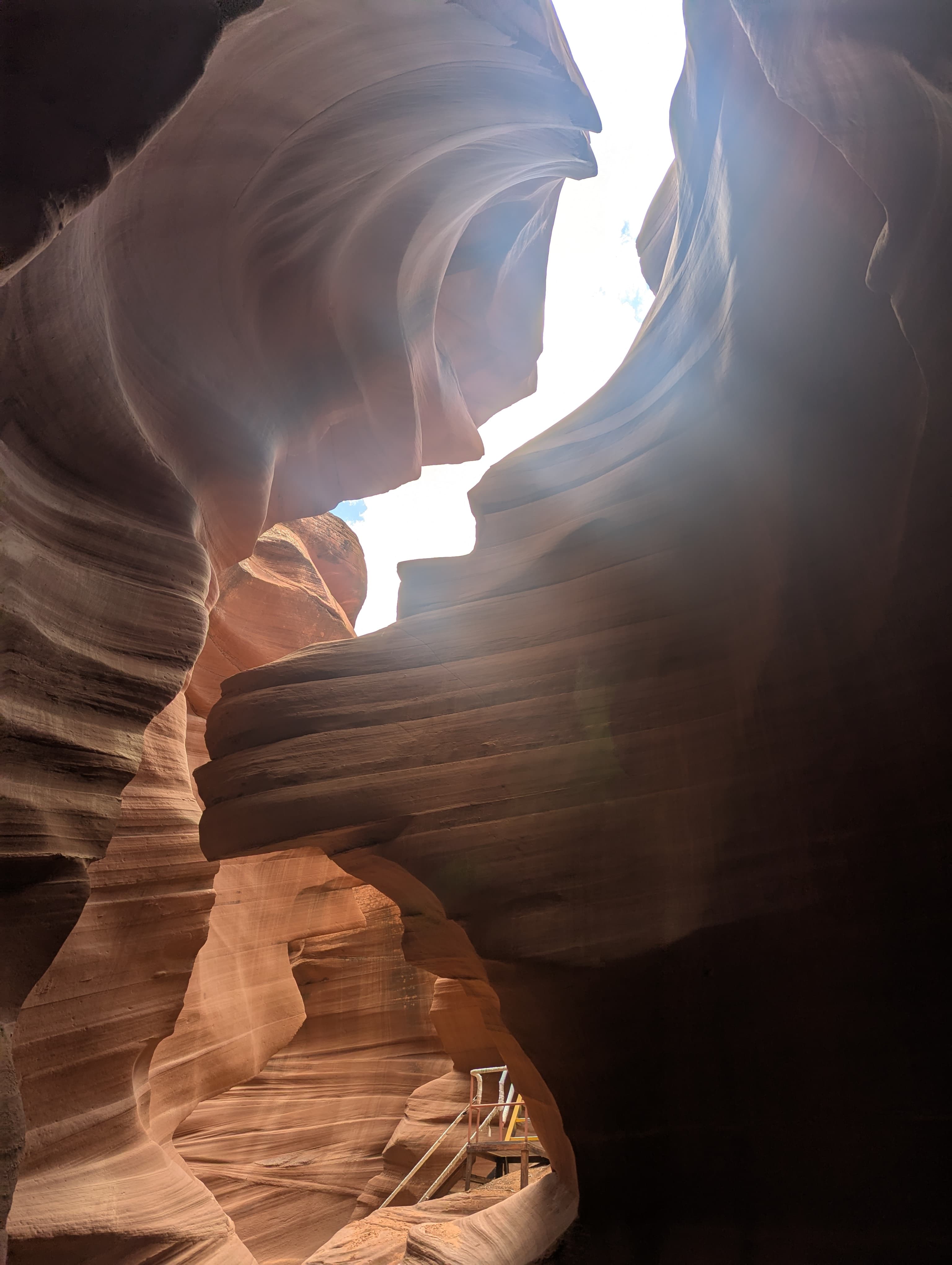
Upper Antelope Canyon tours (2026)
Light beams, six operators, photo tour vs standard tour, midday vs morning tradeoff. Tickets from $90.
Read more →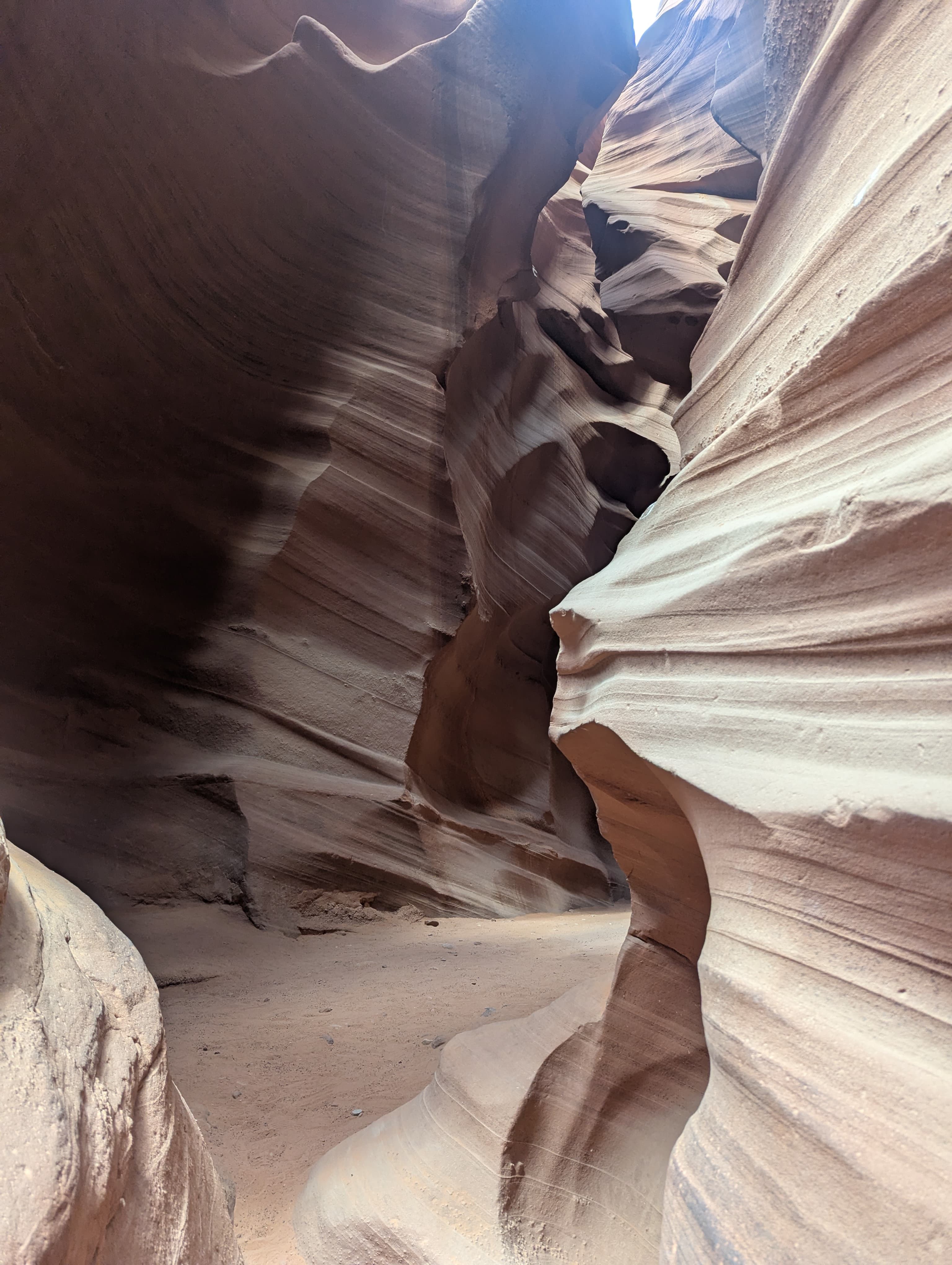
Lower Antelope Canyon tours (2026)
Ken's Tours vs Dixie Ellis, the $15 fee explained, tripod rules, fewer crowds. Tickets from $75.
Read more →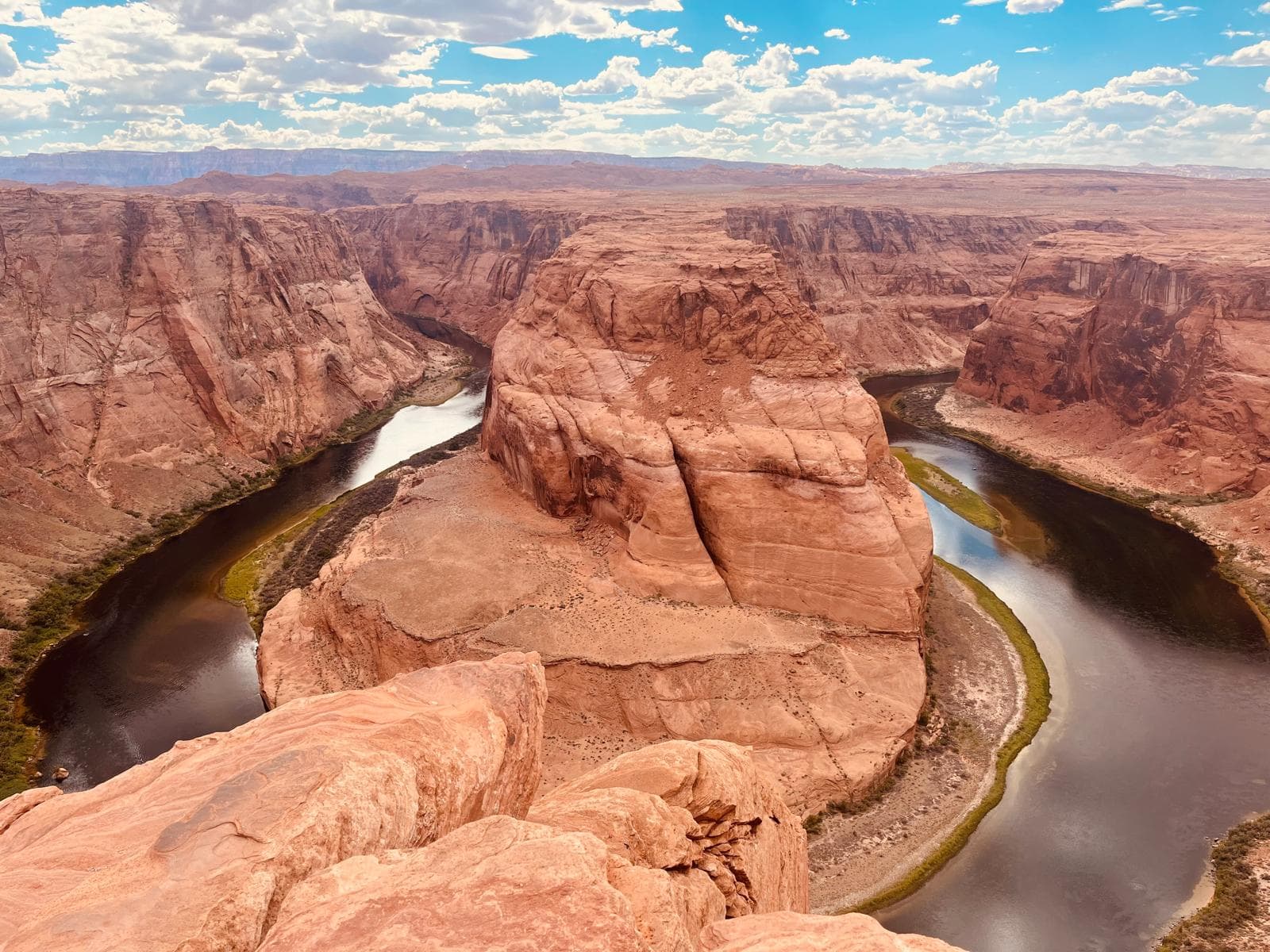
Horseshoe Bend: the complete 2026 guide
The free overlook six miles south of Page. Best paired with Antelope Canyon on the same day.
Read more →Antelope Canyon + Horseshoe Bend in one day
The realistic same-day itinerary, including which Antelope section to pick if you only have one shot.
Read more →