The single biggest mistake first-time visitors make at Horseshoe Bend is going at sunrise. It feels intuitive (cool temperature, fewer people, “golden hour” light), but the geometry of the bend works against you in the morning, and the canonical photograph you have seen on social media (turquoise river curving around a glowing butte) only exists in a narrow late-afternoon window. After visiting the rim three times in 36 hours during the July 2025 field trip (sunrise, midday, afternoon-light) specifically to test the conventional wisdom, this is the timing guide I wish I had on the first trip.
Peak light window
4:30–6:00 pm summer
Shoulder season window
3:30–5:30 pm spring/fall
Winter window
3:00–4:30 pm Dec–Jan
Sunrise verdict
Skip: river in shadow
Best months
Late Mar–May · Sep–Oct
Monsoon hazard
Jul–Sep afternoons
Quick answer: best time of day to visit Horseshoe Bend
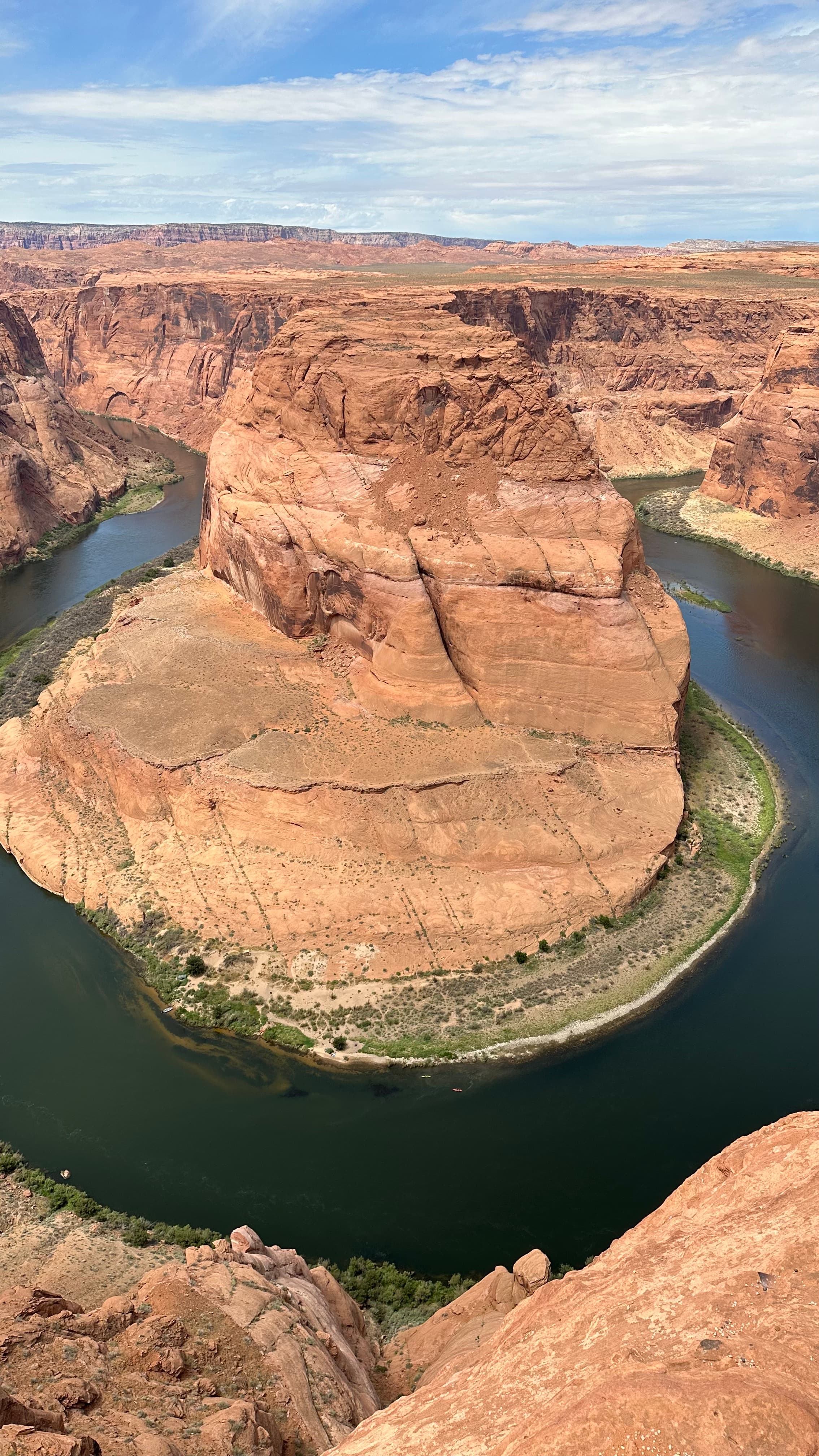
The Colorado River at Horseshoe Bend only receives direct sunlight in a narrow late-afternoon window: 4:30–6:00 pm in summer, roughly 3:30–5:30 pm in spring and fall, and 3:00–4:30 pm in winter. Outside that window the water is either in shadow (morning and early afternoon) or flat-lit with no contrast (around solar noon). The classic Horseshoe Bend photograph (turquoise river curving around a glowing butte) only exists during the afternoon-light window. Every viral version of the shot you have seen was taken in roughly the last 90 minutes before sunset.
Why sunrise does not work at Horseshoe Bend
This is counter-intuitive because almost every other Southwest landmark (Mesa Arch at Canyonlands, Delicate Arch at Arches, the South Rim of the Grand Canyon) photographs best at sunrise. Horseshoe Bend is the exception, and the reason is geometric.
The overlook faces roughly west-southwest. At sunrise the sun rises behind you in the east, lights the far cliff walls beautifully, but the river inside the meander stays in deep shadow because the surrounding 1,000-foot butte casts onto it. You get a perfectly lit cliff with a dark, featureless ribbon of water around it. Not the shot you came for.
The geometry reverses in the late afternoon. As the sun moves west, it eventually crosses the western cliff line and illuminates the water itself for the last ~90 minutes of daylight. The cliff walls go from being the subject to becoming a warm-toned frame around a now-visible turquoise river. That is the photograph people have seen.
On the July 2025 test trip I went at sunrise (6:05 am), midday (12:30 pm) and afternoon (5:15 pm) over a 36-hour window. Only the afternoon visit produced the image. The sunrise shot looked like a different location.
The afternoon-light window explained
The window is not a fixed time: it shifts with the seasons because the sun's altitude at any given hour changes through the year. Practical windows by season:
- Summer (Jun–Aug): river fully lit roughly 4:30 pm – 6:00 pm. Sunset around 8:00 pm but the bend goes flat after 6:00–6:15 pm when the sun crosses behind the western cliff.
- Spring/fall shoulder (Mar–May, Sep–Oct): window shifts earlier to roughly 3:30 pm – 5:30 pm, with the exact end varying by month (see the month-by-month table below). Sunset around 6:30–7:30 pm.
- Winter (Nov–Feb): window shifts earlier still to 3:00 pm – 4:30 pm. Short days; sunset around 5:30 pm. The afternoon window is more compressed but the light is softer and warmer.
Within the window, the final 15–20 minutes (just before the light leaves the river) produce the warmest tones: the classic “glowing butte” effect intensifies as the sun drops. Arrive 30–45 minutes before the window starts to set up, find your composition, and stay through the end.
Month-by-month timing table
| Month | Light window | Crowds | Temperature | Verdict |
|---|---|---|---|---|
| January | 3:00–4:30 pm | Lowest of year | 0–10°C | Quiet, soft warm light, bring layers |
| February | 3:15–4:45 pm | Still low | 2–14°C | Quiet, warm low-sun palette |
| March | 3:30–5:00 pm | Building (spring break spike) | 8–20°C | Spring shoulder begins |
| April | 3:45–5:30 pm | Manageable | 12–24°C | Top sweet spot |
| May | 4:00–5:45 pm | Rising into summer | 17–30°C | Sweet spot, last weeks busy |
| June | 4:30–6:00 pm | High | 24–35°C | Hot but light is best |
| July | 4:30–6:00 pm | Highest | 28–40°C | Heat + monsoon afternoons |
| August | 4:30–5:45 pm | Highest | 27–38°C | Monsoon peak: afternoon lightning hazard |
| September | 3:45–5:30 pm | Drops after Labor Day | 22–32°C | Best after Sep 15 |
| October | 3:30–5:00 pm | Low to moderate | 13–25°C | Top sweet spot |
| November | 3:15–4:45 pm | Low (Thanksgiving spike) | 5–18°C | Quiet, sunsets compress |
| December | 3:00–4:30 pm | Low (Christmas spike) | 0–12°C | Quiet, cold, soft winter light |
When to avoid: monsoon afternoons + peak crowds
Two specific windows where the trade-off shifts against you:
- July through mid-September afternoons: the same hour that produces the best light also brings the highest monsoon thunderstorm risk. The overlook is on a completely unshaded sandstone rim: there is nowhere to take shelter from lightning. National Weather Service issues afternoon flash-flood and thunderstorm watches almost daily through this period. If the sky to the south or west has visible cumulus build-up by 3 pm, abandon the afternoon plan and try the early-morning shot (knowing it will not be the iconic image).
- 10 am – 3 pm any summer day: peak crowds + flat midday light. The lot fills, the queue at the gate extends 15–20 minutes (see the parking guide), and the river still is not in good light. No upside.
What about sunset itself? Sunset at Horseshoe Bend is not the iconic moment, but it is not a wasted hour either. After the sun crosses the western cliff line and the river goes back into shadow, the rim sandstone holds warm rose-pink tones for another 20–30 minutes. Photographers who stayed for the afternoon-light window often shoot a second set of images at this point with the cliffs as the subject, river as a dark frame: a different composition with its own appeal. Worth staying for if you are already on-site, not worth timing your visit around. If you are choosing between arriving for the afternoon-light window and arriving for sunset, the window wins every time.
A practical note before you book
Tours in the Page area sell out weeks ahead in peak season. Most operators offer free cancellation, so locking in a slot now costs nothing if your dates change.
Browse available tours →Photography settings for the rim
The mistakes I made on the first sunrise visit and how to avoid them:
- Use a wide focal length. The bend is much wider than most people expect. On a full-frame camera, 14–16mm fits the whole meander; on APS-C, 10–12mm; on a phone, switch to the ultrawide (0.5×) lens. A standard phone wide-angle cuts off either the inlet or the outlet.
- Shoot in HDR or bracket exposures. The dynamic range between the bright sky, the glowing cliff and the still-shaded inner river is wider than one exposure can handle even at the peak of the light window. Modern phones handle this automatically; on a dedicated camera, bracket -2/0/+2 EV and merge in post.
- No tripods. Tripods and monopods are prohibited on the rim by City of Page Parks & Recreation regulations: partly safety, partly that the edge is shared with hundreds of other visitors at peak hour. A handheld ultrawide exposure at 1/200s and ISO 200 is the reliable move.
- No drones. Banned by FAA regulation (Glen Canyon NRA airspace) and by proximity to Navajo Nation land. Rangers actively enforce.
- Bring a microfibre cloth. Wind picks up sand off the rim continually. Every lens (phone or camera) needs a wipe every 10 minutes.
Compared to Antelope Canyon timing
If you are doing both on the same day (which most visitors are, as they are 6 miles apart), the timing pairs naturally: Antelope Canyon in the morning or midday, Horseshoe Bend in the late afternoon.
Antelope Canyon's famous light beams in Upper appear at midday (roughly 11 am – 1 pm late March through early September): see the dedicated Antelope Canyon timing guidefor the full month-by-month breakdown of when beams form and how strong they are. The two windows do not overlap, which is the lucky timing accident that makes the same-day combo work without compromise:
- 09:00–10:30: Antelope Canyon tour (Lower for value, Upper for beams if it is the right month).
- 11:30–13:30: lunch in Page, drive back from the canyon staging area.
- 14:00–16:00: hotel break (the only realistic option in summer when midday heat is brutal).
- 16:30–18:30: Horseshoe Bend during the afternoon-light window.
For the full same-day plan with parking timing and operator-by-operator notes, see the Antelope Canyon to Horseshoe Bend combo guide, or, if you have more than one day in Page, the 2-day Page itinerary shows where this window fits into a longer stay.
Winter (November–February): the contrarian pick
Winter visits get dismissed by most travel guides but are genuinely good in three ways:
- Crowds drop to ~25–30% of summer levels. The parking lot does not fill, the trail is empty between visitor surges, and the rim itself often has fewer than ten people on it even during the afternoon window.
- The light is softer and warmer. Low winter sun produces a muted rose palette on the sandstone that summer high sun does not: many landscape photographers prefer it. Bring a camera that handles wider dynamic range (modern phones with HDR work well).
- The afternoon window starts earlier. Roughly 3:00 pm in December and January, meaning you are not waiting around for hours after lunch like in summer. You can fit Antelope Canyon in the morning, lunch, and Horseshoe Bend in the same compressed afternoon without dead time.
What winter trades off: temperatures (overnight freezes possible, daytime highs 5–12°C even in sun), shorter days (the window compresses), and the risk of trail closures after winter storms. Page itself sees roughly 4–6 days of measurable snow per year: uncommon enough to be a non-issue, common enough that checking the Page weather forecast before driving up is worth the 30 seconds.
Frequently asked questions
What is the best time of day to visit Horseshoe Bend?
Late afternoon, between roughly 4:30 pm and 6:00 pm in summer (~3:30–5:30 pm in spring and fall). That is the only window when direct sunlight reaches the Colorado River inside the meander: at every other time of day, the river is either in shadow (mornings) or flat-lit (midday). Sunrise looks intuitively right but produces a backlit photo with the river in deep shadow; midday produces flat-contrast images. The classic Horseshoe Bend photograph (the turquoise river curving around a glowing butte) only exists in the late-afternoon window.
Does Horseshoe Bend look good at sunrise?
No, despite what generic travel guides claim. At sunrise the sun rises behind the viewer (east) and lights the far cliff walls, but the river inside the meander stays in deep shadow because the surrounding butte casts onto it. You get warm light on the cliffs and a dark featureless river. The geometry reverses in the afternoon, when the sun moves west and finally illuminates the water itself.
When are the crowds smallest at Horseshoe Bend?
In absolute terms: January–February (winter, fewest visitors year-round). Within the rest of the year, the first hour after parking lot opens (~6:30 am) is the quietest, and the last hour before sunset is the second-quietest. Avoid 10 am – 3 pm any month from April through October: that is when tour buses from Las Vegas, Phoenix and Sedona converge on the parking lot.
Is summer (June–August) a bad time to visit?
It is the hardest time, not the worst. Summer brings three real obstacles: heat (35–40°C on the unshaded rim from 11 am to 4 pm), crowds (the lot fills 15–20 min queue at the entrance gate in the afternoon: see the parking guide), and monsoon thunderstorms (after early July, afternoon lightning is a genuine hazard on the exposed overlook). The afternoon-light window is still the right time even in summer, but you trade comfort for the iconic shot.
Can you visit Horseshoe Bend in winter?
Yes, and many photographers prefer it. November through February sees cold mornings (overnight freezes possible) and short days, but the rim sandstone takes on a muted rose tone in low winter sun that you cannot get in summer. The afternoon-light window shifts earlier in winter: roughly 3:00–4:30 pm in December and January, ~3:30–5:00 pm in November and February. Crowds are at their year-round minimum. The trail is still accessible; bring layers.
How long should I plan to stay at the overlook?
Realistic time on-site is 60–90 minutes. That covers the 0.7-mile walk from the parking lot to the rim (~15 minutes each way unshaded), photography time at the overlook (30–60 minutes depending on whether you are waiting for the light window), and the walk back. Add 10–20 minutes for the queue at the parking gate during summer afternoons: see the dedicated parking guide.
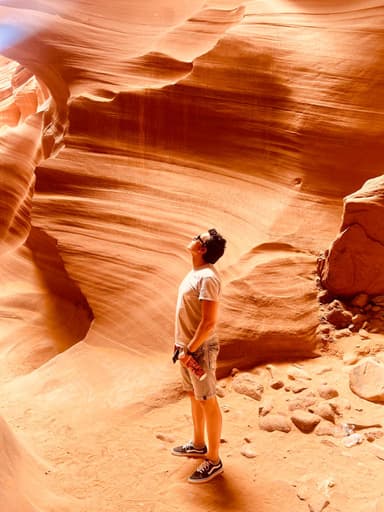
Written by Diego Fresno, travel writer and independent publisher specialising in the American Southwest. This timing guide draws on three visits to the Horseshoe Bend overlook in July 2025 (sunrise, midday and the afternoon-light window) specifically to test the conventional wisdom, plus current City of Page Parks & Recreation seasonal hours cross-checked in May 2026. Verified quarterly: last review April 2026. About the author →
Related guides
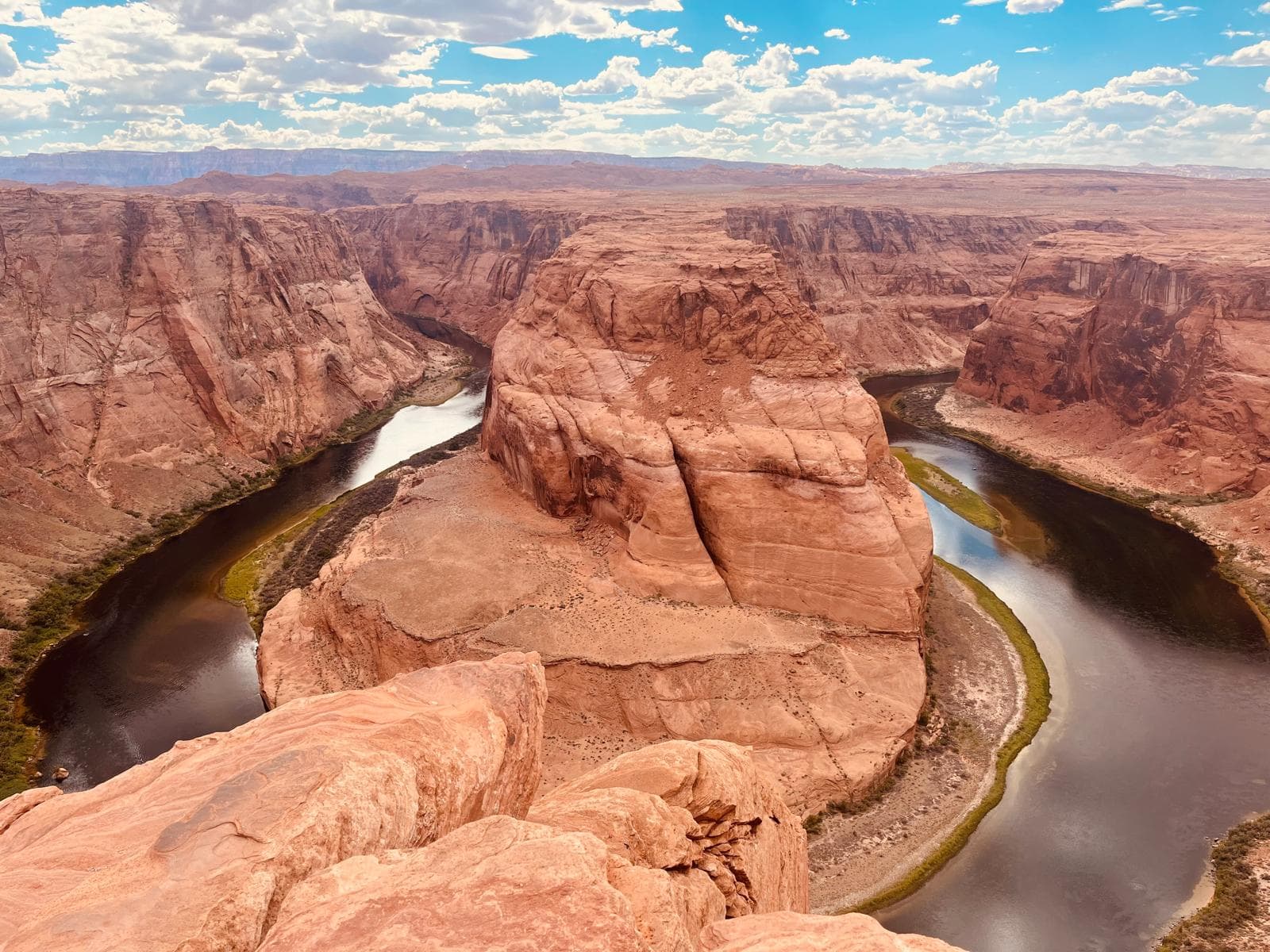
Horseshoe Bend: the complete 2026 guide
The full pillar: trail, accessibility path added 2020, the meander geology and how to combine with Antelope Canyon.
Read more →Horseshoe Bend parking guide
$10 fee, ~300 spaces, when to arrive to skip the queue. Pairs naturally with this timing guide.
Read more →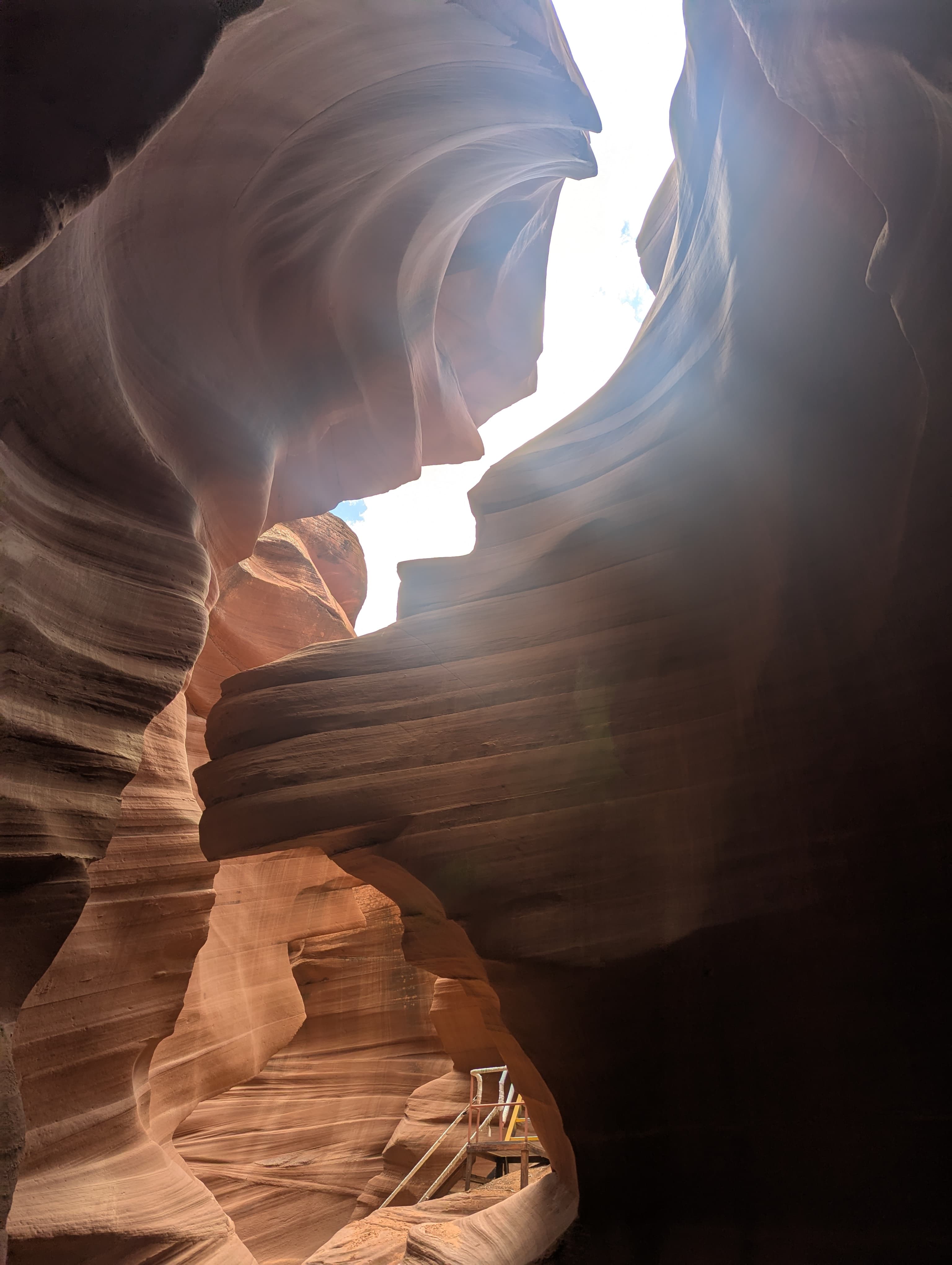
Best time to visit Antelope Canyon
The companion timing guide for the slot canyon: light beams, monsoon flash floods and the seasonal sweet spot.
Read more →Antelope Canyon + Horseshoe Bend in one day
The same-day combo where the Antelope midday window and the Horseshoe Bend afternoon window pair naturally.
Read more →