The historic Grand Canyon Lodge at Bright Angel Point on the North Rim was destroyed by the Dragon Bravo Fire on the night of July 12–13, 2025. The main lodge building, the dining hall and most of the adjacent Western Cabins are gone. The wider North Rim of the park reopened for the 2026 season on May 15; campground, General Store, fuel station and trails are operating; the lodge itself is not. This page is the standing reference for what the lodge was, the timeline of how it was lost, what is currently at the site, and the realistic options for staying near the North Rim until rebuild plans are confirmed.
Original lodge opened
1928
Architect
Gilbert Stanley Underwood
First fire
1932 (interior, lodge rebuilt 1937)
National Historic Landmark
Designated 1987
Destroyed by
Dragon Bravo Fire, July 12–13 2025
Current status
Demolished and stabilized (Nov 2025)
Rebuild
Intended · no firm date as of June 2026
North Rim 2026
Open with limited services (May 15 – Oct)
What was the Grand Canyon Lodge?
The Grand Canyon Lodge (singular, proper noun) refers specifically to the lodge complex at Bright Angel Point on the North Rim of Grand Canyon National Park. Built in 1928 by the Utah Parks Company (a subsidiary of the Union Pacific Railroad) and designed by the architect Gilbert Stanley Underwood, it was for nearly a century the only full-service lodging inside the park on the North Rim and the most architecturally significant building in that part of the canyon. The structure that stood from 1937 to 2025 was a partial rebuild of the original, after an interior fire destroyed much of the first building in 1932; the 1937 reconstruction kept Underwood's footprint and overall form but introduced masonry elements intended to make the building more fire-resistant.
It is also the lodge that most people picture when they Google “Grand Canyon Lodge”: the dark Kaibab limestone walls, the heavy ponderosa pine ceiling beams, the picture-window Sun Room facing south over the canyon with the rim cliffs framing the view. None of that is standing in 2026. This page exists because the most common question on the internet about the building right now is some version of “is it gone?” and the honest answer requires more than a sentence.
The 1928 lodge and the Underwood design
The North Rim was developed for tourism about two decades later than the South Rim, which had the advantage of being on the main Atchison, Topeka and Santa Fe rail line from Williams, Arizona. The North Rim is a thousand feet higher in elevation, much further from any rail spur, and snowed in for roughly half the year; practical reasons most early Grand Canyon visitor development concentrated on the South Rim. By the early 1920s, the Union Pacific Railroad began promoting a different strategy: a loop tour of the southwestern parks, with North Rim Grand Canyon as one anchor, and it needed a flagship lodge to make the loop sellable.
Underwood, then employed by the Union Pacific, was asked to design the North Rim property as part of the same broader portfolio he was producing for Zion and Bryce Canyon. The choice of Bright Angel Point (a narrow promontory of Kaibab limestone reaching out into the canyon) was deliberate: it gave the building a setting that no later structure could replicate. Construction began in 1927 and the lodge opened to the public in 1928. The original complex included the main lodge building (housing the dining room, lounge, Sun Room, gift shop and front desk), about 100 standalone cabins of varying sizes ranged around the rim and across the sloping forest behind, and supporting infrastructure (laundry, staff quarters, water supply).
The Underwood design language at Bright Angel Point was textbook National Park Service rustic (“Parkitecture” in the term of art), characterised by:
- Native materials: Kaibab limestone quarried from the immediate area and Ponderosa pine logs from the surrounding Kaibab Plateau forest, intended to make the building visually emerge from the landscape rather than sit on top of it.
- Massive scale of structural elements: oversized timber beams and stone piers, partly engineering choice (the snowloads on the Kaibab Plateau are real) and partly aesthetic, projecting a sense of permanence and adaptation to the harsh setting.
- Asymmetric, horizontal massing: low silhouette, multiple gabled roof sections, intended to defer visually to the canyon view rather than impose on it.
- The Sun Room: a south-facing observation lounge that became the iconic interior of the building: picture windows from floor almost to ceiling, oriented for the canyon panorama, used as the lodge's social heart from opening through 2025.
The 1932 fire and the 1937 rebuild
The original lodge stood for less than four years. On the night of September 1, 1932, a fire (generally attributed to a kitchen incident in the then-wooden interior) broke out and destroyed most of the main lodge building. The standalone cabins were largely spared because they were physically separate from the main structure. The Sun Room and several of the supporting wings burned to the ground; the masonry foundations and the Kaibab limestone walls at lower levels survived in part.
The 1937 rebuild kept Underwood's essential plan and footprint but made two important changes intended to reduce fire risk. First, more masonry: the lower walls and central fireplace cores were rebuilt entirely in quarried Kaibab limestone, with less exposed timber framing. Second, the interior was redesigned with wider corridors, modern (for 1937) fire suppression, and electrical wiring upgraded from the original 1928 standard. The visual character was preserved deliberately; when the lodge reopened in 1937 it was, to most visitors, the same building. The 1937 version was the lodge that stood for the next 88 years.
Architectural and historical significance
The Grand Canyon Lodge was designated a National Historic Landmark in 1987, an honour reserved for properties of national-scale historical importance. The significance is on three levels:
- Architectural: as a flagship example of Gilbert Stanley Underwood's national-park rustic style: a complete, intact (until 2025) expression of the same design philosophy he applied at Yosemite's Ahwahnee, Zion Lodge and Bryce Canyon Lodge. The four buildings together formed an architectural set, and the Grand Canyon Lodge was the most isolated and ecologically sensitive of the four in terms of how the building interacted with the surrounding landscape.
- Cultural: the lodge was the centre of North Rim Grand Canyon visitor culture for almost a century. Generations of Americans learned about the canyon from the Sun Room. The dining hall and lounge were the locations of countless trip-of-a-lifetime evenings. The guestbook record across nine decades included figures from Theodore Roosevelt-era conservationists through to twenty-first-century artists and writers.
- Programmatic: the lodge was the only full-service lodging on the North Rim. Its destruction did not simply remove a building; it removed an entire visitor model. The North Rim that returns in 2026 is structurally a different national park unit from the one that operated through 2025.
The Dragon Bravo Fire: July 2025
The Dragon Bravo Fire ignited on the Kaibab Plateau in July 2025 in conditions that had become familiar across the western United States by the mid-2020s: a prolonged drought through spring and early summer, low fuel moisture in the conifer forests, and a hot, dry, wind-driven weather window in early-to-mid July. The fire grew rapidly across the plateau and over the course of several days approached the North Rim and the Grand Canyon Lodge complex.
On the night of July 12 into July 13, 2025, the fire reached the lodge site. Despite NPS firefighting resources on the ground and a perimeter defence around the building; the conditions overwhelmed the response: ember showers carried into the roof structures, the building's external timber and shingle elements ignited, and by the morning of July 13 the main lodge, the dining hall and a majority of the Western Cabins were gone. The 1937 rebuild's improved interior fire-resistance was not the relevant design challenge in 2025: the threat was an external wildfire reaching the building from outside, not a kitchen fire starting inside.
The North Rim of the park was evacuated and closed for the remainder of the 2025 season. The full scope of what was lost was confirmed in the weeks after: the main lodge building (1937 rebuild standing on the original 1928 footprint), the adjacent dining hall and kitchen, most of the Western Cabins on the rim, the front desk and gift shop. The Bright Angel Point trail and viewpoint itself were not structurally destroyed and the immediate viewpoint remained safe to access once the fire perimeter was secured. The North Kaibab Trail (the trans-canyon trail from the North Rim to the Colorado River) also survived despite running through the burn area.
What is at the lodge site today (June 2026)
The National Park Service completed demolition and stabilization of the burned structures by November 2025, documented in the NPS Grand Canyon Lodge Demolition and Stabilization (Fall 2025) update. The site was cleared of unstable structures with the following exceptions: two of the burned Western Cabins were left in place near the rim only as short-term erosion control, to be removed during a subsequent stabilization phase. The lodge footprint itself was cleared and fenced. The historic stonework that had survived as foundations and lower walls of the 1937 building was largely retained in place where it could be safely stabilized.
As of June 2026 the lodge site is fenced off and not publicly accessible. There is no formal interpretive signage on site (NPS has indicated this will come in a later phase once the rebuild path is clearer). The Bright Angel Point viewpoint (a short paved walk from the parking area) is open and is the closest point a visitor can stand to the historic lodge footprint. The General Store, fuel station and the North Rim Campground opened for the 2026 season on May 15 and operate through approximately September 7 (campground extends slightly later in some years; check Recreation.gov for exact dates).
What is open at the North Rim in 2026:
- North Rim Campground (RV and tent sites, full hookups available; book on Recreation.gov)
- General Store, daily 9 AM–4 PM, May 15–September 7
- Fuel station, 24-hour self-serve, May 15–September 7
- Bright Angel Point trail and viewpoint
- Cape Royal Drive and viewpoints (Point Imperial, Cape Royal, Walhalla Overlook)
- North Kaibab Trail (the trans-canyon trail): full route reopened
- Backcountry permit office (limited hours)
What is not open at the North Rim in 2026:
- The main Grand Canyon Lodge building
- The lodge dining room and lounge
- Most of the historic cabin inventory (a small number of unaffected satellite cabins may operate; check Aramark directly for current status)
- The lodge gift shop and front desk
- Lodge-based ranger programs (some moved to campground amphitheatre)
- Potable water at the lodge site (visitors must bring enough water for their stay)
Will the Grand Canyon Lodge be rebuilt?
The intent is yes. The National Park Service has stated that rebuilding the Grand Canyon Lodge is a priority for the North Rim recovery. What the intent does not include, as of June 2026, is a firm date or a confirmed architectural plan. There are good reasons for that, and they are worth understanding before reading any rebuild speculation online.
Rebuilding a National Historic Landmark inside a national park is not the same problem as rebuilding a commercial hotel. It involves, at minimum:
- Environmental review under the National Environmental Policy Act (NEPA), typically 18–36 months for a project of this scope at a sensitive site.
- Historic preservation review under the National Historic Preservation Act Section 106, required because the original building was a National Historic Landmark, and any rebuild must be evaluated for how it relates to the landmark designation.
- Congressional appropriation of construction funds. The NPS's recurring operations budget cannot absorb a project at this scale; a dedicated appropriation is necessary, and the timing depends on the federal budget cycle.
- Architectural and engineering design selection, probably through public competition or qualifications-based selection, with substantial public-comment input given the cultural sensitivity of the site.
- Construction in a remote location with a short building season. The North Rim is accessible by road for roughly May–October; major construction outside that window is logistically very difficult and substantially more expensive.
Realistic estimates from comparable national park rebuilds (the Old Faithful Inn restoration after smaller structural events, the post-fire restoration work at Yosemite's Wawona Hotel area, the Sperry Chalet rebuild at Glacier National Park after its 2017 fire) suggest 5–8 years from formal funding to ribbon-cutting, not 1–2. The Sperry Chalet rebuild, often cited as the closest direct comparison (a wildfire-destroyed historic NPS lodge), took roughly four years to complete, and it was a smaller and less architecturally complex building. The 2026 working assumption that most NPS-adjacent observers quietly use is that the rebuilt Grand Canyon Lodge will not open before 2031 at the earliest, and 2033–2034 is more probable.
Should you still visit the North Rim in 2026?
Depends on what the trip was for. The honest answer maps to three trip types.
Yes, visit if the trip is the rim and the trails: Bright Angel Point still delivers the view it always did. Cape Royal and Point Imperial are arguably more dramatic than any single South Rim viewpoint and are open and accessible by car. The North Kaibab Trail reopened in 2026 in its full length. The campground is operating. The General Store and fuel station cover the basics. For photographers, hikers and travellers who actively want the quieter side of the canyon, the 2026 North Rim is still excellent; possibly the best year in decades to visit in terms of how few people are doing so.
Adjust expectations if planning a long stay: without the lodge dining room and the cabin inventory, multi-day stays on the North Rim in 2026 require active planning. Camping inside the park is the cleanest option but you need a reservation 4–6 weeks ahead for summer. Hotel-style stays mean basing at Kaibab Lodge or Jacob Lake Inn and driving in for day trips. Both work; both add 30–90 minutes of daily driving to your time at the rim.
Postpone if the lodge was the point: if the trip was specifically planned around staying at the historic Grand Canyon Lodge (and there are many people for whom that was the case), postponing is the right call. There is no functional substitute, the rebuild has no timeline, and visiting the empty fenced site is not a satisfying experience. A South Rim trip (El Tovar, Bright Angel Lodge) is the closest available alternative for a historic-lodge experience in Grand Canyon National Park in 2026.
Where to stay near the North Rim now
Three realistic options for staying near the North Rim in 2026, in order of proximity:
1. North Rim Campground (inside the park)
Located approximately 1 mile from the historic lodge site, the campground is the only in-park lodging option on the North Rim in 2026. RV sites with full hookups (~$25–35/night) and tent sites (~$18–25/night), reservations through Recreation.gov, typically books 4–6 weeks ahead for summer weekends and Memorial Day / Labor Day windows. The campground is at roughly 8,250 ft elevation; nights are cold even in July (low 40s°F). Bring a warmer sleeping bag than the elevation might suggest at first glance.
2. Kaibab Lodge (5 miles north on AZ-67)
The Kaibab Lodge sits inside the Kaibab National Forest on the highway approach to the North Rim entrance, about 5 miles and ten minutes by car from the park boundary. It is a private historic property dating from the 1920s, independent of the destroyed Grand Canyon Lodge but in the same broader tradition. Realistic 2026 rates run $150–220/night for the rustic cabins, with a restaurant on site. The trade-offs: small property (about two dozen cabins), no Wi-Fi worth using, limited cell service. Reservations 6–8 weeks ahead are sensible for summer. The big upside is that for many visitors in 2026 this is the closest functional equivalent to what staying inside the park used to feel like.
3. Jacob Lake Inn (45 minutes north at the AZ-67 / US-89A junction)
Jacob Lake Inn is the established traveller hub at the junction where AZ-67 (the road south to the North Rim) meets US-89A (the route between Page, Arizona and Kanab, Utah). About 45 minutes by car from the park entrance and an hour from Bright Angel Point. Rates are typically $130–180/night, the on-site restaurant is good (the bakery has been the cookies-stop for North Rim road-trippers for generations), and the inn stays open year-round, which Kaibab Lodge does not. Best fit for travellers comfortable with a daily drive to the rim or who are pairing a North Rim visit with a wider Utah / Arizona loop including Zion or Bryce Canyon.
Other lodges inside Grand Canyon National Park
Seven lodges still operate inside the park as of 2026; all on the South Rim except Phantom Ranch, which sits at the bottom of the canyon next to the Colorado River. None substitute for the Grand Canyon Lodge experience but if a Grand Canyon trip with in-park lodging is the goal in 2026, the South Rim is now the only practical option. Briefly:
- El Tovar Hotel (1905, South Rim flagship, $250–500 shoulder/peak): the historic equivalent on the South Rim, also a National Historic Landmark.
- Bright Angel Lodge (rim-side historic cabins designed by Mary Colter, $140–280): the budget-friendlier rim-side option.
- Kachina & Thunderbird Lodges (mid-priced rim-side modern, $200–280): built in the 1960s, rim-side rooms.
- Maswik Lodge (in the pines, $180–240): value option a short shuttle ride from the rim.
- Yavapai Lodge (largest property, $170–220): biggest rooms, easiest parking, two-minute shuttle to the rim.
- Phantom Ranch (canyon floor, lottery system, $58–185 depending on dorm vs cabin): accessible only on foot, by mule or by raft; the 15-month lottery is the only realistic way to book.
For full comparison and booking guidance see our Grand Canyon lodges overview.
Frequently asked questions
Did something happen to the Grand Canyon Lodge?
Yes. The historic Grand Canyon Lodge on the North Rim, built in 1928 and rebuilt after a 1932 fire, was destroyed by the Dragon Bravo Fire in July 2025. The fire began on the Kaibab Plateau and burned through the lodge complex on the night of July 12–13, 2025, destroying the main lodge building, the dining hall, and most of the adjacent Western Cabins. The National Park Service completed demolition and stabilization of the burned structures in November 2025. As of June 2026 the main lodge has not been rebuilt and no firm reconstruction date has been published. The North Rim itself reopened in May 2026 with limited services; General Store, fuel station and campground are operating, but the lodge dining room and most of the cabin inventory are not.
Is the Grand Canyon Lodge open in 2026?
The main Grand Canyon Lodge building is not open and is not currently being rented to visitors. The wider North Rim of Grand Canyon National Park reopened for the 2026 season on May 15 with limited services: the General Store is open daily from 9 AM–4 PM (May 15 to September 7), the fuel station is open 24-hour self-serve in the same window, and the North Rim Campground is operating with reservations via Recreation.gov. The lodge restaurant, front-desk check-in, gift shop and most cabin inventory are all closed. The Aramark-operated grandcanyonnorth.com is marketing a partial 2026 reopening but the National Park Service has not published a completion date for the rebuilt main lodge.
Where can I stay on the North Rim of the Grand Canyon in 2026?
Three realistic options. (1) North Rim Campground inside the park: ~$25/night, full hookups for RV and tent sites, reservations via Recreation.gov, typically books out 4–6 weeks in advance for summer. (2) Kaibab Lodge, about 5 miles north of the park entrance on AZ-67 inside the Kaibab National Forest: rustic cabins, restaurant on site, typically $150–220/night in 2026, smaller property so reservations 6–8 weeks ahead are sensible. (3) Jacob Lake Inn at the junction of AZ-67 and US-89A, 45 minutes north of the park entrance: established highway lodge with restaurant and bakery, $130–180/night, the standard fallback for travellers who don't want to camp.
Who designed the Grand Canyon Lodge?
Gilbert Stanley Underwood, the architect responsible for several of the great rustic lodges of the western United States national parks. Underwood designed the original 1928 Grand Canyon Lodge, the Ahwahnee Hotel in Yosemite (1927), the Zion Lodge (1925, also destroyed by fire in 1966 and partially rebuilt) and the Bryce Canyon Lodge (1925). His Grand Canyon Lodge design used native Kaibab limestone and Ponderosa pine logs to anchor the building visually into the rim: a deliberate choice to make the structure feel native to the landscape rather than imposed on it. The 1937 rebuild after the 1932 fire kept Underwood's overall form but introduced more masonry to improve fire resistance. The 1937 building was the one that stood until the Dragon Bravo Fire.
Why did the Grand Canyon Lodge burn down twice?
The 1932 fire is generally attributed to a kitchen fire that spread through the wooden interior of the original 1928 structure (the building was largely log construction and lacked modern fire suppression). The 1937 rebuild deliberately added masonry and a more fire-resistant design but the Dragon Bravo Fire in July 2025 was a wildfire driven by drought conditions, high winds and the fuel load of the surrounding Kaibab Plateau forest, not a structural fire originating inside the lodge. The 2025 fire approached the building from outside, ignited the rooflines and outbuildings, and the 90-year-old wood elements (protected against interior fire risk but not against an aggressive wildfire arriving at the property) could not be saved. Two different kinds of fire, with the 2025 wildfire reflecting a wider pattern of severe western US fire seasons.
Can I see the ruins of the Grand Canyon Lodge?
No, not as ruins. The National Park Service completed demolition and stabilization of the burned structures by November 2025. Two of the burned Western Cabins were left in place near the rim only to control short-term erosion before full removal; these are not preserved as a memorial. As of June 2026 the lodge site itself is fenced off as an active recovery and stabilization zone, with no public access to the original building footprint. The Bright Angel Point viewpoint (a short, paved walk from the former lodge area) remains open and is the closest publicly accessible point to the historic location.
Will the Grand Canyon Lodge be rebuilt?
The intent is yes, but no firm timeline exists as of June 2026. The National Park Service has stated that rebuilding is a priority. Rebuilding a National Historic Landmark inside a national park is a multi-year process that requires environmental review, congressional appropriation of funds, design selection (likely informed by historic preservation standards), procurement and construction in a remote location with a short building season; realistic estimates from comparable national park rebuilds (Old Faithful Inn restoration, post-fire Yosemite work) suggest 5–8 years from formal funding to ribbon-cutting, not 1–2. For 2026 and likely several years beyond, the practical assumption is that the historic Grand Canyon Lodge is not coming back soon.
Is the North Rim worth visiting in 2026?
Yes, but with adjusted expectations. The North Rim is structurally a different visit from the South Rim: 1,000 feet higher in elevation, cooler in summer, far less crowded (about 10% of South Rim visitation), and the viewpoints (Bright Angel Point, Cape Royal, Point Imperial) are arguably more dramatic than the South Rim equivalents. What you lose in 2026 is the lodge dining room, the historic main building, the gift shop and most of the cabin inventory. What you keep is the campground, the trails (including the entire North Kaibab Trail which reopened in May 2026), the General Store for dry goods, the gas station and the viewpoints themselves. If your trip is photography, hiking or solitude-focused, the North Rim in 2026 is still excellent. If the lodge itself was the point of the trip, postpone.
What is the difference between the Grand Canyon Lodge and other Grand Canyon lodges?
The Grand Canyon Lodge (singular, properly capitalised) refers specifically to the historic 1928/1937 Gilbert Stanley Underwood building on the North Rim at Bright Angel Point. "Grand Canyon lodges" (plural) is a generic term that covers all in-park lodging: El Tovar Hotel (South Rim flagship, opened 1905), Bright Angel Lodge (South Rim, also designed by Mary Colter), Kachina and Thunderbird Lodges (mid-priced rim-side, South Rim), Maswik Lodge (South Rim, pines), Yavapai Lodge (South Rim, largest property), and Phantom Ranch at the bottom of the canyon. See our overview of the seven in-park lodges still operating in 2026 for a comparison.
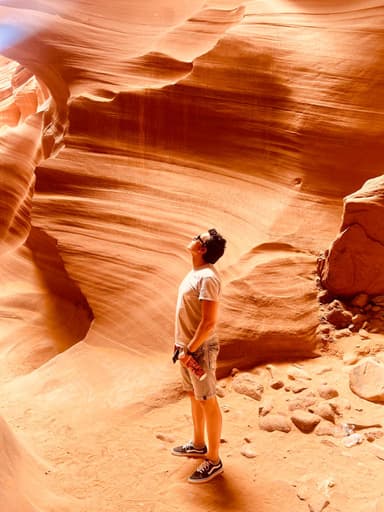
Written by Diego Fresno, travel writer and independent publisher specialising in the American Southwest. This Grand Canyon Lodge piece draws on the National Park Service's published demolition and stabilization documentation, on-the-ground reporting from southwest US travellers in 2025–2026, and field visits to the Grand Canyon South Rim and Page, Arizona region between 2023 and July 2025. The North Rim visit referenced in source material predates the Dragon Bravo Fire. Verified quarterly: last review April 2026. About the author →
Related guides
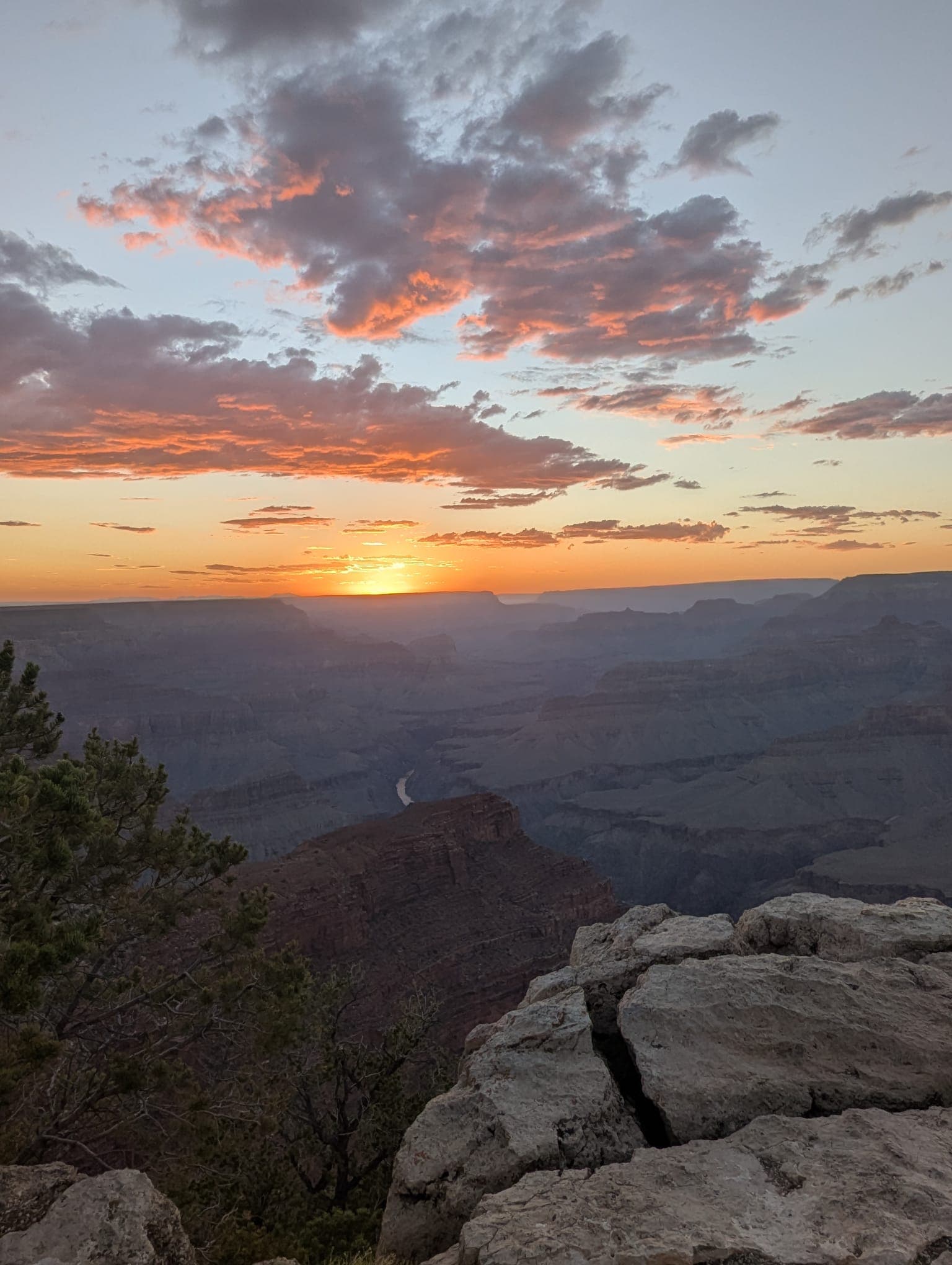
Grand Canyon lodges: every in-park option compared
The six South Rim lodges plus Phantom Ranch: how each one differs and how far ahead you actually need to book.
Read more →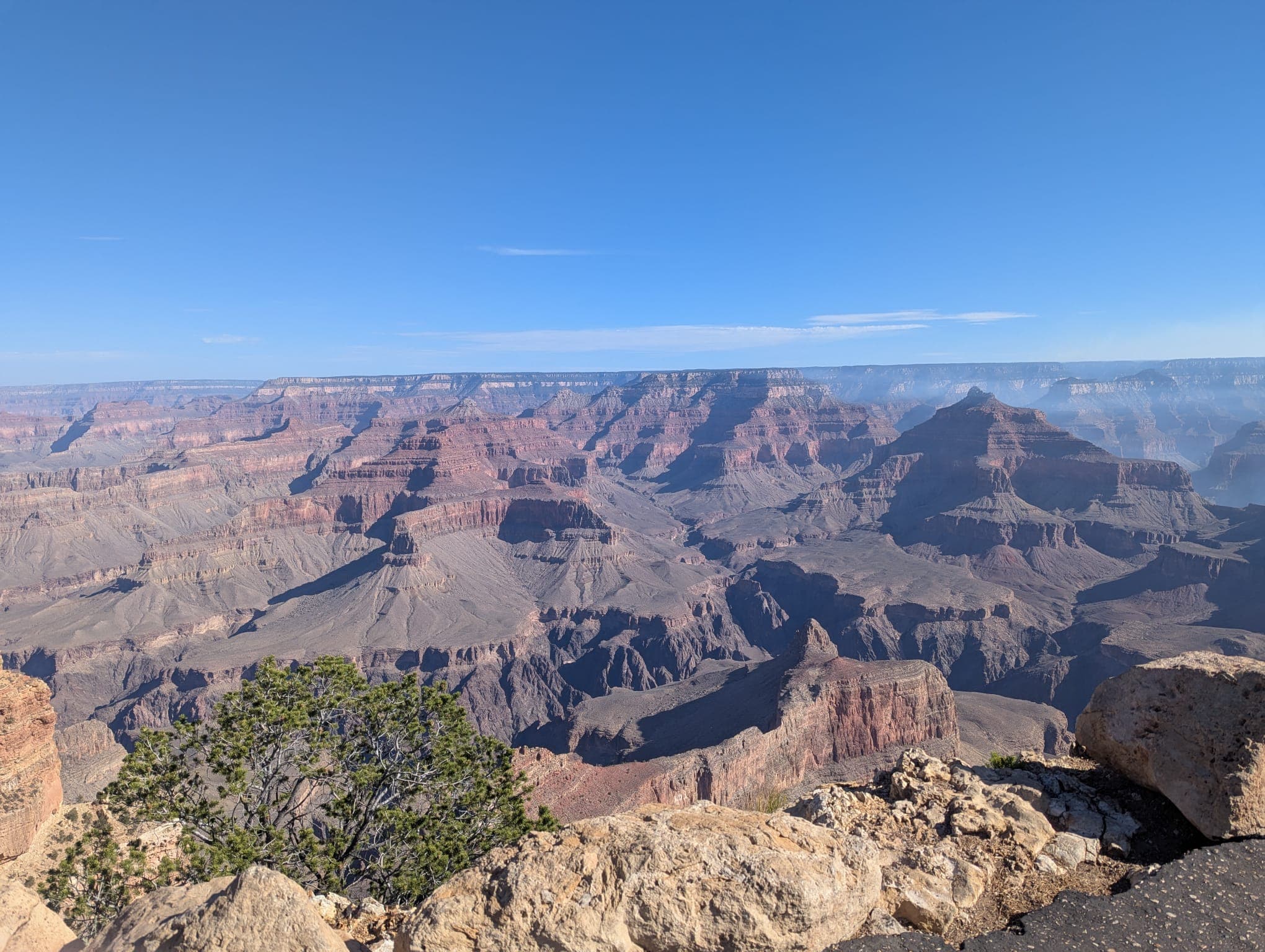
Grand Canyon Visitor Center: practical guide
If you are visiting the South Rim, the Visitor Center is the right first stop. Hours, parking, shuttle and first-60-minute plan.
Read more →Grand Canyon helicopter tours from Las Vegas
The West Rim option for travellers based in Vegas: operators, prices and how it differs from the South Rim.
Read more →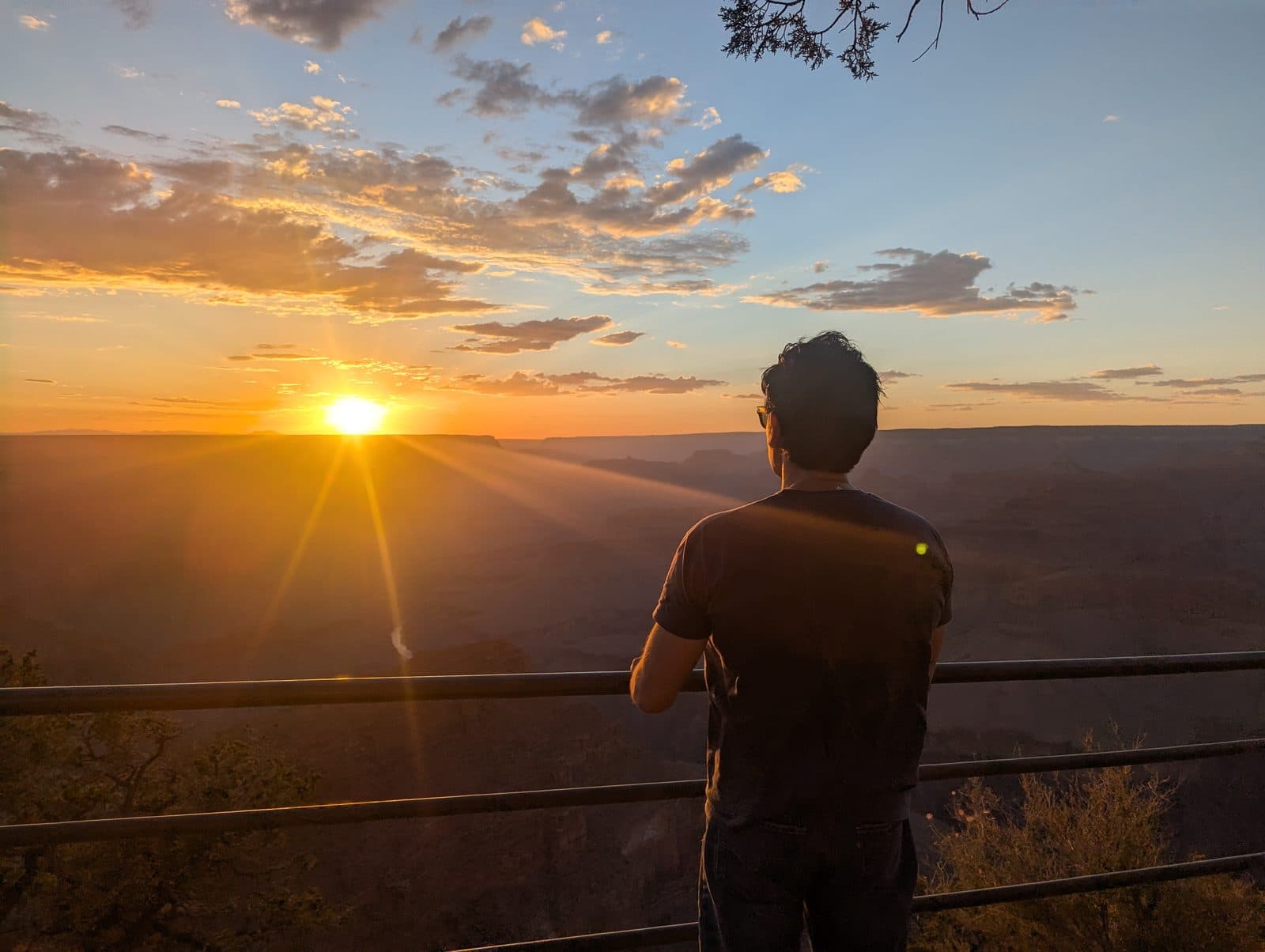
Grand Canyon: the complete guide
Pillar overview of Grand Canyon National Park: South Rim, North Rim, West Rim and how to combine them.
Read more →