Grand Canyon Village is the historic visitor village on the South Rim of Grand Canyon National Park. Most first-time visitors confuse it with the main Visitor Center at Mather Point; they are different places, about a mile apart. The Village is the older and architecturally significant one: a concentrated cluster of buildings from 1901–1935 that includes El Tovar Hotel, Hopi House, Bright Angel Lodge, Lookout Studio, Kolb Studio, Verkamp's and the 1909 train station, all within a 10-minute walk of each other on the Rim Trail. This guide is the practical layout, the walking tour through the seven historic landmarks, where to stay and eat inside the village, and a realistic half-day plan if the village is your South Rim base.
Elevation
~6,800 ft (2,073 m)
Distance from main Visitor Center
~1 mile (1.6 km), 4-min drive
Historic district status
National Historic Landmark (1987)
Oldest building
Kolb Studio (1904)
Flagship hotel
El Tovar (1905)
Number of in-park lodges
5 inside or adjacent to the Village
Free shuttle route
Village Loop (Blue): runs Mar–Nov
Train arrival
Grand Canyon Railway daily from Williams, AZ
What is Grand Canyon Village?
Grand Canyon Village is the original concentrated visitor area inside Grand Canyon National Park on the South Rim. It is, in practical terms, the walkable heart of the South Rim; five of the six in-park lodges either sit inside the historic village footprint or within a short walk of it, all the architecturally significant buildings of the park are here, and the most popular trailhead down into the canyon (the Bright Angel Trail) starts in the middle of it.
What it is not: it is not the main visitor centre. The current main Visitor Center is at Mather Point, about a mile to the east, opened in its current form in 2010; that's where most first-time visitors arrive, park, watch the introductory NPS film, take their first overlook walk to Mather Point itself, and then either drive west to the Village or take the free shuttle. This is the single most common point of confusion at the South Rim: the “village” is not where you check in for the park, it is a mile west and is itself the destination.
The historic district was added to the National Register of Historic Places in 1975 and designated a National Historic Landmark in 1987: recognition of the fact that it represents an unusually intact example of early 20th-century railroad-era national park development. Most of the original buildings are still where they were built, still operating in roles close to their originals (the Fred Harvey Company-era hotels are still hotels, the curio stores are still shops, the train station still receives a train), which is rare for a national park concentrated village of this age.
Where exactly is it (and how it differs from the Visitor Center)
Geographically: Grand Canyon Village sits on the South Rim of the canyon at approximately 36.0544°N, 112.1401°W. The Bright Angel Lodge sits at the rim's edge with El Tovar Hotel about 200 metres to the east along the Rim Trail. The Village is laid out roughly along a half-mile stretch of the rim, with parking lots, the train station and the Maswik Lodge area extending a few hundred metres back from the rim.
Relative to other South Rim points of interest:
- Mather Point (main Visitor Center): ~1 mile east. Where you arrive if you drove in through the South Entrance.
- Yavapai Geology Museum: ~1 mile east of the Village centre, accessible by an easy Rim Trail walk or shuttle.
- Hermit's Rest: 7 miles west along Hermit Road, accessible by shuttle only from Mar–Nov (no private cars).
- Desert View Watchtower: 23 miles east, accessible by car year-round.
- South Entrance Station: ~6 miles south.
- Tusayan (town outside the park): ~7 miles south of the South Entrance.
If you have any confusion about Visitor Center versus Village, see our Grand Canyon Visitor Center guide for the Mather Point area in detail; the two pages cover different destinations.
The seven historic landmarks: a walking tour
The seven buildings below are the architectural and cultural heart of the Village. They sit within a 10-minute walk of each other on the Rim Trail and the immediately adjacent paths. Doing all seven on foot, without lingering, takes about 90 minutes; with proper time inside each (the buildings open to the public, anyway) figure 2.5–3 hours.
1. El Tovar Hotel (1905): the flagship
Designed by Charles Whittlesey for the Atchison, Topeka and Santa Fe Railway and built directly on the rim. The style was deliberately European resort-hotel: Swiss chalet meets Norwegian villa, dark wood, stone fireplaces, vaulted ceilings, big formal dining room. It opened January 14, 1905, was the most expensive hotel west of the Mississippi at the time, and has hosted Theodore Roosevelt, Albert Einstein, Bill Clinton and Paul McCartney over the past 120 years. It is a designated National Historic Landmark in its own right and the closest the South Rim has to a flagship building. Even if you are not staying there, the lobby and rim-side terrace are open to non-guests and worth 15 minutes.
2. Hopi House (1905): Mary Colter's debut
Directly across the small plaza from El Tovar. This was Mary Colter's first commission for the Fred Harvey Company (she was 35) and it set the template for everything she would do later at the canyon. The design is modelled on the multi-storey adobe pueblos of Oraibi (the Hopi village in northern Arizona), with stacked terraces, small windows, and a deliberately asymmetric massing. It opened as a Native American crafts store and continues to operate as one today; the ground floor still sells Native arts (Hopi kachina dolls, Navajo silverwork, pottery) curated by Fred Harvey Company successor operators. Two upper floors are not open to the public. Whether or not you buy anything, the building itself is worth a slow walk through.
3. Verkamp's (1905): the family curio shop, now a NPS visitor center
A two-storey wooden building 100 metres east of Hopi House, opened in 1905 by John Verkamp as a souvenir and Indian crafts store. Verkamp's family operated it continuously for 103 years, until 2008, when the third generation closed the business and the National Park Service took over. It now functions as a Verkamp's Visitor Center: small museum exhibits about the early village history, NPS information desk, books and maps. It is quiet (most visitors miss it) and worth 20 minutes for the history.
4. Lookout Studio (1914): Mary Colter's rim integration
150 metres west of Bright Angel Lodge, perched on the rim itself. Colter designed it to look like it had grown out of the rock: irregular stone walls, terraced platforms, low profile, no clean roof line. The intent was to be invisible against the cliff when viewed from across the canyon, and from certain angles it actually achieves this. It operates as a small shop and viewing platform; the lower terrace is one of the best rim-side photography vantage points in the village, especially at sunrise and sunset.
5. Kolb Studio (1904 onwards): the photographers' house
A four-storey wooden structure perched on the rim immediately west of Lookout Studio, technically the oldest building in the historic district. It was built and progressively expanded between 1904 and the 1920s by brothers Emery and Ellsworth Kolb as their home and photographic studio. The Kolb brothers documented Colorado River expeditions in the 1910s; they were the first to film the full Green and Colorado River route, and ran continuous screenings of their footage to South Rim visitors for sixty years. Emery Kolb lived in the studio until his death in 1976. It is now operated as a gallery space by the Grand Canyon Conservancy with rotating exhibitions. Free to enter; about 30 minutes worth seeing.
6. Bright Angel Lodge (1935): Colter's mature work
The newest of the historic landmarks, designed by Mary Colter (then 67) and opened in 1935 to replace earlier, more rudimentary canyon-side tent accommodations. The lodge is a sprawling complex of cabins and the main lodge building with the History Room: a remarkable interior space featuring a 10-foot-tall fireplace built by Colter herself from rocks gathered in the various canyon strata, layered to show the geological sequence visitors would see if they hiked down into the canyon. Even if not staying here, the History Room is worth seeking out. Bright Angel Lodge also houses the Bright Angel Trailhead just outside the front doors: the most-used trail down into the canyon.
7. The Grand Canyon Railway depot (1909)
South of the lodge area, behind El Tovar and Bright Angel. Designed by Francis Wilson, it is a two-storey log structure: one of only three log train stations still standing in the US, and the only one still in active railway service. The Grand Canyon Railway from Williams, Arizona delivers passengers here daily (typically arrival around 11:45 AM, return departure 3:30 PM). Even if you arrive by car, the station and the small adjacent railway equipment displays are worth a 15-minute visit for the context they give to the village's origin as a railway destination.
Where to stay inside the village
Four of the six in-park South Rim lodges sit directly inside Grand Canyon Village. A fifth (Maswik) sits in the pines about 5 minutes' walk back from the rim, still considered part of the village area. The sixth (Yavapai) is further east near the Visitor Center.
- El Tovar Hotel: the flagship, on the rim, $250–500/night shoulder/peak. The historic option.
- Bright Angel Lodge: rim-side historic cabins designed by Mary Colter, $140–280. The budget-friendlier rim-side option.
- Kachina Lodge & Thunderbird Lodge: 1960s modern rim-side builds, $200–280. Functional, slightly less character but excellent rim proximity.
- Maswik Lodge: in the ponderosa pines behind the rim, ~5 minute walk to the village centre, $180–240. The practical value pick.
For full per-property details, booking windows and how far ahead to book by season, see our in-park lodges overview. All Village-area lodges are operated by Xanterra and bookable at grandcanyonlodges.com; Maswik and Yavapai are operated by Delaware North and bookable at visitgrandcanyon.com.
Where to eat in the village
Five distinct sit-down or counter options inside the village footprint, all within the historic district:
- El Tovar Dining Room: the formal option. Original 1905 dining room, white tablecloths, full breakfast / lunch / dinner service. Reservations strongly recommended for dinner (call Xanterra 6+ months ahead in summer). Breakfast and lunch are walk-in friendly.
- Arizona Room (Bright Angel Lodge): Southwest cuisine, dinner only, no reservations (first-come). Quieter atmosphere than El Tovar.
- Bright Angel Restaurant: casual all-day American food, the practical option if El Tovar is full.
- Maswik Food Court: cafeteria-style, the cheapest in-park option, walk-in.
- Canyon Coffee House (Bright Angel): coffee, pastries, breakfast sandwiches before the trail.
For groceries or prepared sandwiches, the Canyon Village Market (general store) sits about 5 minutes' walk from Maswik Lodge and stocks everything from sandwiches to camping fuel.
Shopping and Native arts
Three village locations curate Native American art that is both better quality and more authentic than the average national park gift store:
- Hopi House (1905): the original curio store and still the strongest curation. Hopi kachina dolls, Navajo silverwork (squash blossom necklaces, concho belts), Pueblo pottery, Zuni fetishes. Pricing is genuinely museum-quality for the high-end items; less expensive decorative pieces are also available.
- Lookout Studio: smaller selection, more focused on books, prints and photographic merchandise. Worth visiting for the building itself as much as the shop.
- Verkamp's: the original three-generation family curio store. Smaller now under NPS operation but still sells Native arts and books on the Village's history.
For inexpensive park souvenirs (postcards, magnets, generic gear), the Bright Angel Lodge gift shop and the Canyon Village Market are the practical options.
Getting to and around the village
By car
Drive in through the South Entrance Station ($35 per vehicle, valid 7 days), continue north through the park, and follow signs to either the main Visitor Center (recommended for first arrival) or directly to the Village. Village parking is limited and fills early in summer (8 AM onwards). If you have a Village-area lodge reservation, your lodge parking lot is generally reserved for guests. If not, parking at the main Visitor Center and taking the Blue Route shuttle to the Village is the practical strategy.
By shuttle (free, inside the park)
The park operates a free shuttle bus system on three colour-coded routes:
- Blue Route (Village Loop): connects the main Visitor Center, Yavapai Lodge, Market Plaza, Maswik Lodge, Village historic area and back. Runs March–November, every 15 minutes peak season.
- Red Route (Hermit Road): connects the Village to Hermit's Rest 7 miles west, with multiple viewpoint stops. Only shuttle access; private cars not allowed on Hermit Road March–November.
- Orange Route (Kaibab/Rim): connects the Visitor Center east to Yaki Point and the South Kaibab Trailhead. Year-round.
By train
The Grand Canyon Railway runs daily round-trip service from Williams, Arizona (60 miles south of the park) to the historic Village train station. Departure from Williams typically 9:30 AM; arrival at the Village around 11:45 AM; return departure from the Village 3:30 PM; arrival back in Williams 5:45 PM. Several class options (coach through luxury parlour car) with corresponding price tiers. This gives roughly 3.5 hours at the South Rim: enough for the Village walking tour and a meal but not for serious hiking. Train tickets at thetrain.com. Even if you drove, the train station is worth a 15-minute visit for the historical context.
Best time to visit the village specifically
The general South Rim crowd patterns apply (peak July–August, shoulder April–May and September–October, quietest November–February), but the Village specifically has a few sub-patterns worth knowing:
- Early morning (before 8 AM) is when the Village is at its quietest. The rim viewpoints inside the village (Lookout Studio, Bright Angel viewpoint, El Tovar terrace) are largely empty. Sunrise from the Lookout Studio terrace is one of the most photographed compositions in the canyon.
- 11:30 AM – 1:30 PM is when the train arrives and lunch service starts: the busiest period of the day. If you are doing the walking tour, skip this window.
- Late afternoon (after 5 PM): day-trippers and tour buses clear out. The Village becomes essentially the lodge guests only. El Tovar dinner service and the Bright Angel viewpoint at sunset are both significantly less crowded than the noon period.
- Winter: the Village stays open year-round (unlike the North Rim, which closes mid-October). Crowds drop to roughly 10–15% of summer levels. The downside is reduced services (some restaurants on limited winter hours) and occasional snow. The upside is genuinely peaceful experience of the historic buildings.
A realistic half-day plan for the village
If you have a 3.5–4 hour window at the South Rim and want to maximise the Village specifically, here is a sequencing that works for most visitors:
- 0:00–0:20: Arrive (via car parked at Village lot, shuttle from Visitor Center, or train). Start at El Tovar lobby and step out onto the rim-side terrace. First look at the canyon from this specific spot.
- 0:20–0:45: Hopi House next door. Walk through the ground floor.
- 0:45–1:15: Walk east on the Rim Trail to Verkamp's. Small museum, history of the Village.
- 1:15–1:45: Return west and continue past Bright Angel Lodge to Lookout Studio. Walk through, lower terrace photo stop.
- 1:45–2:15: Kolb Studio next door. Climb through the gallery levels.
- 2:15–2:45: Lunch. Bright Angel Restaurant (no reservation needed) or El Tovar Dining Room (if booked).
- 2:45–3:15: Bright Angel Lodge History Room (Colter's geology fireplace) and the Bright Angel Trailhead viewpoint.
- 3:15–3:45: Optional: walk over to the train station for the building and railway exhibits, or use remaining time for a short Rim Trail walk west (to Trailview Overlook, ~15 min one way).
If you have a full day, add the Yavapai Geology Museum (east, accessible by an easy 30-minute Rim Trail walk from El Tovar) and a sunset return to the Lookout Studio terrace. See our South Rim viewpoints guide for how to use additional time east or west of the Village.
Frequently asked questions
What is Grand Canyon Village?
Grand Canyon Village is the historic village inside Grand Canyon National Park on the South Rim. It sits at about 6,800 feet of elevation, roughly 1 mile west of the main Visitor Center at Mather Point. The village is the original concentrated visitor area developed by the Atchison, Topeka and Santa Fe Railway starting in 1901: it includes El Tovar Hotel (1905), Bright Angel Lodge (1935), Hopi House (1905), Lookout Studio (1914), Kolb Studio (1904), Verkamp's (1905) and the historic Grand Canyon Railway train station (1909). The whole area was designated the Grand Canyon Village National Historic Landmark District in 1987. Most in-park lodging, the main rim-side restaurants and the bulk of architecturally significant buildings are concentrated within a 10-minute walking radius along the Rim Trail.
How far is Grand Canyon Village from the Visitor Center?
About 1 mile (1.6 km), roughly a 4-minute drive on the park road or a 15-minute shuttle ride on the Village Loop. The main Visitor Center is at Mather Point on the east side of the South Rim development; the Village is to the west. Most first-time visitors arrive at the Visitor Center, park there, take the Mather Point overlook walk, then take the free Blue Route shuttle to the Village; this avoids the village's limited parking in summer. If you have an in-park lodge reservation in the Village (El Tovar, Bright Angel, Kachina, Thunderbird), you can drive directly to the lodge parking lot.
Can you stay in Grand Canyon Village?
Yes, Grand Canyon Village contains four of the six in-park South Rim lodges directly on or near the rim: El Tovar Hotel (flagship, 1905, $250–500/night), Bright Angel Lodge (cabins on the rim, $140–280), Kachina Lodge and Thunderbird Lodge (1960s rim-side, $200–280). Maswik Lodge sits in the pines about a 5-minute walk from the rim (still considered part of the Village area, $180–240). Yavapai Lodge is further east near the Visitor Center, not strictly inside the historic village. For a full comparison of the seven in-park lodges including Phantom Ranch on the canyon floor, see our Grand Canyon lodges overview.
Is there a town inside Grand Canyon National Park?
Sort of. Grand Canyon Village is not a town in the conventional sense: there are no residents independent of the park concessionaire workforce, no schools, no town government. It is a concentrated visitor services area with about 2,000 employees who live in nearby Park Service housing. From a visitor's perspective it functions as a base town: it has lodging, restaurants, shops, a general store, gas station, post office, bank ATM, a chapel and a school for employee children. The nearest actual incorporated town outside the park is Tusayan, 7 miles south of the South Entrance, with chain hotels and a small airport. The nearest larger town is Williams, AZ, 60 miles south.
What is there to do in Grand Canyon Village?
Six broad activity groups. (1) The historic landmarks walking tour (El Tovar, Hopi House, Bright Angel Lodge, Lookout Studio, Kolb Studio, Verkamp's, the train station) all within a 10-minute walk on the Rim Trail. (2) Rim viewpoints accessible directly from the village (Lookout Studio overlook, Bright Angel viewpoint, El Tovar terrace). (3) Trail access: the Bright Angel Trailhead starts in the village and is the most popular South Rim trail down into the canyon. (4) Yavapai Geology Museum (a 20-minute walk east along the Rim Trail) for the canyon's geology in plain language. (5) Mule rides into the canyon (book months ahead) and other ranger-led programs. (6) Shopping and dining in the historic Fred Harvey Company buildings that still operate as restaurants and shops.
When was Grand Canyon Village built?
The original development was 1901–1935. The Grand Canyon Railway reached the South Rim in September 1901, ending what had been a multi-day stagecoach trip from Flagstaff. The Atchison, Topeka and Santa Fe Railway then commissioned a series of buildings: El Tovar Hotel and Hopi House both opened in 1905 (designed by Charles Whittlesey and Mary Colter respectively); Kolb Studio was completed in 1904; Lookout Studio in 1914; Bright Angel Lodge in 1935 (also Mary Colter). The Grand Canyon Village Historic District was added to the National Register of Historic Places in 1975 and designated a National Historic Landmark in 1987. Most of the original buildings are still in their original locations and continue to function as lodges, restaurants or visitor services, a rare case of a national park concentrated historic district that remains operationally intact.
Who designed the historic buildings?
Three figures dominate the architectural legacy. (1) Mary Colter: Hopi House (1905), Lookout Studio (1914), Hermit's Rest (1914), the Watchtower at Desert View (1932) and Bright Angel Lodge (1935). Colter is now recognised as the most significant designer of the village; her work emphasised regional vernacular (Pueblo, Hopi and Spanish Mission influences) and integration with the landscape. (2) Charles Whittlesey: El Tovar Hotel (1905), in a Swiss chalet meets Norwegian villa style, dark wood, stone fireplaces, intended to evoke European resort lodges of the era. (3) Emery and Ellsworth Kolb: photographers and adventurers who built and progressively expanded Kolb Studio (1904 onwards) right on the rim edge as their home and photographic studio. The Kolb brothers documented Colorado River expeditions in the 1910s and ran continuous film screenings of their canyon trips for visitors well into the 1970s.
Can I take the train to Grand Canyon Village?
Yes, the Grand Canyon Railway runs daily round-trip service from Williams, Arizona (60 miles south) to the historic Grand Canyon Village train station. The trip is 2 hours 15 minutes each way, vintage and refurbished passenger cars (coach, first class, parlour car, dome car, luxury parlour). Departure from Williams is typically 9:30 AM with arrival at the village around 11:45 AM; the return train leaves the village at 3:30 PM. This gives roughly 3.5 hours at the South Rim: enough for a walking tour of the village landmarks, lunch at El Tovar or Bright Angel, and a short Rim Trail walk, but not enough for any serious hiking or distant viewpoints. The train station is a 1909 log structure designed by Francis Wilson and is the only original log train station still operating in the US National Park System.
Is Grand Canyon Village wheelchair accessible?
Largely yes. The Rim Trail through the village is paved and graded for accessibility from at least El Tovar through Bright Angel Lodge: about 0.6 mile of accessible rim walking with multiple viewpoints. El Tovar and Bright Angel Lodge have accessible rooms (call ahead to book). Hopi House and Lookout Studio have accessibility limitations due to their historic original construction (steps, narrow doorways); the National Park Service publishes specific accessibility notes for each building. Maswik Lodge and Yavapai Lodge are more accessible than the historic rim-side properties due to their later (1960s-1970s) construction.
Written by Diego Fresno, travel writer and independent publisher specialising in the American Southwest. This Grand Canyon Village guide draws on a July 2025 South Rim visit covering the Village walking tour, two meals at El Tovar and Bright Angel Lodge, and a stay at Bright Angel cabins, cross-checked against National Park Service and Grand Canyon Conservancy published documentation on the historic district. Verified quarterly: last review April 2026. About the author →
Related guides
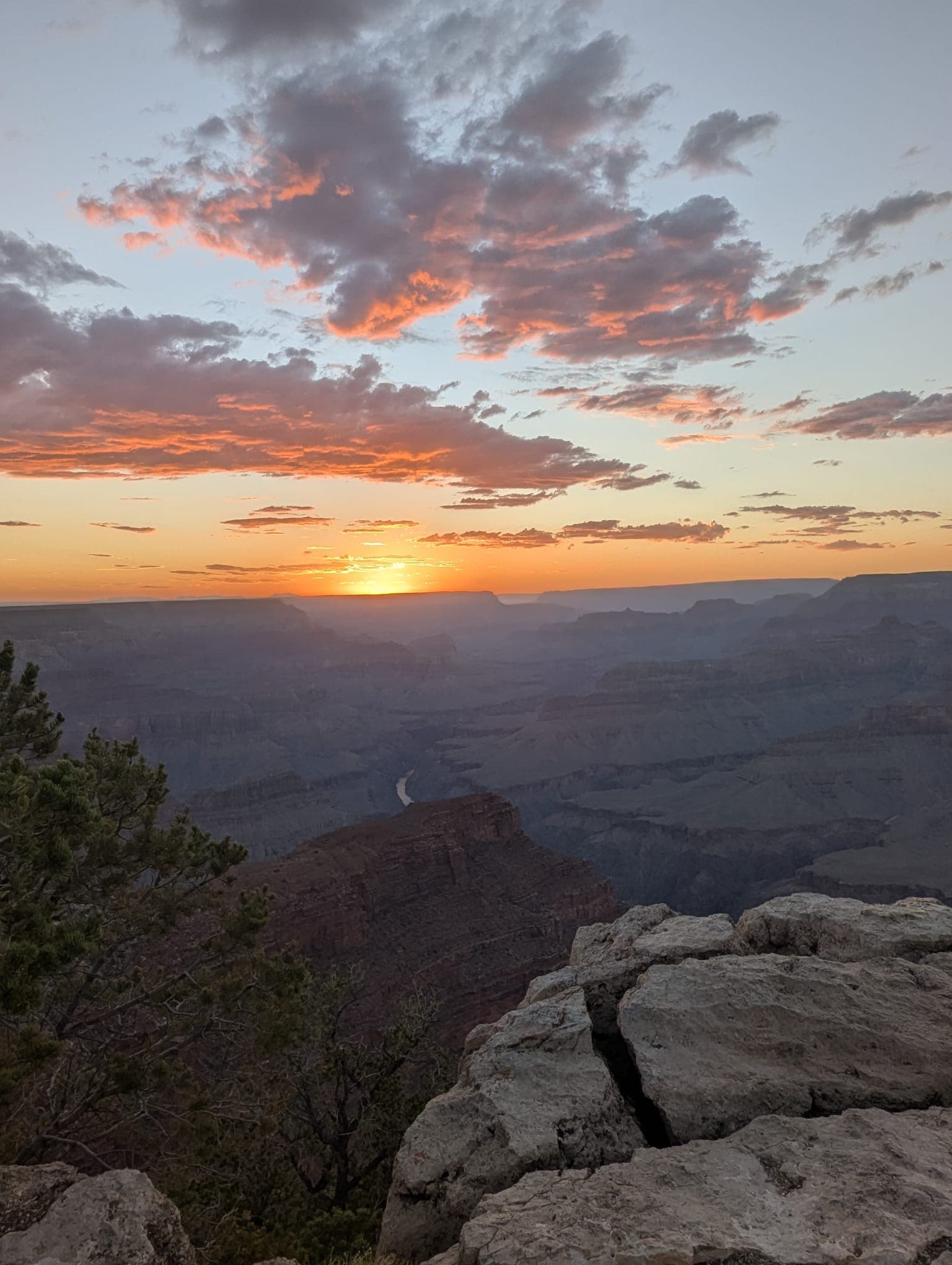
Grand Canyon lodges: every in-park option compared
If you are deciding which Village-area lodge to book (El Tovar, Bright Angel, Kachina, Thunderbird, Maswik), the head-to-head comparison plus how far ahead to book by season.
Read more →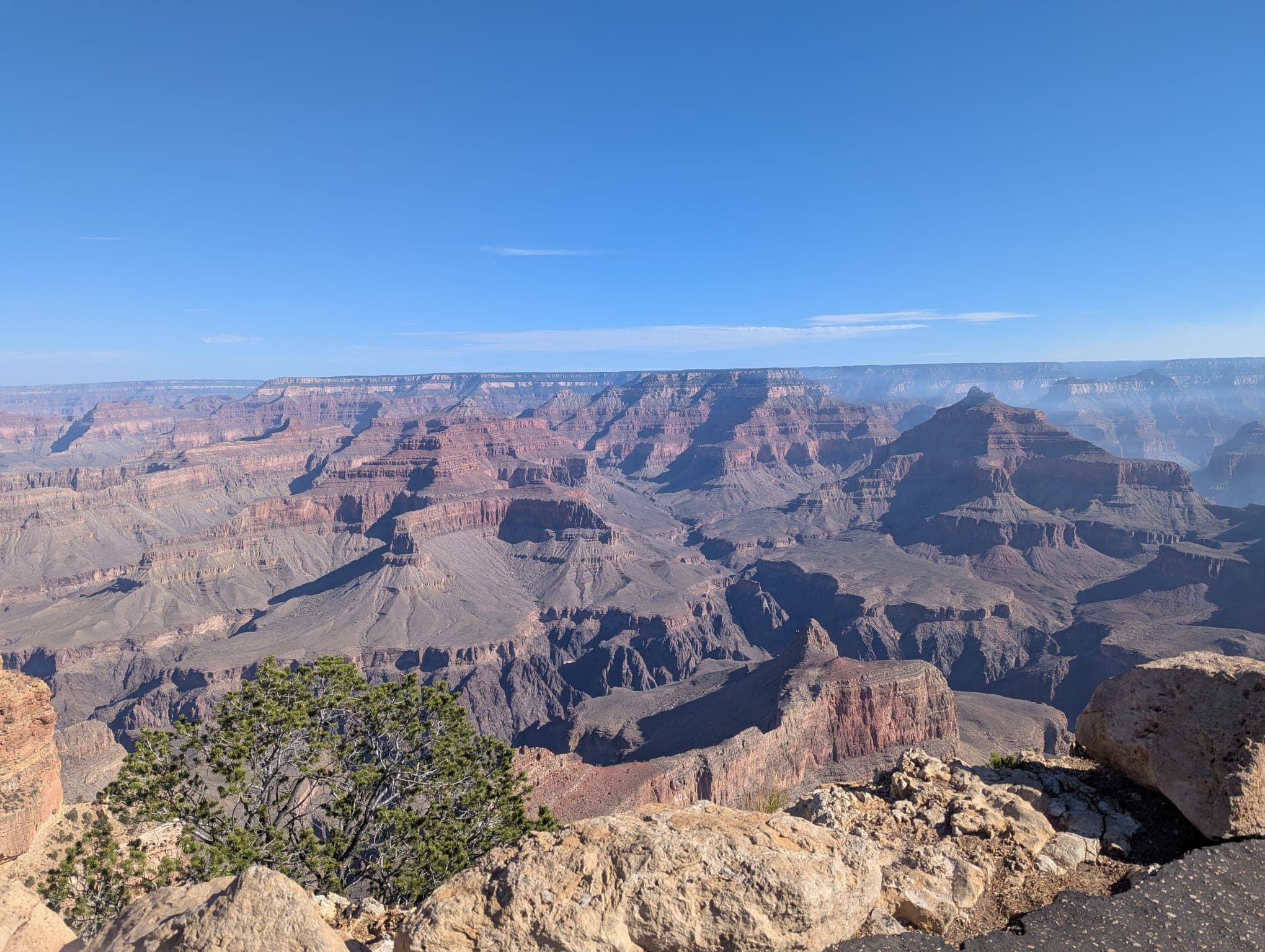
Grand Canyon Visitor Center: practical guide
The other South Rim hub: Mather Point area, where most visitors arrive. Hours, parking, shuttle and first-60-minute plan.
Read more →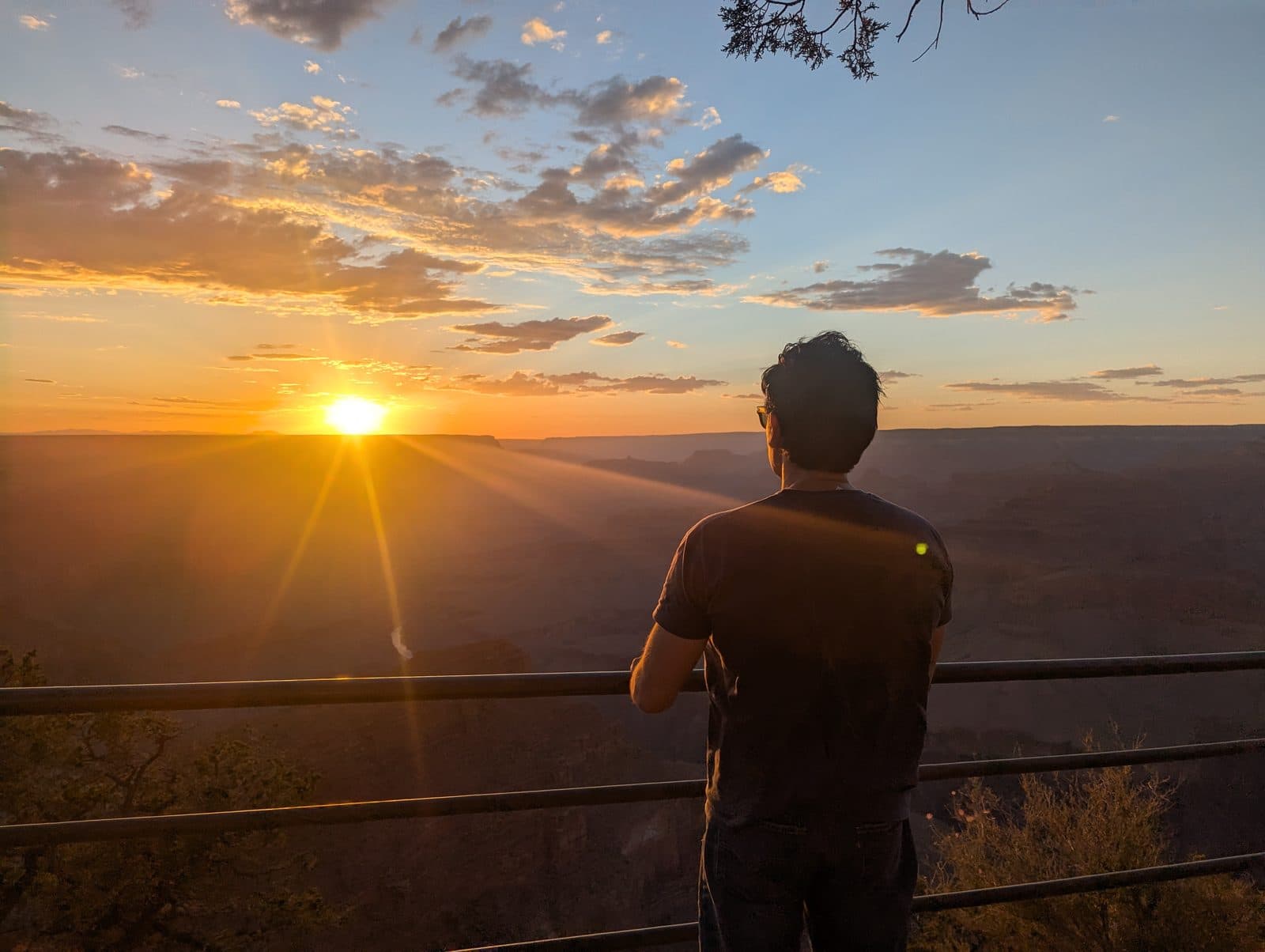
Grand Canyon South Rim viewpoints: which to prioritise
If you have time beyond the Village walking tour, the prioritised viewpoint list for Hermit Road, Desert View Drive and the Rim Trail.
Read more →
Grand Canyon Lodge: the historic North Rim property after the 2025 fire
The other historic lodge in the park, on the North Rim, destroyed by the Dragon Bravo Fire in July 2025. Full property biography and 2026 status.
Read more →