Location
Eagle Point · Grand Canyon West · Hualapai tribal land
Distance from Las Vegas
~105 miles · ~2 hours by road
All-Access Pass (Skywalk included)
$99/person ($114 with tax)
General Admission (no Skywalk)
$67/person
Sunset Pass
$59/person
Kids 5–12 (Skywalk)
FREE
Photography on bridge
Phones OK since May 2026 · cameras and bags in lockers
Bridge length
70 feet · horseshoe shape
Height above Colorado River
~4,000 feet
Operator
Grand Canyon West / Hualapai Tribe (NOT NPS)
What the Skywalk actually is
The Grand Canyon Skywalk is a horseshoe-shaped walkway with a glass floor and glass railings, extending 70 feet (21 metres) out from the canyon edge at Eagle Point, on the West Rim of the Grand Canyon. It sits on Grand Canyon West, a visitor complex owned and operated by the Hualapai Tribe on their sovereign tribal land, about 105 miles by road from Las Vegas.
Two facts that matter before you buy a ticket. First: this is not Grand Canyon National Park. Grand Canyon West is a completely separate destination from the South Rim, managed by the Hualapai Tribe under their own fee structure, no NPS pass applies, the America the Beautiful pass does nothing here. Second: Grand Canyon West and the South Rim are 250 miles apart by road. You cannot do both in a single day from most starting points.
The Skywalk opened in 2007. It extends from a sharp promontory at Eagle Point, with canyon walls dropping away steeply beneath it on both sides. The platform is bolted to solid rock, there are no suspension cables and the structure does not flex. The engineering spec allows for loads many multiples of what any visitor crowd would produce.
What the experience is like (honest account)
From outside the bridge (Eagle Point rim area): this is where you get the photogenic view most people associate with the Skywalk, the glass horseshoe extending out over the canyon with the blue sky behind it and the canyon walls framing the shot. This angle is free once you have the Hualapai Legacy Package, and you can photograph it freely with your own camera. It is one of the best shots at Grand Canyon West and the image used in virtually all Skywalk marketing.
From on the bridge itself: you walk out 70 feet on glass, looking down through the floor at the canyon 4,000 feet below. For most visitors, the first thirty seconds are the most intense, the visual disconnect between the solid floor underfoot and the canyon visible beneath it is real and visceral. The sensation tapers after that. Most visitors complete the loop in under ten minutes.
The honest limitation: without your phone or camera, the experience exists only in memory. Unless you buy the official photographer package (more below), you leave with no personal images from the bridge. For most modern travelers, a significant personal experience they cannot photograph is a diminished one, a real trade-off, not a minor footnote.
A second honest note: the view from on the Skywalk is narrower than the panorama you get standing at Eagle Point's surrounding rim. The glass walls frame one specific angle of canyon rather than the wide spread of walls and river below. The Guano Point viewpoint, included in the Legacy Package with no Skywalk pass needed, offers a broader, arguably more satisfying canyon picture.
Photography on the Skywalk: what changed in May 2026
May 2026 update: the Hualapai Tribe lifted the 18-year ban on smartphones at the Skywalk glass bridge. You can now bring your phone onto the bridge and photograph freely, the glass floor, the canyon 4,000 feet below, selfies, video. This is a significant change from everything written about the Skywalk before 2026.
What is still prohibited on the bridge:
- Cameras with interchangeable lenses (DSLR, mirrorless)
- Action cameras (GoPro, Insta360, DJI Pocket)
- Tripods and monopods
- Backpacks and bags of any size
These items must be stored in lockers at the bridge entry before stepping onto the glass. Staff enforce the remaining equipment restrictions at the entrance , no exceptions.
Your options for photos from the bridge:
- Your own smartphone (free). Permitted on the bridge since May 2026. Shoot as much as you want, the glass floor, the canyon walls, the Colorado River below, portraits, video.
- Official Skywalk photographer. The Hualapai still operate an on-site photography service at the bridge. Packages typically run $20–40 per digital download or print. The photographer works the bridge continuously, useful for shots where you want both people and the full bridge in frame, which is difficult to manage solo.
- Photos from the rim (free, any camera). From Eagle Point's rim area outside the bridge entry, you can photograph the glass horseshoe extending out over the canyon with people visible on the bridge behind the glass. Any camera permitted from this angle.
The South Rim still has no restrictions for any photography equipment at any viewpoint, relevant if you travel with a full camera kit.
Full price breakdown: what you actually pay
Grand Canyon West restructured its ticketing in 2026. The Skywalk is included in the All-Access Pass, not sold as a separate add-on. Current pricing:
| Ticket | Price per person | Includes |
|---|---|---|
| All-Access Pass | $99 ($114 with tax) | Skywalk + zipline + all viewpoints + shuttle |
| General Admission | $67 | All viewpoints + shuttle, Skywalk not included |
| Sunset Pass | $59 | Afternoon/evening access |
| Children 5–12 | FREE for Skywalk | Age proof may be required |
| Children under 5 | FREE | All access |
| Official bridge photos | $20–40 | Purchased at kiosk, optional add-on |
The General Admission gives you Eagle Point (with the view of the Skywalk from outside), Guano Point, Hualapai Ranch, and shuttle transport between all three , without stepping onto the glass bridge. The All-Access Pass adds Skywalk access and the zipline.
If you book a day tour from Las Vegas with Skywalk included, bundled pricing typically runs $100–140 per person for a bus tour, $350+ for a helicopter package. The upside of bundled tours: tribal entry and Skywalk are pre-paid, logistics are handled, and you get hotel pickup. The trade-off: group schedules may compress time at each viewpoint.
How to get to the Grand Canyon Skywalk
Grand Canyon West is at the end of Diamond Bar Road, off US-93, about 25 miles of gravel road from the highway turnoff. The nearest major city is Las Vegas, roughly 105 miles (about 2 hours by car). Phoenix is approximately 220 miles; Flagstaff about 190 miles. There is no public transport from any of these cities.
Two access methods:
- Self-drive. Rental car or own vehicle to the Grand Canyon West terminal. The Diamond Bar Road section is gravel but passable in a standard 2WD vehicle in dry conditions, rough but not 4WD terrain. From the terminal, a Hualapai-operated shuttle (included in the Legacy Package) takes you to Eagle Point, Guano Point, and Hualapai Ranch. Personal vehicles cannot drive to the viewpoints directly.
- Day tour from Las Vegas. The simplest option. Most operators run morning departures, include tribal entry, shuttle to the viewpoints, and return by evening. The Skywalk is typically an optional add-on or bundled depending on the tour tier. Helicopter operators also run West Rim packages; see our Grand Canyon helicopter tours guide for that comparison.
Opening hours, crowds and practical tips
Hours: Grand Canyon West opens at 8 AM daily (closed Christmas Day). Closing time varies by season, typically around sunset: roughly 5 PM in winter and 7 PM in peak summer. Confirm current hours at grandcanyonwest.com before you travel, as schedules shift between seasons.
Best time to arrive: The 8–9 AM window is significantly quieter than midday. Las Vegas bus tours begin arriving around 10 AM, and peak crowds run from 10 AM to 2 PM in summer. Arriving at opening also beats the worst of the heat.
Summer heat: Grand Canyon West sits at roughly 5,000 feet elevation, but temperatures at the rim regularly reach 100–110°F in July and August. Shade between the shuttle stops and viewpoints is limited. Bring more water than you expect to need; kiosks sell water on site but at inflated prices.
What to bring and what to leave behind:
- Closed-toe shoes (required on the bridge). Flip-flops and open sandals are not permitted on the Skywalk glass platform.
- Water: at least 2 litres per person for a full-day visit. More in summer.
- Small bag only. Backpacks and larger bags must go into lockers before stepping onto the bridge. If you carry a camera bag or full daypack, plan to leave it at the locker station.
- Sunscreen and a hat. The shuttle stops and viewpoints are fully exposed. A hat with a brim makes a material difference.
Allow 3–4 hours for the full Grand Canyon West visit: 15–20 minutes on the bridge, 30–45 minutes at each additional viewpoint (Guano Point, Hualapai Ranch), plus shuttle wait times. Budget more time in peak season when the bridge queue and shuttle frequency extend the visit.
Is the Skywalk safe? What actually happened in 2015
The Grand Canyon Skywalk is an engineered structure built to hold up to 800 people simultaneously. It uses a steel cantilever frame with multi-layer tempered glass on the floor and sides, designed by Lochsa Engineering. It has operated since March 2007 without a structural incident.
In 2015, photos circulated online showing what appeared to be a crack in the Skywalk surface, which generated significant alarm. What cracked was the transparent protective coating applied over the structural glass, not the glass itself. This protective layer is a softer surface designed to absorb scratches and wear from foot traffic. When it cracked, it behaved exactly as it was designed to. The structural glass beneath was undamaged. Grand Canyon West confirmed this; outdoor publication Outside Online investigated independently and reached the same conclusion.
If you feel vibration while on the bridge, it is from the movement of other visitors, not structural deflection. The bridge is bolted to solid rock and does not flex visibly under normal loads.
Skywalk vs South Rim: the real decision
This is the most important question for anyone planning a Grand Canyon trip from Las Vegas or Arizona. The answer is clear:
If you have to choose between West Rim + Skywalk and the South Rim, choose the South Rim.
| South Rim (NPS) | West Rim + Skywalk | |
|---|---|---|
| Entry cost | $35/vehicle · 7-day pass | $80–100+/person |
| Photography | Unlimited at all viewpoints | Phones OK since May 2026; cameras in lockers |
| Canyon panorama | World-class (277-mile view) | Dramatic but narrower |
| From Las Vegas | ~4.5 hours by road | ~2 hours by road |
| Facilities | Visitor centers, lodges, restaurants, shuttles | Terminal, shuttles, Hualapai Ranch |
| Managed by | National Park Service | Hualapai Tribe (tribal land) |
| NPS passes valid | Yes | No |
| Novelty factor | Lower (seen everywhere) | High (glass bridge is unique) |
The South Rim is the Grand Canyon most people picture: vast layered walls stretching 277 miles, the Colorado River visible as a silver ribbon far below, a dozen dramatic viewpoints strung along the Rim Trail. The $35/vehicle fee covers seven days of unlimited access. Photography is unrestricted everywhere.
West Rim's real advantage is proximity to Las Vegas (2 hours vs 4.5 hours) and the genuine novelty of the Skywalk. If your trip is anchored in Las Vegas and an overnight near the South Rim is not feasible, the West Rim is the right call for a Grand Canyon experience that day. Go in with calibrated expectations: it is a smaller, more commercial operation than the South Rim, with a narrower canyon view at most points.
See the full Grand Canyon guide for the complete South Rim vs West Rim vs North Rim breakdown.
Skywalk vs helicopter tour: value comparison
If your Grand Canyon West budget reaches $300+, a helicopter landing tour from Las Vegas deserves serious consideration over a bus tour with Skywalk add-on.
A helicopter landing tour descends 4,000 feet into the canyon floor, giving you a view of the walls and the Colorado River that no rim viewpoint, including the Skywalk, can match. You photograph freely during flight and on the canyon floor. The Skywalk is a narrow glass bridge 70 feet long; the helicopter experience is dimensional, moving, and unrestricted. A Papillon landing tour runs $450–600; a Sundance or 5 Star option starts around $350.
The practical split: if you are already on a full-day West Rim bus tour and the Skywalk is a $30 add-on to an existing trip, take it. If you are spending $130+ on a bus tour specifically to do the Skywalk, reconsider whether a $350 helicopter landing is a better use of your Grand Canyon budget.
Book West Rim + Skywalk tours
Day tours from Las Vegas are the most practical option. Both Viator and GetYourGuide aggregate the main operators with real-time availability and instant confirmation.
Grand Canyon West, Hoover Dam Stop, Wi-Fi, Optional Lunch & Skywalk
Las Vegas day tour combining Grand Canyon West (Skywalk access included), Hoover Dam stop and Wi-Fi on board. 10-11 hours, free cancellation. Most popular West Rim tour from Las Vegas.
Grand Canyon West, Hoover Dam Stop, Breakfast, Lunch & Skywalk
Upgraded version with breakfast and lunch included. Same West Rim + Skywalk route from Las Vegas with full meals, Hoover Dam stop, and shuttle to all viewpoints. 10.5 hours.
For helicopter access to the West Rim, see our Grand Canyon helicopter tours guide , helicopter packages typically include the tribal entry fee and optional Skywalk add-on.
Frequently asked questions
Is the Grand Canyon Skywalk worth it?
It depends on your priorities. The Skywalk is worth it if: (a) the novelty of walking on glass over a 4,000-foot drop appeals to you; (b) you want to photograph the experience from your phone, as of May 2026, smartphones are permitted on the glass bridge. It is less worth it if: (a) you shoot with a DSLR, GoPro or any camera other than a phone, as those are still stored in lockers; (b) you are choosing between West Rim and the South Rim, the South Rim delivers more dramatic views, unrestricted photography for all equipment, and a genuine National Park experience for $35 per vehicle vs $67–99+ per person at Grand Canyon West.
Can you take photos on the Grand Canyon Skywalk?
Yes, with your smartphone. As of May 2026, the Hualapai Tribe lifted the 18-year phone ban on the glass bridge. Smartphones are now permitted on the Skywalk. What is still prohibited: cameras (DSLR, mirrorless, GoPro, action cameras), backpacks, bags and tripods must all be stored in lockers before stepping onto the bridge. The official on-site photographer service remains available for professional portraits ($20–40 per package). Photos of the Skywalk from the Eagle Point rim area, the iconic view of the horseshoe extending over the canyon, are free to take with your own camera from that angle.
How much does the Grand Canyon Skywalk cost in 2026?
Grand Canyon West restructured its ticketing in 2026. Current pricing: All-Access Pass $99 per person ($114 with tax, includes Skywalk access and zipline); General Admission $67 per person (viewpoints and shuttle, Skywalk not included); Sunset Pass $59 per person (afternoon/evening access). Children ages 5 to 12 visit the Skywalk free. If you book a Las Vegas day tour that includes the Skywalk, bundled prices typically start at $100–140 per person for a bus tour, $350+ for a helicopter package.
How do you get to the Grand Canyon Skywalk?
Grand Canyon West sits at the end of Diamond Bar Road near Peach Springs, Arizona, roughly 105 miles from Las Vegas (about 2 hours by road). Most visitors arrive on day tours from Las Vegas. If you self-drive, park at the Grand Canyon West terminal and take a Hualapai-operated shuttle to Eagle Point where the Skywalk is located. Personal vehicles cannot drive to the viewpoints directly. There is no public transport from any city; a rental car or tour package is required.
How long is the Grand Canyon Skywalk?
The Skywalk walkway extends 70 feet (21 metres) from the canyon rim in a horseshoe (U-shape) with 4-foot-high glass railings on both sides. The glass floor and walls give an unobstructed view straight down to the Colorado River approximately 4,000 feet (1,220 metres) below. The full loop takes 5–10 minutes to walk; most visitors spend 15–20 minutes total on the bridge platform. There is no minimum or maximum time limit once you are on the bridge.
Is the Grand Canyon Skywalk part of the National Park?
No. The Skywalk is owned and operated by the Hualapai Tribe on their sovereign tribal land at Grand Canyon West. It is not part of Grand Canyon National Park and not managed by the National Park Service (NPS). A National Park pass (America the Beautiful, etc.) does not apply here: Grand Canyon West has its own tribal entry fee structure. The South Rim and Grand Canyon West are completely separate destinations roughly 250 miles apart by road.
What else is at Grand Canyon West besides the Skywalk?
Grand Canyon West includes three main viewpoints covered by the Hualapai Legacy Package: Eagle Point (where the Skywalk is), Guano Point (a natural promontory with panoramic views and good Colorado River visibility), and Hualapai Ranch (western-theme area with cowboy shows). Guano Point is arguably the best free viewpoint at the complex, wider panorama than Eagle Point, and no extra fee beyond the Legacy Package. None of these viewpoints match the South Rim in scale or depth of experience.
Can you see the Colorado River from the Skywalk?
Yes, the Colorado River is visible roughly 4,000 feet below the Skywalk platform on a clear day. The river appears as a narrow ribbon from that height. The view from Guano Point at Grand Canyon West offers a wider and arguably more satisfying Colorado River panorama than the Skywalk bridge, and it is included in the standard Hualapai Legacy Package at no extra cost.
What is the Grand Canyon glasswalk?
"Glasswalk" and "glass walk Grand Canyon" are informal names used interchangeably for the Grand Canyon Skywalk, the U-shaped glass-floor bridge at Eagle Point on the West Rim. The Hualapai Tribe and the official Grand Canyon West website use the name "Skywalk," not "glasswalk," but both terms refer to exactly the same attraction: a 70-foot glass bridge extending 4,000 feet above the Colorado River. The design features a glass floor and glass railings, giving the impression of walking on air over the canyon.
Is the Grand Canyon glass walk the same as the Skywalk?
Yes. The Grand Canyon glass walk, Grand Canyon glasswalk, glass bridge Grand Canyon, and Grand Canyon Skywalk are all names for the same structure at Eagle Point, Grand Canyon West. It is a horseshoe-shaped walkway with a glass floor and glass walls, operated by the Hualapai Tribe. Entry to the glass bridge requires the All-Access Pass ($99/person, $114 with tax). The glass walk is not part of Grand Canyon National Park, and NPS passes do not apply.
Has the Grand Canyon Skywalk ever cracked?
In 2015 photos circulated showing what appeared to be a crack in the Skywalk surface. What cracked was the transparent protective coating applied over the structural glass, not the glass itself. The protective layer is a softer surface designed to absorb scratches and wear; when it cracked, it behaved exactly as intended. The glass beneath was undamaged. Grand Canyon West confirmed this and outdoor publication Outside Online investigated and reached the same conclusion. The Skywalk has operated without a structural incident since it opened in 2007 and is engineered to hold up to 800 people simultaneously.
What should I wear to the Grand Canyon Skywalk?
Closed-toe shoes are required on the glass bridge itself: flip-flops and open sandals are not permitted on the Skywalk platform. Beyond that, dress for the desert: lightweight, breathable clothing; a hat; and sunglasses. Summer temperatures at Grand Canyon West regularly exceed 100°F and the viewpoints between shuttle stops offer little shade. Bring significantly more water than you think you need. Backpacks and bags must be stored in lockers before stepping onto the bridge, so carry only what fits in a small personal item or leave bags at the locker station.
What time does the Grand Canyon Skywalk open?
Grand Canyon West opens at 8 AM daily (closed Christmas Day). Closing time varies by season, typically around sunset: roughly 5 PM in winter and 7 PM in summer, but confirm on the official Grand Canyon West website before your visit as hours can shift. The earliest shuttle to Eagle Point departs shortly after the 8 AM gate opening. Arriving close to opening is strongly recommended in summer to beat peak heat and the Las Vegas tour bus crowds that arrive from 10 AM onward.
Written by Diego Fresno, travel writer and independent publisher specialising in the American Southwest. Grand Canyon West and the Skywalk visited in person in July 2025. Prices and Hualapai Tribe policies verified against the Grand Canyon West official site and Las Vegas tour operator listings in July 2026.. Verified quarterly: last review April 2026. About the author →
Related guides
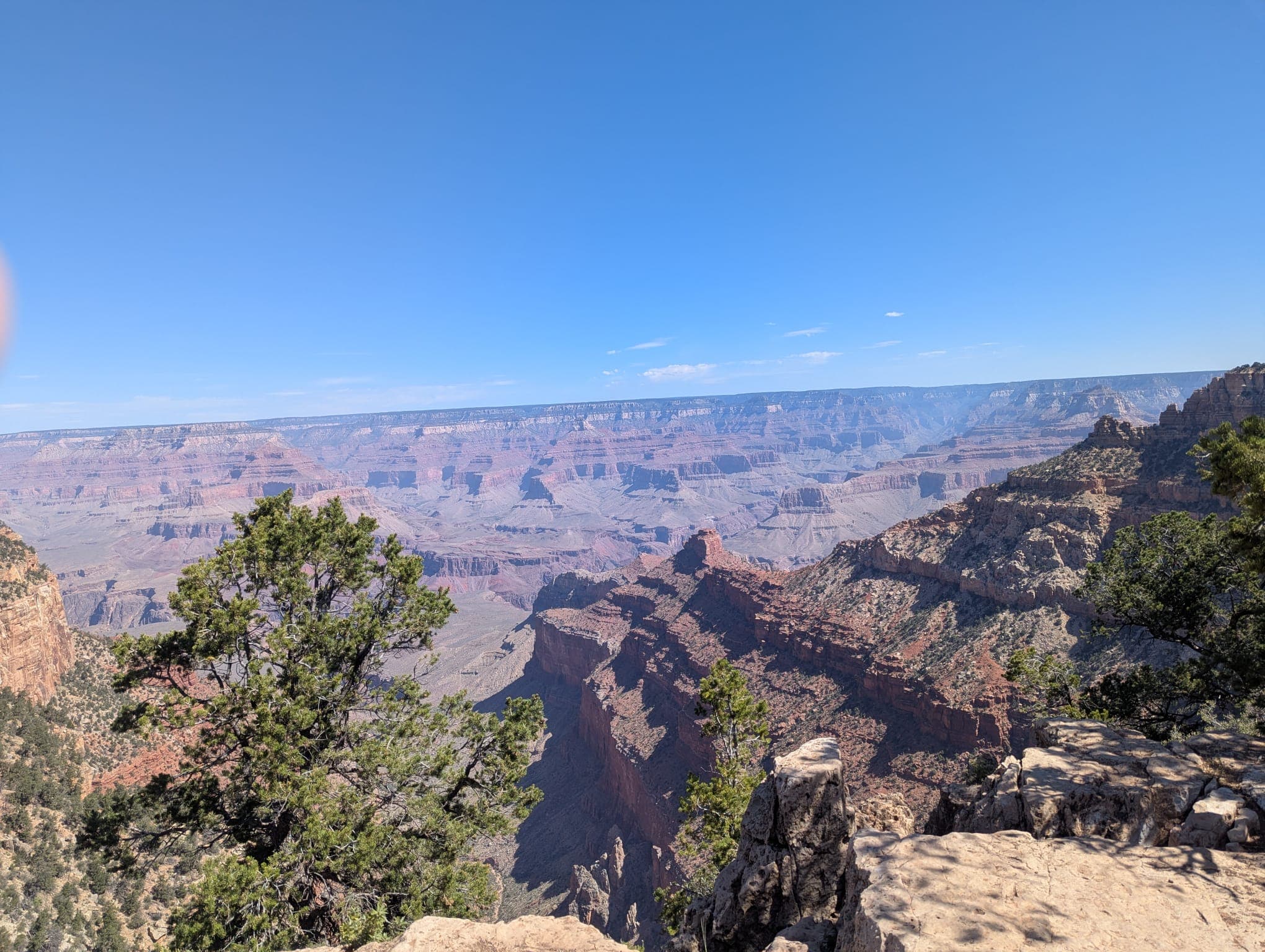
Grand Canyon: the complete guide
South Rim vs West Rim vs North Rim, how to get there from Las Vegas, helicopter tours ranked, best time to visit.
Read more →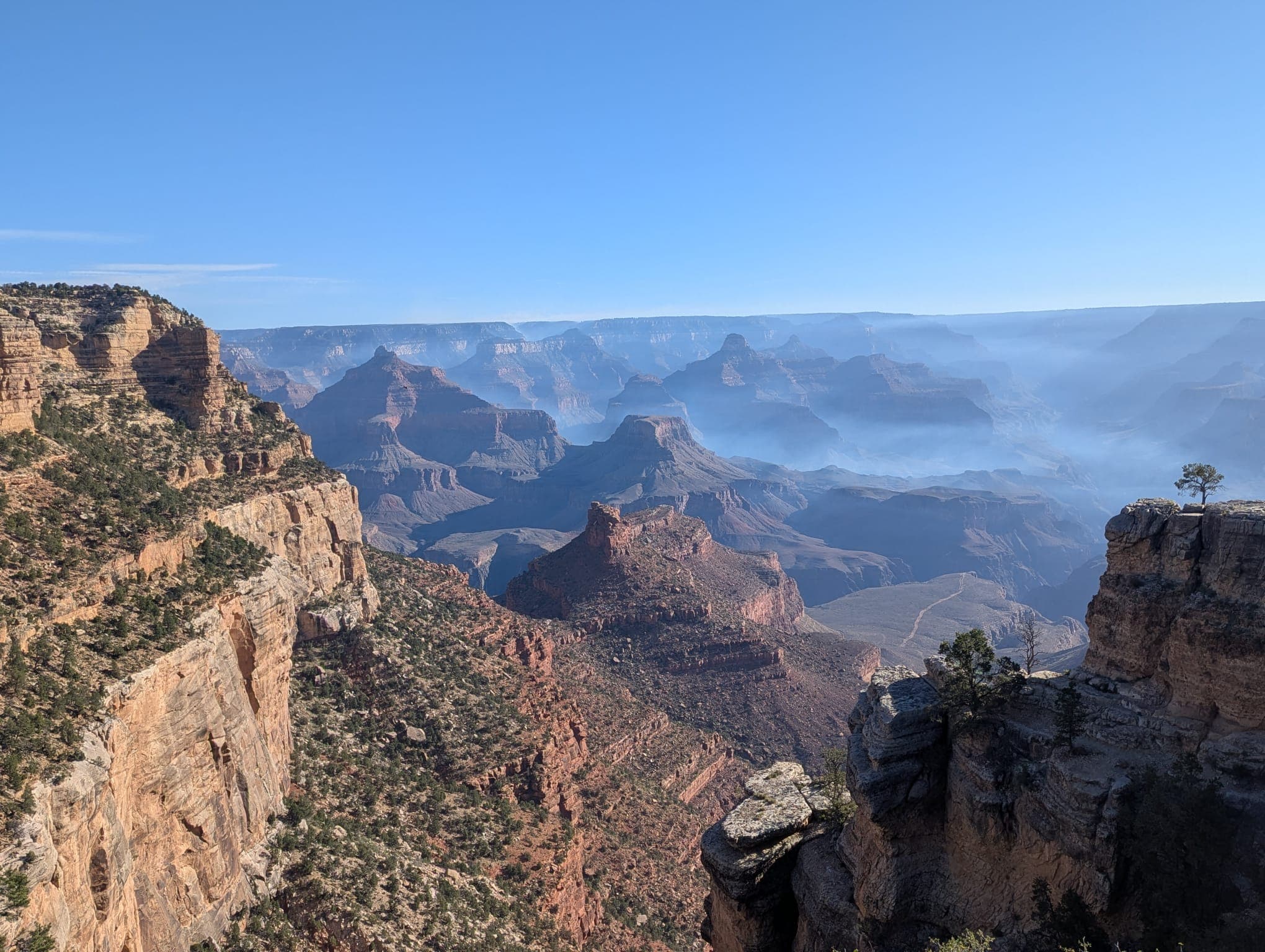
Grand Canyon helicopter tours from Las Vegas
Papillon, Maverick, Sundance and 5 Star compared: landing tours, air-only options, real 2026 prices.
Read more →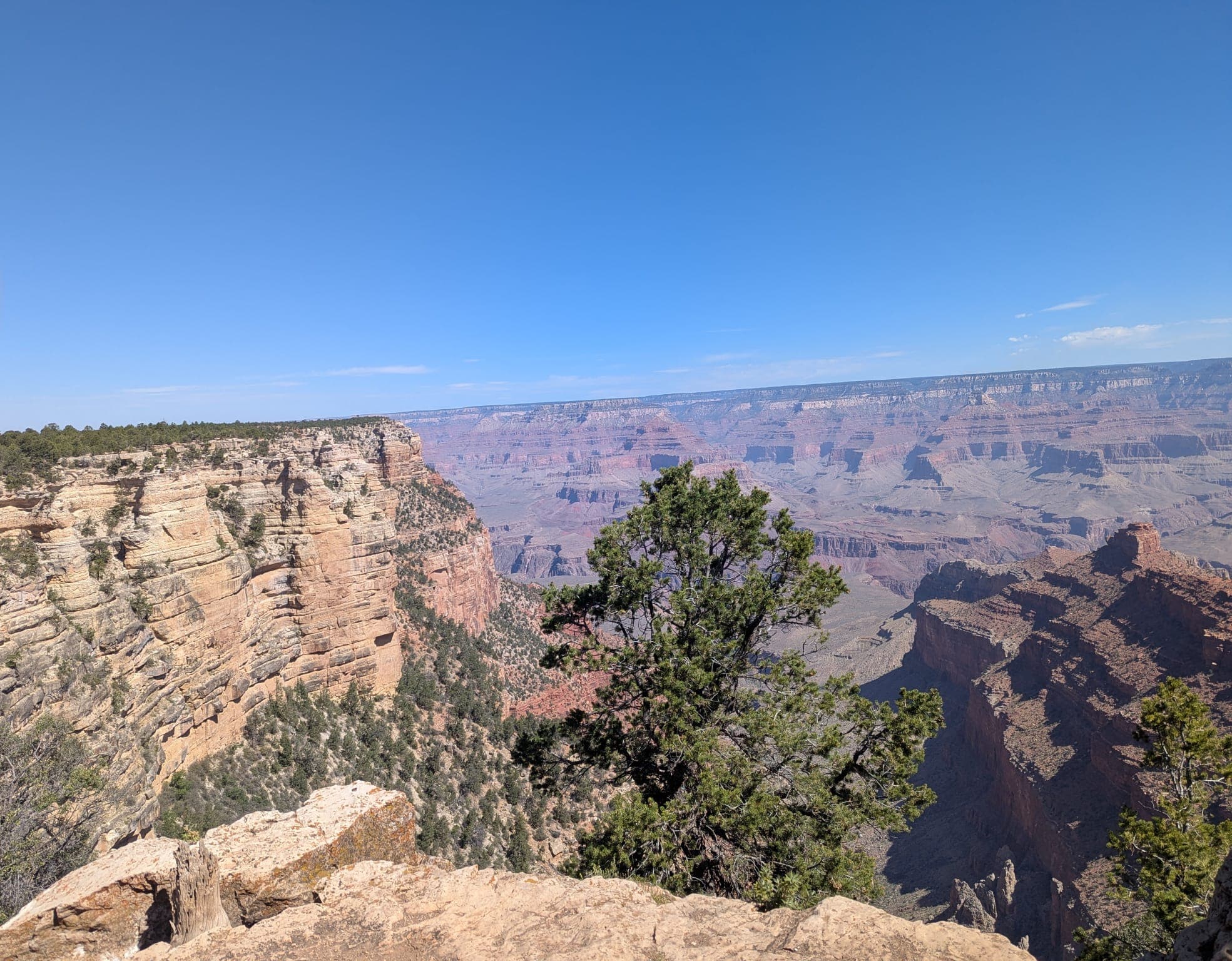
Grand Canyon visitor centers (South Rim)
Every official NPS visitor stop mapped: Mather Point, Verkamp's, Yavapai Geology Museum, Desert View Watchtower.
Read more →