Upper Antelope Canyon is the one with the light beams: narrow vertical shafts of sunlight that cut through the slot at midday between March and October. It sits on Navajo Nation land just off Route 98 near Page, Arizona, and entry is only possible on a guided tour with one of four authorized Navajo operators. Tours run about one hour inside the canyon, prices start at $99, and the 11 am slot books out weeks ahead during peak season. This guide covers all of that: plus when light beams actually appear, which operator to choose, and whether Upper or Lower is right for you.
Location
22 S Lake Powell Blvd, Page, AZ
Price range
$99–$170 per person (all-in)
Duration
~60 min inside + 30–45 min check-in
Light beams
March–October · 10 am–1 pm · best at 11 am
Tripods
Not allowed (banned since 2019)
Book ahead
4–8 weeks for summer · 1–2 weeks off-season
What makes Upper Antelope Canyon different?
Upper Antelope Canyon is a narrow slot canyon entered from above through a crack in the plateau, with a flat sandy floor and walls that glow orange and red. It is famous for vertical light beams visible at midday in warmer months.
The canyon is about 450 feet (137 metres) long and varies from one to three metres wide. You walk in on a flat, sandy floor: there are no steps, ladders, or scrambling. The walls rise 30–40 metres overhead, worn smooth by centuries of flash floods into wave-like curves. The Navajo name is Tse' bighannilini: "the place where water runs through rocks."
Compared to Lower Antelope Canyon, Upper is:
- More accessible. The flat walk is suitable for strollers, wheelchairs (with assistance), and visitors who cannot manage stairs. Lower requires descending and ascending metal staircases.
- More crowded at peak times. Upper is the more famous of the two and draws larger groups, especially at the 11 am light-beam slot.
- More restrictive for photographers. Tripods have been banned since 2019. Lower still allows them.
- Slightly more expensive. Upper tours typically start at $99–$120; Lower starts at $75–$80.
| Feature | Upper Antelope | Lower Antelope |
|---|---|---|
| Access | Flat walk, no stairs | Metal staircases, uneven floor |
| Light beams | Yes: midday, March–Oct | No direct beams |
| Tripods | Not allowed | Allowed |
| Group size | 8–20 people | 8–15 people |
| Price (from) | $99 | $75 |
| Book ahead | 4–8 weeks (summer) | 1–3 weeks |
Full breakdown with photography tips and operator details: Upper vs Lower Antelope Canyon.
The light beams: when and how to see them
The light beams in Upper Antelope Canyon appear from late March through mid-October, between roughly 10 am and 1 pm, when the sun is high enough to angle directly down through the narrow opening above. The 11 am slot gives the strongest beams.
The beams form when sunlight enters the narrow crack at the top of the canyon and hits suspended sand particles in the air: the guides stir the sand at photo spots to make the beams more visible. The effect depends on the sun being nearly overhead:
- March to October: Beams are visible daily at midday. Strongest in summer (sun is highest). The 11 am slot gives the most vertical, most dramatic beams.
- Around the summer solstice (mid-June): Peak beam intensity. The most sought-after dates of the year. Book 10–12 weeks ahead.
- November to February: The sun never rises high enough to produce visible beams. The canyon is still beautiful but you will not see the shafts of light in photographs.
Practical note: Guides stir the sand intentionally at designated photo spots to amplify the beam effect. Even at the 11 am slot, the beams are not a permanent fixture: they appear in bursts as the sand settles and rises. You get multiple opportunities at different spots throughout the walk.
The 6 authorized operators
Six Navajo-owned operators are authorized to run tours in Upper Antelope Canyon: Antelope Canyon Tours (ACT), Adventurous Antelope Canyon Tours (AACT), Antelope Canyon Navajo Tours (ACNT), Antelope Slot Canyon Tours, Tse Bighanilini Tours, and Antelope Hogann Tours. All operate under the same Navajo Nation Parks permit system.
All six are Navajo-owned and operate under authorization from the Navajo Nation. The differences are in group size, booking platforms, and pricing:
- Antelope Canyon Tours (ACT): the largest operator, based at 22 S Lake Powell Blvd. Runs the highest volume of tours. Books via their website and Viator. From $85 (standard tour); higher for midday slots.
- Adventurous Antelope Canyon Tours (AACT): popular option on Viator with 2,000+ reviews. The most widely booked on third-party platforms. From $154; free cancellation available.
- Antelope Canyon Navajo Tours (ACNT): one of the original operators, runs smaller groups. Books primarily direct via navajotours.com. From $80.
- Antelope Slot Canyon Tours: smallest of the four, known for smaller group sizes. Available on Viator. From $99.
All four operators follow identical Navajo National Parks rules: no tripods, no solo entry, mandatory guided escort, $15 Navajo entry fee (included in all tour prices). The canyon walk itself is the same regardless of operator.
For a full comparison of all six Navajo-authorized canyon operators across both Upper and Lower sections, see the complete operator guide.
Best Upper Antelope Canyon tours to book now
The most reviewed Upper Antelope Canyon tour on Viator is the AACT tour at $154 with free cancellation. Budget options start at $99 with Antelope Slot Canyon Tours.
Upper Antelope Canyon Tour: AACT
Guided tour inside Upper Antelope Canyon with Adventurous Antelope Canyon Tours (AACT). 1 hour 20 minutes inside the canyon. Free cancellation up to 24 hours before. The most flexible Upper Canyon option on Viator: you can book and cancel if your plans change. Navajo entry fee included.
Upper Antelope Canyon Guided Tour: Select Ticket
Guided Upper Antelope Canyon tour with Antelope Slot Canyon Tours. The lowest-priced Upper Canyon option on Viator. Known for smaller groups (better for photos). Non-refundable: book when you are certain of your dates. Ages 8 and up. Navajo entry fee included.
How to book and what to expect
Book Upper Antelope Canyon 4 to 8 weeks in advance for summer visits, selecting the 11 am slot for light beams. Arrive 30 minutes before your tour time and bring only small bags: there is no luggage storage inside.
Booking strategy:
- Peak season (May–September): Book the 11 am slot 6–8 weeks ahead for weekends, 4–6 weeks for weekdays. If sold out, check Viator daily at 6–7 am Mountain Time: cancellations appear overnight and fill by mid-morning.
- Shoulder season (March–April, October): 2–4 weeks ahead is usually sufficient. Light beams are still visible and crowds are smaller.
- Off-season (November–February): Often bookable 1–2 weeks ahead, sometimes same week. No light beams but the cheapest prices and fewest crowds.
On the day: The entrance is at 22 S Lake Powell Blvd, Page, AZ 86040: a short drive or 10-minute walk from most Page hotels. Arrive 30 minutes before your slot. Tours depart on time; late arrivals may lose their spot without a refund. Wear closed-toe shoes (fine sand on the floor). Bring a water bottle. Large backpacks are not permitted inside; leave them in your car.
Photography inside: Guides stop the group at the best light-beam spots and stir the sand to enhance the effect. They will position you and suggest camera settings (usually: exposure +1 to +2 stops above auto). Phone cameras in portrait or manual mode work well. No flash, no tripod, no selfie sticks with extendable handles.
Is Upper Antelope Canyon worth it?
Yes for most visitors, especially if you visit between March and October and book the 11 am slot. The one-hour canyon walk is a genuine once-in-a-lifetime experience. The main trade-off vs Lower Canyon is price, crowds, and the tripod ban.
One independent travel blog ranking near the top of Google for this keyword argues you should skip Upper Canyon. Their objection: the crowds, the herding, the sense of being rushed through for a photo. Those are real trade-offs. But they apply equally to many of the world's most iconic natural sites, and most visitors report the experience as one of the highlights of their Southwest trip.
The honest case for Upper:
- The light beams are genuinely unlike anything else in nature. Photographs do not fully capture the experience of standing in one.
- At $99–$154, it is not an expensive experience relative to other Arizona attractions. See the full Antelope Canyon pricing breakdown for current rates.
- The flat, accessible path means it is one of the few iconic natural wonders that works for visitors with mobility limitations.
The honest case to consider Lower instead:
- You want to use a tripod or spend longer at specific spots.
- You are visiting November–February (no beams anyway).
- You prefer smaller groups and more flexibility.
If budget and time allow, do both: they are 7 minutes apart by car and require separate bookings. The morning/afternoon split works well: Upper at 9 am, Lower at 2 pm, or vice versa. See the full Upper vs Lower comparison for the detailed breakdown.
Frequently asked questions
Is Upper Antelope Canyon better than Lower?
Upper has the famous vertical light beams (March–October, midday only) and a completely flat, easy walk. Lower Canyon does not allow tripods either, has smaller groups, more geological variety, and a lower price. Neither is objectively better: they are genuinely different experiences. Most first-time visitors prefer Upper for the iconic photos; most photographers prefer Lower for the flexibility. The two entrances are 7 minutes apart by car, and many visitors do both in the same day.
What time is best to see the light beams in Upper Antelope Canyon?
The light beams appear when the sun is nearly overhead: roughly 10 am to 1 pm, with peak intensity around 11 am to noon. They are most dramatic from late March through late September. The clearest and most vertical beams occur around the summer solstice (mid-June). From November through February the sun is too low in the sky to produce beams: you see the canyon but not the beams. The 11 am tour slot sells out weeks in advance during summer; book that slot early or accept the 9 am alternative which still has good light.
How far in advance should you book Upper Antelope Canyon?
Book 4 to 12 weeks in advance for peak season (May–September). The 11 am slot sells out fastest: often 6 to 8 weeks ahead for weekends. Off-season (November–February) you can sometimes book a week ahead or even the day before. Cancellations on Viator appear daily; checking at 6–7 am Page time catches same-week slots that opened overnight.
How long is an Upper Antelope Canyon tour?
The guided walk inside the canyon takes approximately 60 minutes. Add 30–45 minutes for check-in and the shuttle or walk to the entrance. Total time on-site is typically 90–120 minutes. Tours move at a steady pace with photo stops; the path is flat and about 450 feet long (136 metres).
Can you use a tripod in Upper Antelope Canyon?
No. Tripods have been banned across all Antelope Canyon sections since 2019. The path is narrow (1 to 3 metres wide in places) and the operators found tripods created safety risks as groups crossed in tight sections. Phone and hand-held cameras are fully permitted. Lower Canyon does not allow tripods either, but it has more geological variety, smaller groups, and a lower price.
What is the entrance fee for Upper Antelope Canyon?
There is no separate entrance fee you pay at the gate. The $15 per-person Navajo Nation recreation fee is included in the tour price by all authorized operators. What you pay on Viator or directly with the operator is the all-in price: tour + Navajo fee. There are no add-on fees at the entrance.
Which months have no light beams in Upper Antelope Canyon?
Light beams are absent or very faint from November through February. During those months the sun never rises high enough to angle directly down through the narrow slot opening. You still see the canyon (the sandstone colours and wave-like formations are beautiful year-round) but the signature vertical shafts of light are not visible. If light beams are your main reason for visiting, go between March and October.
How many people are in an Upper Antelope Canyon tour group?
Standard tours run 8 to 20 people per group. The larger operators (Antelope Canyon Tours, AACT) run groups at the upper end of that range. Antelope Canyon Navajo Tours and Antelope Slot Canyon Tours tend to offer smaller groups (8–12). Smaller groups mean more time at each photo spot and less jostling in the narrow sections.
What is the Navajo name for Upper Antelope Canyon?
Upper Antelope Canyon is called Tse' bighannilini in Navajo, which translates roughly as "the place where water runs through rocks." It was named for the flash floods that carved the passage over millions of years, not for the antelope, though pronghorn antelope do graze the surrounding plateau. The canyon itself was unknown to outsiders until the 1930s.
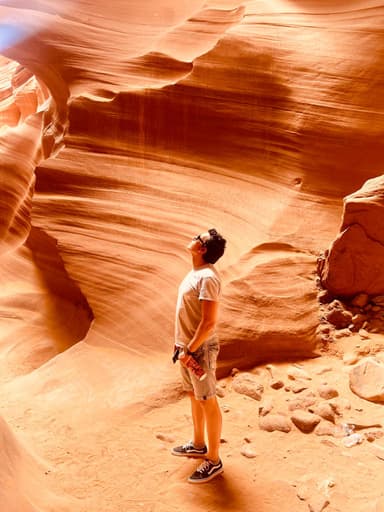
Written by Diego Fresno, travel writer and independent publisher specialising in the American Southwest. This guide draws on multiple visits to Antelope Canyon, current Viator and operator pricing cross-checked in July 2026, and Navajo National Parks official rules.. Verified quarterly: last review April 2026. About the author →
Related guides
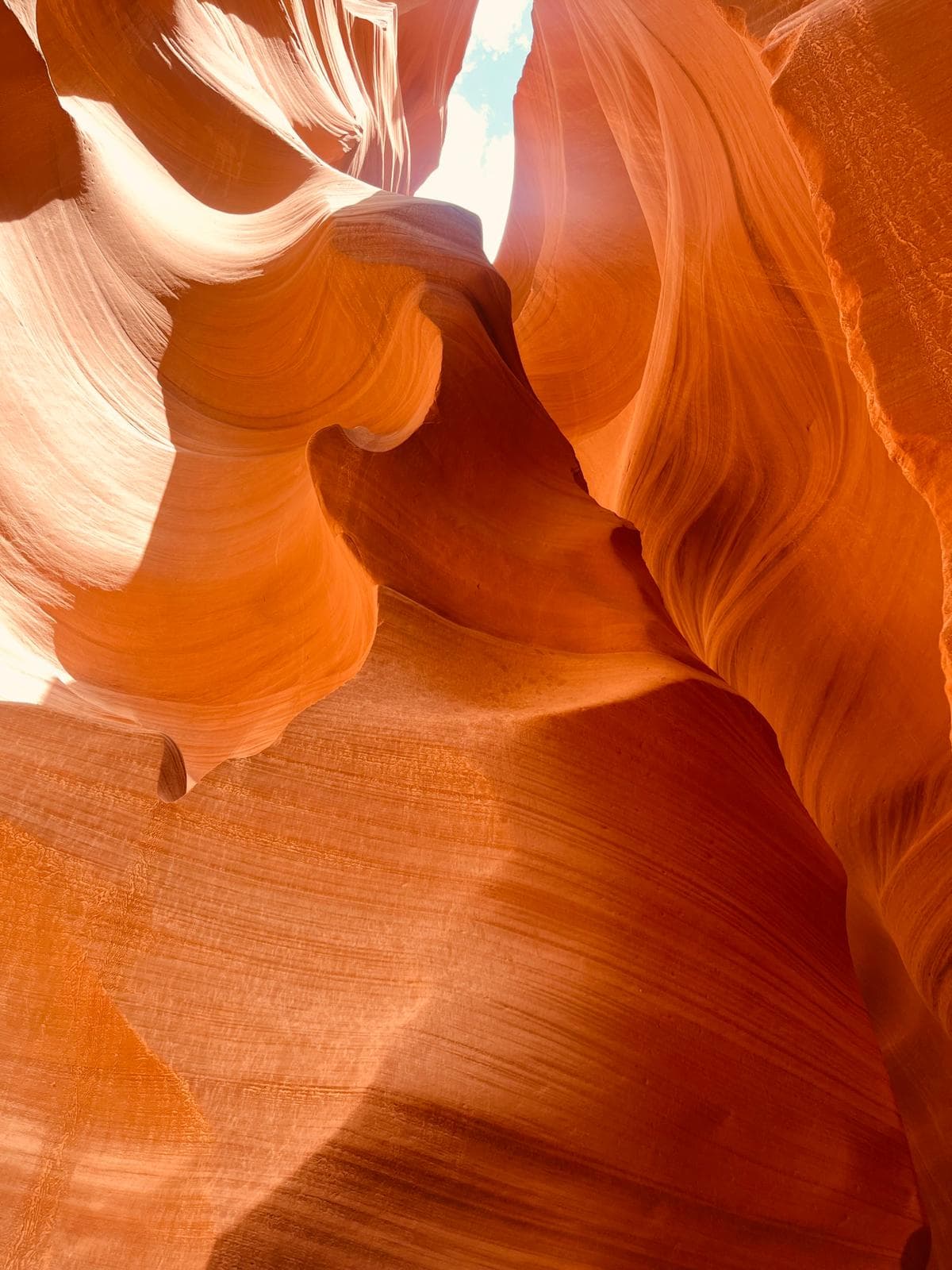
Lower Antelope Canyon Tours 2026
Ken's Tours vs Dixie Ellis, tripod rules, prices from $75, and why photographers often prefer Lower over Upper.
Read more →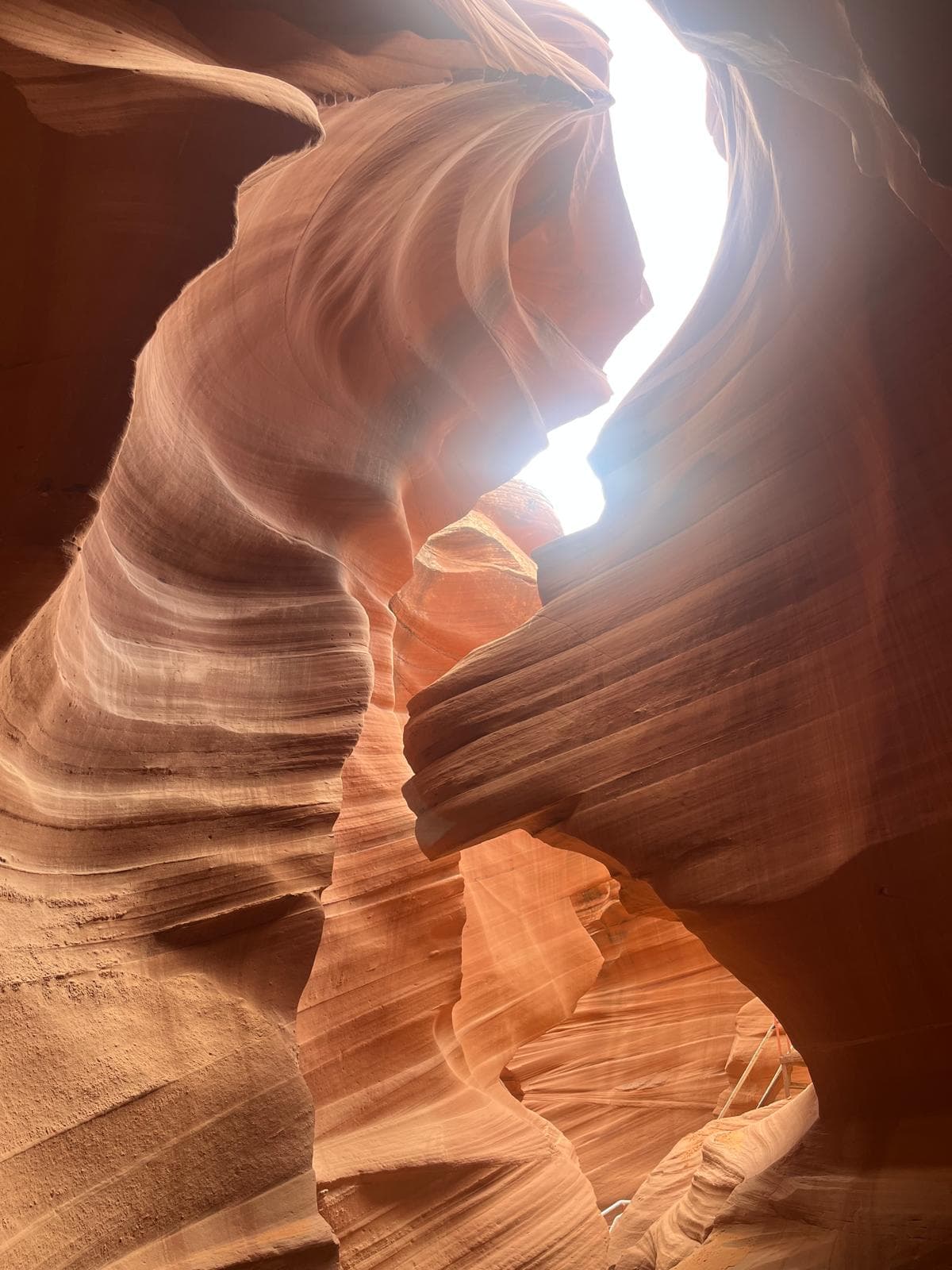
Upper vs Lower Antelope Canyon
Side-by-side comparison of access, photography, crowd levels, prices, and the best time to visit each section.
Read more →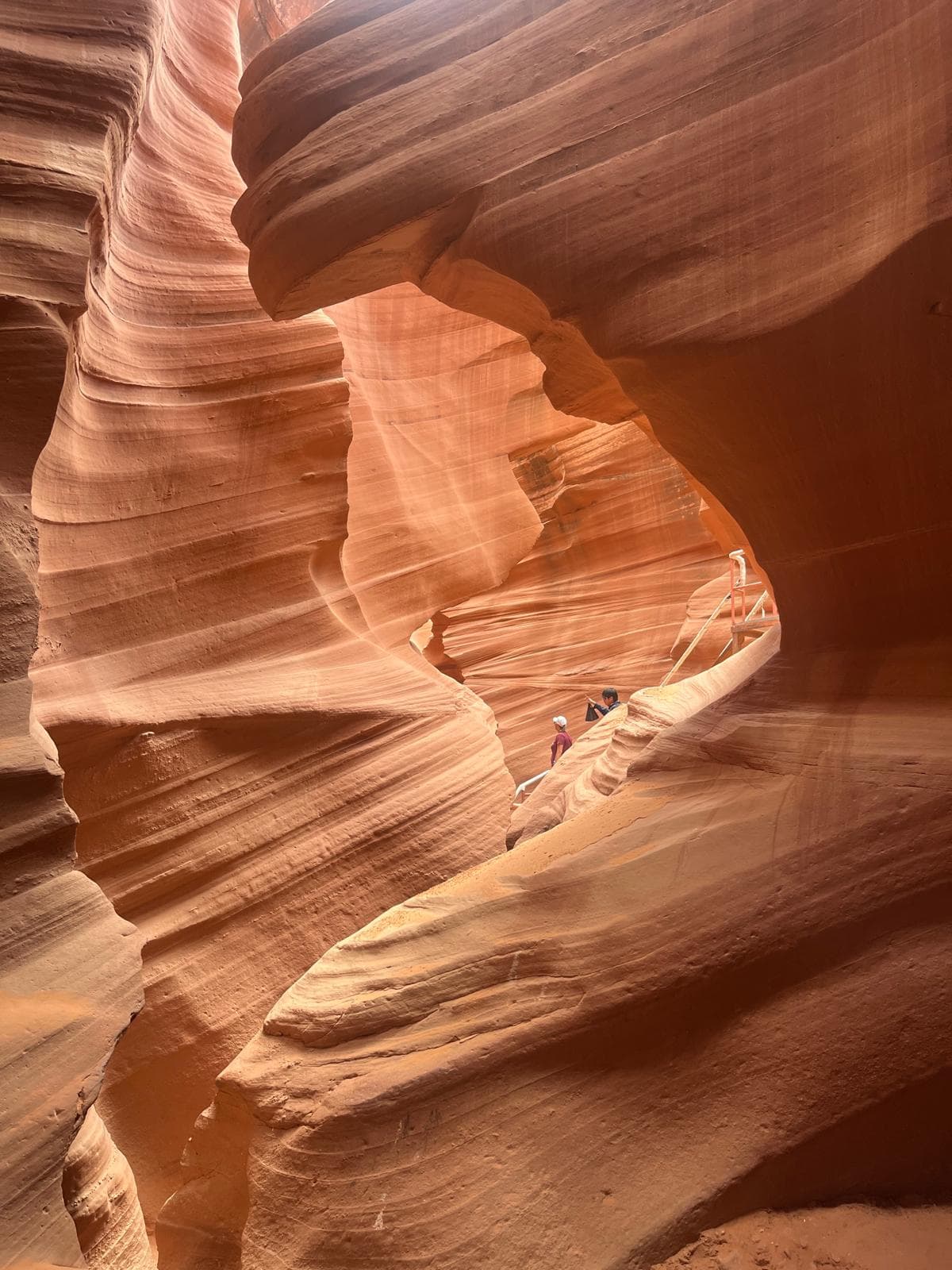
All 6 Navajo-authorised operators compared
Complete table of every authorized operator for both Upper and Lower, with prices, group sizes, and booking links.
Read more →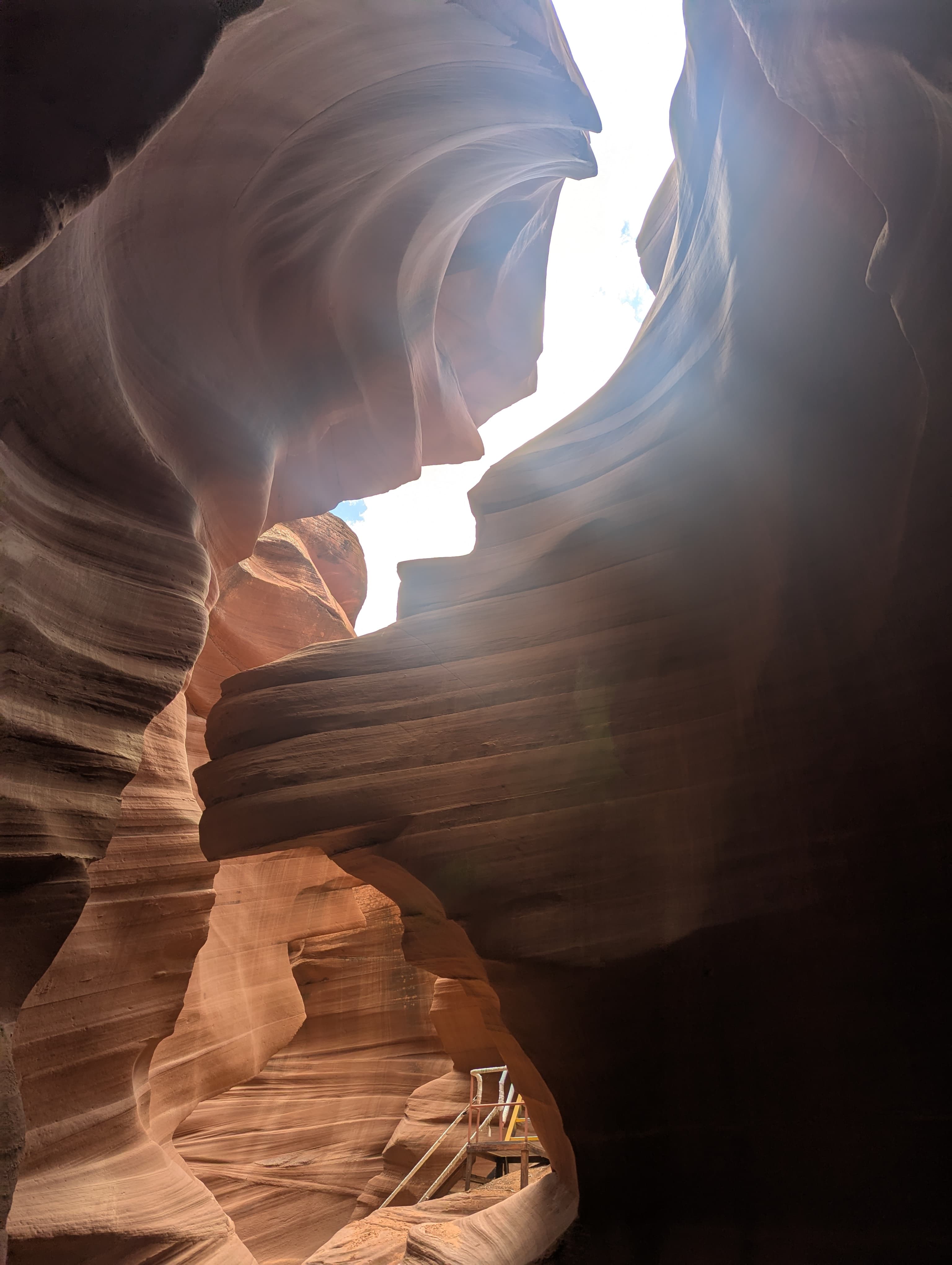
Antelope Canyon: the complete 2026 guide
Start here for the full overview: sections, permits, best time to visit, and how the canyon was formed.
Read more →