There are exactly two helicopter operators at the South Rim, two routes to choose between, and one important restriction that surprises most visitors: no landings inside the park. Grand Canyon South Rim helicopter tours fly air-only over the Dragon Corridor (the deepest, most dramatic section of the canyon), departing from Tusayan Airport, 15 minutes south of Grand Canyon Village. Here is what the tours actually cover, what the 2026 prices look like with hidden fees included, and which operator is worth the premium.
Price range
$259–$398 per adult
Tour lengths
25-30 min or 45-50 min
Operators
Maverick + Papillon (both from Tusayan)
Canyon landing
Not permitted (NPS restriction)
Departure airport
Tusayan, AZ: 15 min from Village
Best for
Visitors already at the South Rim
What is a South Rim helicopter tour?
A South Rim helicopter tour is an air-only flight departing from Grand Canyon National Park Airport (KGCN) in Tusayan, Arizona. The helicopter flies over the canyon (through and along the Dragon Corridor) and returns to the same airport. You never land inside the canyon: the National Park Service prohibits helicopter landings within Grand Canyon National Park boundaries.
This is a crucial distinction if you have been researching Las Vegas helicopter tours, which land inside the canyon at the West Rim (on Hualapai Tribe land, outside the NPS boundary). The South Rim experience is fundamentally different: shorter flight time, no champagne landing on the canyon floor, different angle on the canyon (wider, more panoramic than the West Rim), and a different departure logistics (Tusayan, not Las Vegas).
The target audience is visitors who are already staying at the South Rim (at Grand Canyon Village, Tusayan, or doing a road trip) and want an aerial perspective to complement their rim visit. You are not flying from a city: you are adding a 2-3 hour experience to a day already at the park.
The two routes: 25-min vs 45-min
Both operators offer two flight lengths. The route is the same airspace (the Dragon Corridor); the longer tour simply extends it.
| 25-30 min tour | 45-50 min tour | |
|---|---|---|
| Flight time | 25–30 minutes in the air | 45–50 minutes in the air |
| Total time (incl. check-in) | Approx 2.5 hours door-to-door | Approx 3–3.5 hours door-to-door |
| Route covered | Core Dragon Corridor section | Dragon Corridor + extended canyon sections |
| Papillon price | From $259 (North Canyon) | From $354 (45-min tour) |
| Maverick price | From $369 (Canyon Dancer) | From $398 (extended flight) |
| Landing inside canyon | No (NPS restriction) | No (NPS restriction) |
| Recommended for | Tight schedules or budget constraints | First-time visitors, photographers |
For most first-time visitors, the 45-minute tour is worth the additional cost. The extra 20 minutes extends the flight over a wider section of the canyon, and the price difference between Papillon's 25-min ($259) and 45-min ($354) tours is $95, relatively small for the experience gain. The 25-minute tour makes sense if your schedule is tight (a long check-in + safety briefing + flight + return can stretch to 2.5 hours even for the shorter flight) or if budget is the hard constraint.
The Dragon Corridor: what you'll see from the air
The Dragon Corridor is the roughly 10-mile stretch of the Grand Canyon that FAA regulations permit commercial helicopters to fly. It runs through one of the deepest and widest sections of the canyon, where the walls drop more than 4,000 feet to the Colorado River below.
From the helicopter, you are looking down at a geological cross-section spanning roughly two billion years of Earth history: the pale Kaibab Limestone at the rim, the Coconino Sandstone's pale cliffs, the dark red Supai Group, the Tonto Platform, and at the very bottom the dark Vishnu Schist, the oldest exposed rock on the continent. The Colorado River is visible as a narrow green-brown ribbon running along the canyon floor.
The corridor gets its name from the serpentine shape of the canyon section as seen from above: from altitude, the twisting river and walls look like a dragon from above. Rim viewpoints at Mather Point and Bright Angel Point show you the canyon in front of you; the Dragon Corridor shows you the canyon below you and around you, which is a fundamentally different perspective.
What you cannot see from the rim that you can see from the air: the full depth of the canyon floor (the Colorado River is not visible from most South Rim viewpoints because the inner gorge walls block the sightline), the scale of side canyons that branch off the main canyon, and the way the geological layers look horizontal when viewed from above rather than as a wall of strata.
2026 prices and hidden fees
| Tour | Duration | Base price | With fuel surcharge |
|---|---|---|---|
| Papillon North Canyon | 25 min | $259 | $274–294 |
| Maverick Canyon Dancer | 25 min | $369 | $384–404 |
| Papillon 45-min tour | 45 min | $354 | $369–389 |
| Maverick 45-min flight | 45 min | $398 | $413–433 |
Prices per operator Viator listings, July 2026. Fuel surcharge ($15–$35) is sometimes shown separately at checkout. Front-seat upgrade: $50–$60 extra (not guaranteed: assigned at check-in based on weight distribution). Papillon's tours include an optional Hummer add-on for canyon viewpoints at extra cost.
Two fees to know before booking:
- Fuel surcharge ($15–$35): Both operators add a fuel surcharge that is sometimes listed separately from the base tour price. Check the total at checkout, not just the advertised headline price.
- Front-seat upgrade ($50–$60): You can request the front seat next to the pilot, which gives the widest unobstructed view. It is not guaranteed (seating is assigned at check-in based on FAA weight-and-balance rules), but it is worth requesting if photography is important. Maverick's EC130 forward-facing seats make this less critical than in a standard helicopter, since all passengers face forward.
Maverick vs Papillon: which operator is better?
There are only two commercial helicopter operators at the South Rim. Both fly the same permitted airspace (Dragon Corridor) and neither lands inside the canyon. The meaningful differences are fleet type, group size, and price.
| Maverick | Papillon | |
|---|---|---|
| Fleet | EC130 Eco-Star exclusively | Mixed fleet (EC130 + AS350) |
| Seating | Forward-facing stadium layout (180° view) | Sideways seating on some aircraft |
| Windows | Floor-to-ceiling wraparound, no structural column | Standard helicopter windows (smaller) |
| Group size | Smaller groups, quieter operation | Largest operator: more passengers per slot |
| 25-min price | $369 (Canyon Dancer) | $259 (North Canyon) |
| 45-min price | $398 | $354 |
| Departure times | Fewer slots (book early) | More departure times daily |
| Best for | Photography, premium experience | Value, schedule flexibility |
Verdict: if you are travelling with a camera and the aerial photography is a significant part of why you are doing the tour, Maverick's EC130 is meaningfully better: the forward-facing seating and wider windows produce cleaner shots without passengers blocking the view. The roughly $40–$110 premium over Papillon is worth it in that case.
If you are a casual visitor who wants the aerial perspective without a specific photography goal, Papillon is entirely adequate. They carry more passengers and have a longer operating history at the South Rim, which translates to more available slots and generally smoother logistics.
For a full breakdown of fleet specs, weight limits and departure logistics from Las Vegas, see our Maverick Helicopters Grand Canyon review.
Maverick 45-Minute Grand Canyon Helicopter Flight from Tusayan
45-minute flight over the Dragon Corridor in the EC130 Eco-Star: forward-facing stadium seating, wraparound floor-to-ceiling windows, no structural column blocking sightlines. Smaller groups than Papillon. Departs from Tusayan Airport, 15 min from Grand Canyon Village. The pick if photography is the trip's main goal.
Papillon Grand Canyon 45-Minute Helicopter Tour with Optional Hummer
45-minute flight over the Dragon Corridor from Tusayan. Papillon is the world's largest aerial tour operator: the most departure times, most rebooking flexibility on weather days. Optional Hummer canyon viewpoints add-on available. More affordable than Maverick with a solid track record at the South Rim.
Budget options: 25-minute tours
The 25-minute tours cover the core Dragon Corridor and are a legitimate option if budget or schedule is tight. Papillon's North Canyon tour at $259 is the most affordable entry point; Maverick's Canyon Dancer at $369 gives you the EC130 for a shorter flight.
Papillon North Canyon 25-Min Helicopter Tour
25-minute flight over the Dragon Corridor from Tusayan. Covers the most dramatic section of the canyon at the lowest price point. The trade-off vs the 45-min tour is less total coverage and less time in the air: the geological layers and Colorado River are still visible. Papillon's optional Hummer add-on can be added.
Maverick Canyon Dancer 25-Min Helicopter Tour from Tusayan
25-minute EC130 Eco-Star flight over the Dragon Corridor. Same Maverick forward-facing seating and wraparound windows as the 45-min tour, shorter flight time. Best choice if you want the EC130 experience but have limited time. Newer tour (fewer reviews than the 45-min product) but same Maverick quality.
Getting to the helipad: Tusayan logistics
Both Maverick and Papillon depart from Grand Canyon National Park Airport (KGCN), located in Tusayan, Arizona, a small town just outside the south entrance of the national park, about 6 miles and 15-20 minutes by car from Grand Canyon Village.
There is no shuttle service between the park and Tusayan. You need your own vehicle or a taxi/rideshare to get to the airport. VRBO-style properties and some hotels in Tusayan are within walking or biking distance of the airport, but if you are staying inside the park (Bright Angel Lodge, El Tovar, Yavapai Lodge), plan for the 15-20 minute drive each way.
Full logistics for a typical 45-min tour:
- Drive from Grand Canyon Village to Tusayan Airport (~15-20 min)
- Check in at the operator terminal (45 min before scheduled departure)
- Weight check, safety briefing, boarding (~20 min)
- Flight (~45 min)
- Debrief and return to car (~10 min)
- Drive back to Grand Canyon Village (~15-20 min)
Total: approximately 3-3.5 hours for the 45-minute tour. Block a half-day, not a quick 90-minute slot between rim viewpoints.
Best time to fly
Morning departures (before noon) are consistently better for two reasons: light and turbulence. In the morning, the sun illuminates the canyon walls from the east and casts long shadows that reveal the geological layers. Afternoon sun flattens the colour and washes out contrast. More practically, afternoon thermals (warm air rising rapidly from the heated canyon floor) create turbulence that makes the flight rougher, especially in summer.
Summer (June–August): Morning is essential, not optional. Afternoon thunderstorms are common at the South Rim from July through September and can cancel flights with little notice. Book early in the day and have a refund/rebooking policy confirmed before you pay.
Spring and fall (March–May, September–November): The most reliable conditions: stable air, good visibility, comfortable temperatures both on the rim and in the helicopter. Morning is still preferable for photography but less critical for comfort than in summer.
Winter (December–February): Often the crispest visibility of the year. The canyon in snow is spectacular from the air. The trade-off: Tusayan Airport sits at 6,608 feet and mornings can be below freezing. Dress in warm layers even if the forecast says mild.
Is a Grand Canyon South Rim helicopter tour worth it?
Yes, for most first-time visitors to the South Rim who have the budget.
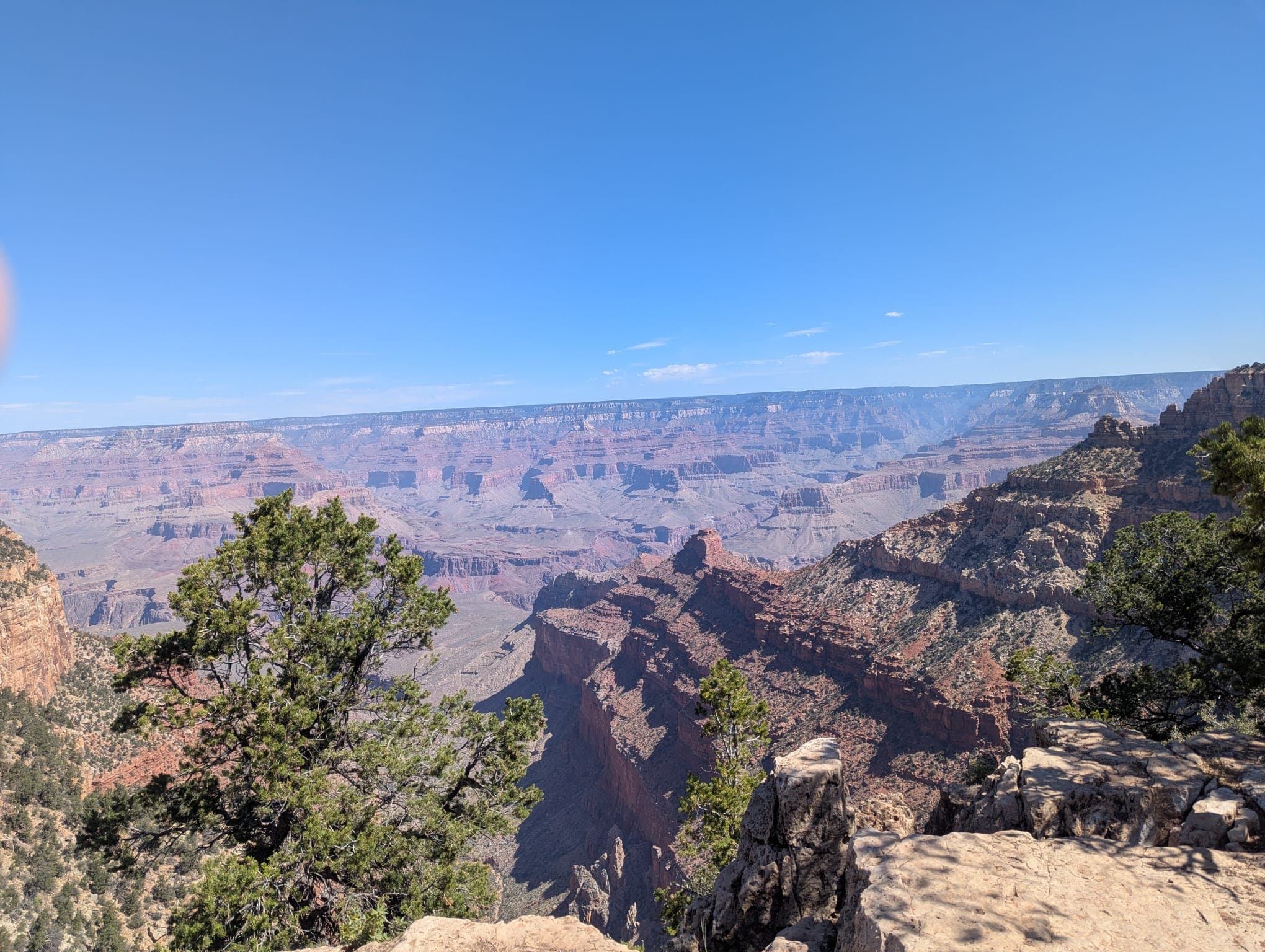
The helicopter gives you something that even the best rim viewpoints cannot: the canyon floor in your field of vision. From every South Rim overlook, the Colorado River is hidden by the inner gorge walls: you see the canyon's width and the opposite rim but not the bottom. From the helicopter at 1,000 feet above the Dragon Corridor, the river is right below you, the walls rise around you on both sides, and the scale of what 5-6 million years of erosion has produced becomes physically real in a way that no photo or viewpoint prepares you for.
The 45-minute tour is better value than the 25-minute option: the incremental cost for 20 more minutes in the air is $95 with Papillon and only $29 with Maverick.
Who should skip the helicopter tour:
- Visitors who have already done a South Rim helicopter tour previously: the experience will be essentially the same.
- Anyone whose priority is the Bright Angel Trail, Rim Trail, or other ground-level experiences: a full day on foot at the South Rim gives you more time in the park than a 2.5-3 hour helicopter block.
- Budget travellers: $354-$398 plus fees for 45 minutes in the air is a significant spend. The rim viewpoints are free and genuinely spectacular.
How far in advance should you book?
- Peak summer (June–August): Book 3-4 weeks ahead. Popular morning slots disappear fast and same-week availability at 8-10am departures is essentially zero in July.
- Shoulder season (spring/fall): 1-2 weeks is typically enough. Book early to secure a morning slot.
- Winter (December–February): Slots are often available a few days ahead, but early booking still gives you morning departure options rather than whatever time is left.
Both operators allow cancellation 24-48 hours before the flight (confirm the policy before paying: Viator listings show this clearly). If summer thunderstorm risk is a concern, add the flexible-cancellation option at booking for $10-$20 extra; it extends the window to 24 hours and lets you rebook if a storm rolls in.
Frequently asked questions
Do Grand Canyon South Rim helicopter tours land inside the canyon?
No. The National Park Service prohibits helicopter landings inside Grand Canyon National Park. South Rim helicopter tours are air-only: you fly over and through the Dragon Corridor and return to the helipad in Tusayan without touching down inside the canyon. This is the main difference versus West Rim tours (which do land inside the canyon on Hualapai Tribe land, since that land is outside the National Park boundary). If landing inside the canyon is important to you, a Las Vegas-based West Rim tour is the right product.
How much does a Grand Canyon South Rim helicopter tour cost in 2026?
As of July 2026: the 25-minute North Canyon (Papillon) starts at $259; the 25-minute Canyon Dancer (Maverick) at $369; the 45-minute Papillon tour at $354; and the 45-minute Maverick tour at $398. Add a fuel surcharge ($15-$35, sometimes buried in the booking flow) and an optional front-seat upgrade ($50-$60) if visibility is the priority. Papillon also offers an optional Hummer tour add-on for the drive to canyon viewpoints. Book through Viator or the operator website: prices are typically within $10-$20 of each other.
What is the Dragon Corridor?
The Dragon Corridor is the roughly 10-mile stretch of the Grand Canyon that commercial helicopters are permitted to fly. It runs through one of the deepest and most dramatic sections of the canyon, where the walls drop over 4,000 feet to the Colorado River. The view from the air through the Dragon Corridor shows geological layers spanning two billion years of Earth history. The corridor is named for the serpentine shape of the canyon section as seen from above. It is not accessible on foot from the South Rim: the only way to see it from this angle is from the air.
Is Maverick or Papillon better for the South Rim?
For photography and best visibility, Maverick. Their EC130 Eco-Star fleet has forward-facing seating (360-degree stadium layout), wraparound floor-to-ceiling windows, and no structural column blocking sightlines. Group sizes are smaller than Papillon. For value and schedule flexibility, Papillon. They carry more passengers, have more departure times, and cost roughly $80-$100 less than the equivalent Maverick tour. Both operators fly the same airspace (Dragon Corridor) and offer the same 25-min and 45-min options. Neither lands inside the canyon.
Where does the helicopter take off from?
Both Maverick and Papillon operate from Grand Canyon National Park Airport (IATA: GCN) in Tusayan, Arizona, a small town 15 minutes south of Grand Canyon Village by car. There is no shuttle service between the park and Tusayan: you need your own vehicle. Plan to arrive at the terminal 45-60 minutes before your flight for check-in and safety briefing. Factor in the drive from wherever you are staying: from the South Rim visitor area it is 6-8 miles, roughly 15-20 minutes.
How long does a South Rim helicopter tour take, total?
The flight time is 25-30 minutes or 45-50 minutes depending on which tour you book. Total door-to-door time including the drive to Tusayan, check-in, safety briefing, boarding and return is 2.5-3 hours for the 25-min tour and 3-3.5 hours for the 45-min tour. Plan your day accordingly: this is not a quick add-on between rim viewpoints.
What is the best time of day for a South Rim helicopter tour?
Morning departures (before noon) give the cleanest light for photography: the sun illuminates the canyon walls without the harsh midday shadows. Afternoon thermals, especially in summer (June-August), create turbulence that makes the flight rougher, and summer afternoon thunderstorms can cause cancellations. In spring and fall the difference is less marked, but morning is still the safer choice. Winter departures are typically crisp and clear with low turbulence, but dress for cold at 6,800 feet elevation.
How far in advance should I book a South Rim helicopter tour?
In peak summer (June-August): 3-4 weeks ahead. Slots at popular morning departure times fill fast and same-week availability is rare. In shoulder season (spring/fall): 1-2 weeks is usually sufficient. In winter (December-February): often possible to book a few days ahead. Both operators allow cancellation 24-48 hours in advance (confirm the policy when booking). If your schedule is flexible, book early anyway: rebooking is easier than scrambling for a slot.
Is a South Rim helicopter tour worth it?
Yes, for most first-time visitors to the South Rim who have the budget. The view from 1,000 feet above the Dragon Corridor shows you geological scale and canyon depth that even the best rim viewpoints cannot replicate: the Colorado River as a ribbon below, the canyon walls layered in reds and greys, the sheer drop that ground-level photos flatten out. The 45-minute tour is worth the extra cost over the 25-minute option: the additional 20 minutes extends the flight and covers more of the corridor. Who should skip it: repeat visitors who have already done the helicopter once, budget travellers who would rather spend $350 on permits and gear for the Bright Angel Trail, and anyone whose priority is an immersive multi-day rim experience rather than a compressed aerial overview.
Written by Diego Fresno, travel writer and independent publisher specialising in the American Southwest. This guide is based on research at the South Rim in 2025, pricing cross-checked against Viator, GetYourGuide and operator websites in July 2026, and field experience flying the Grand Canyon from Las Vegas in July 2025.. Verified quarterly: last review April 2026. About the author →
Related guides
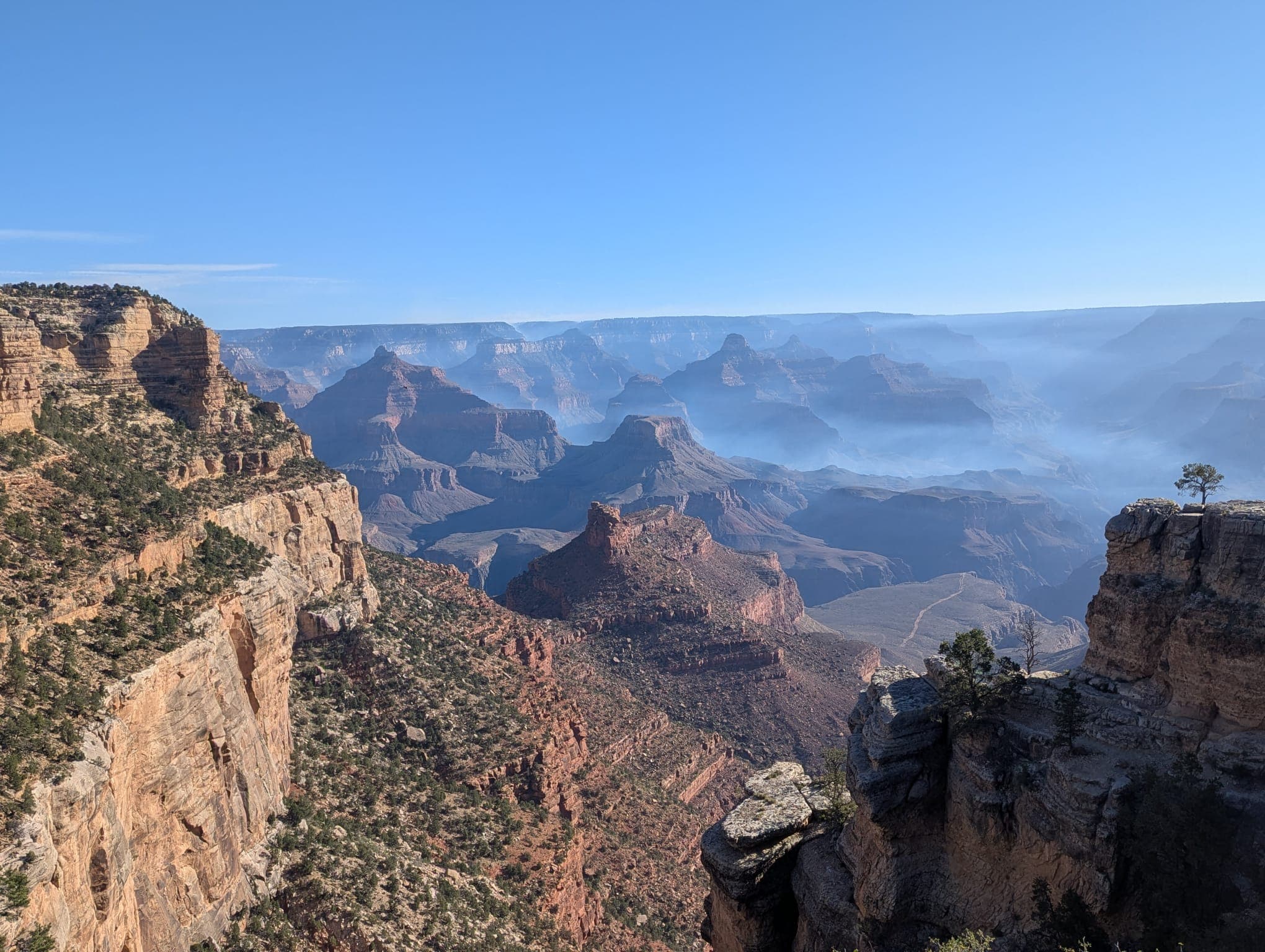
Grand Canyon helicopter tours from Las Vegas
The Las Vegas-based alternative: West Rim landing tours with champagne on the canyon floor. All 4 operators compared, with prices and honest verdict on who should book which tour.
Read more →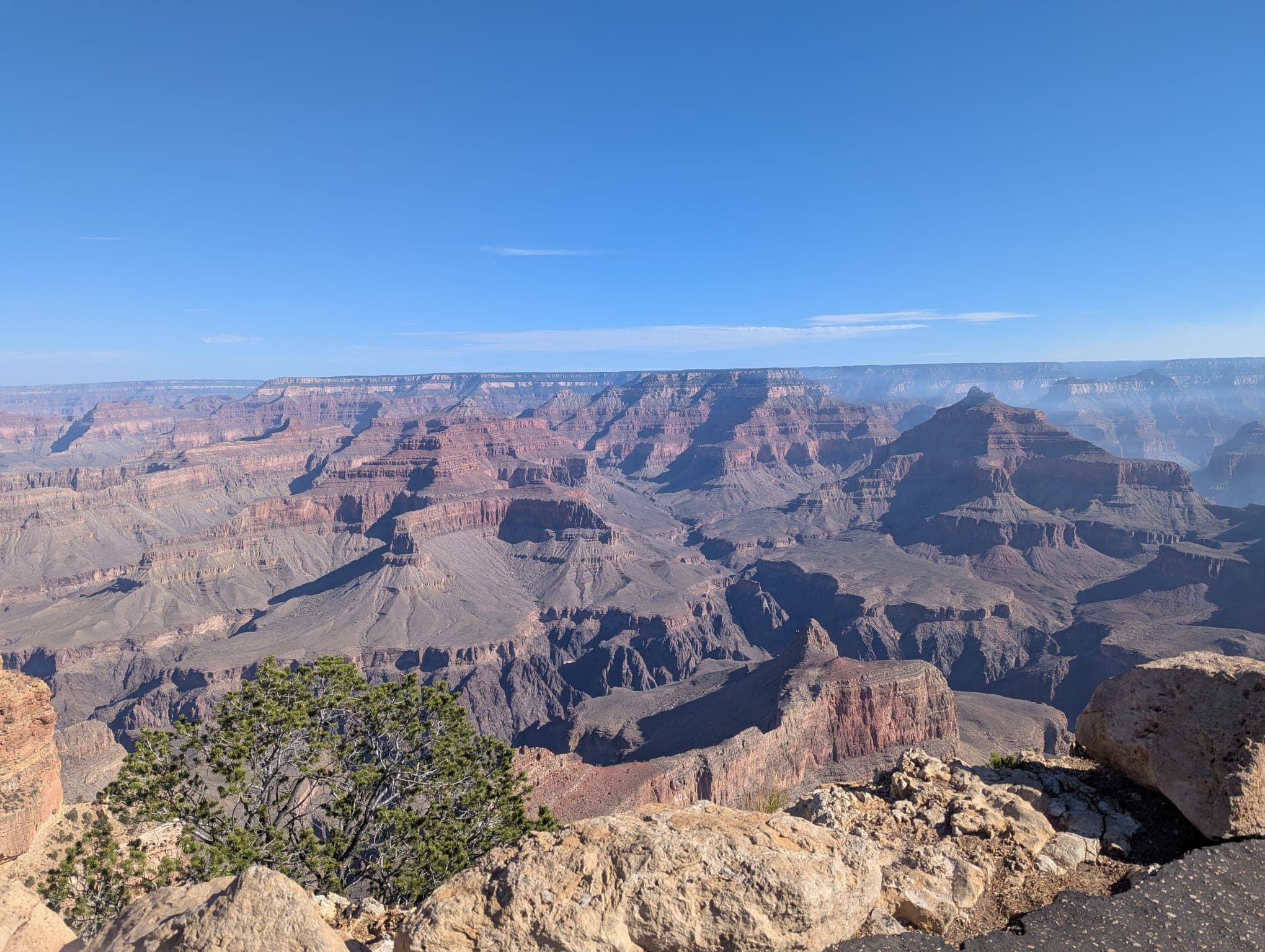
Grand Canyon: South Rim vs West Rim vs North Rim
Which rim to choose, how many days to plan, and how to combine Grand Canyon with Antelope Canyon and the rest of the Page, Arizona region.
Read more →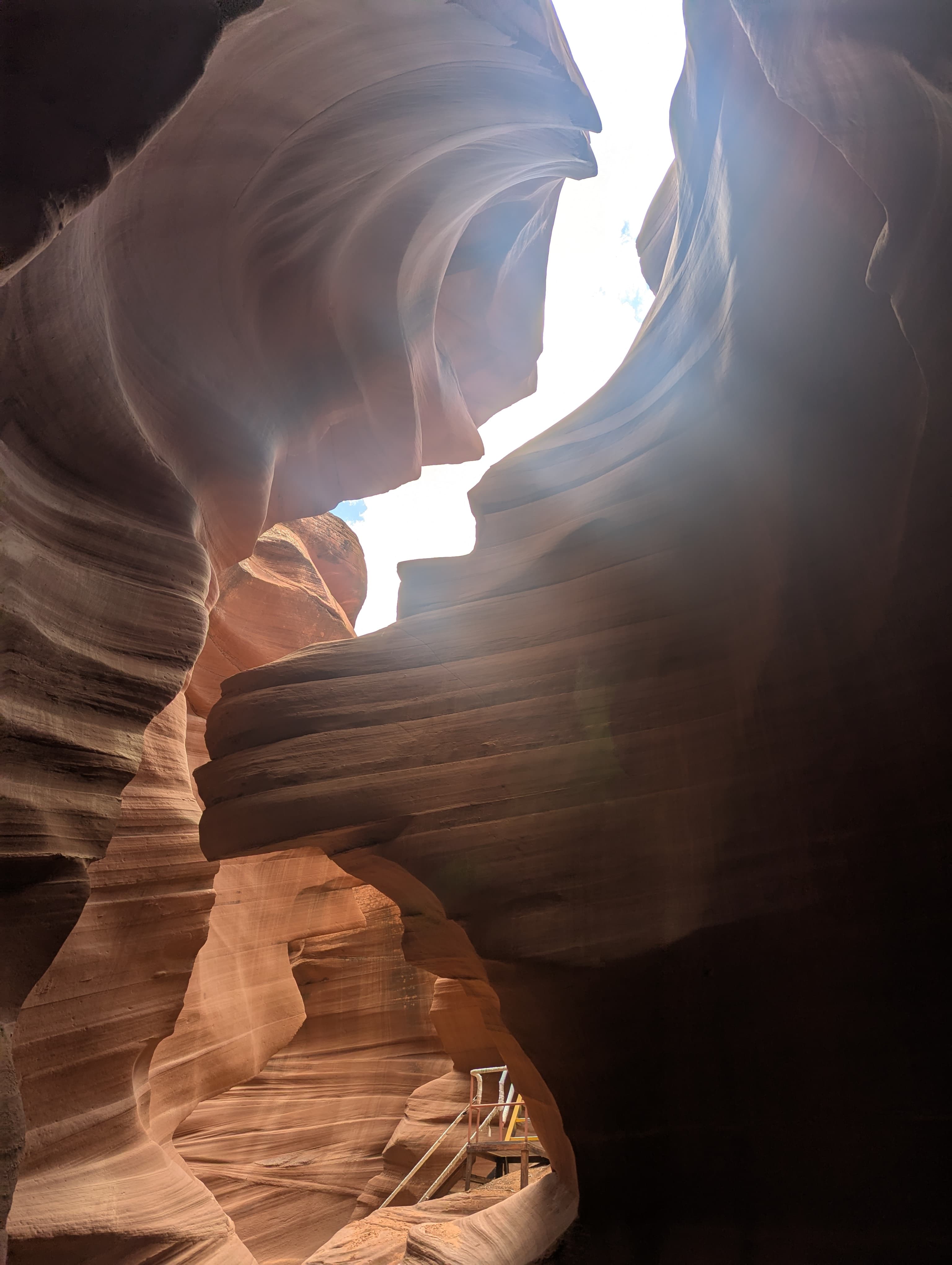
Antelope Canyon tours: complete guide
The most photographed slot canyon in the world. Upper vs Lower, which operator to book, and what the tour experience actually looks like from inside.
Read more →