Zion National Park is a 229-square-mile canyon system in southwestern Utah where the Virgin River has carved walls of Navajo Sandstone up to 2,000 feet high. It sees roughly 4.5 million visitors a year, more than Yellowstone or the Grand Canyon South Rim, and the density inside the narrow canyon makes planning more important here than at almost any other park in the American Southwest. This guide covers what you actually need to know: entry fees, the shuttle system, which hikes need permits and which do not, how to get there from Las Vegas, Salt Lake City and Phoenix, and how Zion fits into a broader Utah road trip.
Entry fee
$35 / vehicle (7 days)
Shuttle
Free · required Apr to Nov
Angels Landing
Permit required (lottery)
The Narrows
No permit needed (bottom-up)
From Las Vegas
158 mi · 2.5 hours
From Salt Lake City
300 mi · 4.5 hours
Gateway town
Springdale, UT 84767
Dark Sky Park
Yes (certified)
What makes Zion National Park worth the trip?
Most national parks offer scale: vast plateaus, wide open sky, distant vistas. Zion offers the opposite: the canyon walls close in on either side and the sky becomes a narrow ribbon above your head. The Virgin River, which carved the canyon over millions of years, is still running at the bottom. On a busy summer morning the main trail from the Visitor Center to the Narrows trailhead can feel like a crowded city street, which is part of why the permit system for Angels Landing exists and why arriving early or staying late makes such a difference.
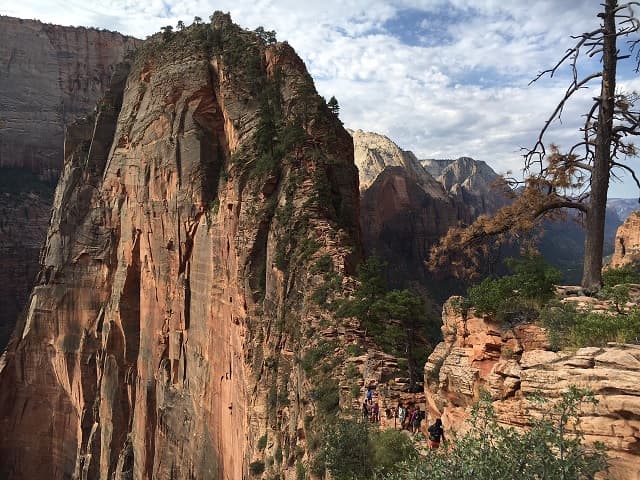
What Zion has that almost nowhere else does: the combination of The Narrows (a slot canyon you wade through, with walls 20 feet apart and 2,000 feet high) and Angels Landing (a summit hike with 1,488 feet of elevation gain, chains bolted into exposed rock, and a 360-degree view of the canyon floor). Neither is technically difficult by mountaineering standards, but both deliver the kind of physical engagement that a viewpoint overlook cannot. If you can only go to one Utah national park and want to actually hike rather than look, Zion is the right choice.
How to get to Zion National Park
The main entrance to Zion Canyon is at Springdale, Utah, at the south end of the park. A second entrance at the east (the Zion-Mount Carmel Highway) connects to Bryce Canyon and brings you through the famous Zion-Mount Carmel Tunnel. A third section, Kolob Canyons, sits off I-15 at Exit 40 in the northwestern corner of the park and is easily the most underused part of Zion.
Drive times to the south (Springdale) entrance:
- From Las Vegas, NV: 158 miles, about 2.5 hours via I-15 North. The most common gateway. Full guide including day-trip verdict and tours.
- From Salt Lake City, UT: 300 miles, about 4 to 4.5 hours via I-15 South. Stop at Kolob Canyons (Exit 40) for 45 minutes with zero additional driving. Full guide including Kolob stop and tours.
- From Phoenix, AZ: 330 miles, about 4.5 to 5 hours via I-17 North and I-15. Less common but very driveable as part of a northern Arizona road trip.
- From Bryce Canyon National Park: 86 miles, about 1.5 hours via UT-9 and US-89. Zion and Bryce are the two most popular parks on the Utah Mighty Five loop and pair naturally together.
- From Grand Canyon South Rim: 240 miles, about 3.5 hours via US-89 and US-89A. A full day of driving but makes sense as part of a southwest road trip.
No public transport connects Las Vegas or Salt Lake City to Zion. A car is effectively required. If you are flying in and renting, compare aggregator rates:
Compare rental car rates for the Zion road trip →
Getting around: the shuttle system
From roughly April through November, private vehicles are not allowed on Zion Canyon Scenic Drive beyond the Visitor Center. The free Zion Canyon Shuttle runs the full length of the canyon (9 stops from the Visitor Center to Temple of Sinawava, where The Narrows trailhead begins) every 7 to 10 minutes during peak hours. This is the only way to reach most trailheads during the busy season.
Practical notes: in July and August waits at the Visitor Center stop can reach 30 to 45 minutes. Arriving before 8 am or after 5 pm cuts this to near-zero. Each shuttle holds about 75 passengers with standing room. The system is efficient once you stop expecting something nicer than a city bus. In winter (roughly December through February) private vehicles can drive the scenic road, making early-morning access to trailheads faster.
A separate Springdale Town Shuttle connects parking areas in Springdale (the town just outside the south entrance) to the park Visitor Center. It is also free. Most Springdale hotels walk to a town shuttle stop, which means you can skip parking at the crowded Visitor Center lot entirely: park at your hotel, take the town shuttle in, transfer to the canyon shuttle.
Best hikes in Zion National Park
Zion has roughly 90 miles of maintained trail. Most visitors arrive with Angels Landing and The Narrows on their list. Both are genuinely exceptional, but the permit system for Angels Landing and the timing constraints of The Narrows mean it helps to have backup plans.
Angels Landing
The chain section above Scouts Lookout (the top 0.5 miles to the summit at 5,790 feet) requires a permit. Below Scouts Lookout, the West Rim Trail is open to everyone: a 4.4-mile round trip with 1,050 feet of elevation gain that ends at a viewpoint most visitors find completely satisfying. The full summit hike adds the chain section and another 438 feet to a total 1,488 feet of gain.
The permit lottery runs on recreation.gov: seasonal (advance) lotteries open roughly four months before each season, and a day-before lottery opens the evening prior to your hike. Permit demand is extremely high in spring and fall. Full Angels Landing guide: permit strategy, chain section, and alternatives.
The Narrows
No permit is required for a bottom-up hike starting from the Riverside Walk. You enter the Virgin River at the end of the paved trail and wade upstream through a slot canyon that narrows to 20 feet wide in places, with walls rising 2,000 feet. Depending on water levels, you can wade anywhere from 15 minutes to a full day. Neoprene booties and a walking stick (rentable in Springdale) are strongly recommended: river temperatures stay around 13°C (55°F) even in summer.
Full Narrows guide: depth maps, gear rental, flash flood protocol and best entry times.
Other hikes worth knowing
- Canyon Overlook Trail: 1 mile round trip, no permit, 163 feet of elevation gain, starts at the east end of the Zion-Mount Carmel Tunnel. Best quick view in the park if you arrive late in the day.
- Emerald Pools: Three linked pools (Lower, Middle, Upper) connected by a network of trails. Lower Emerald Pool is 1.2 miles round trip and accessible; Upper is 3 miles round trip with 400 feet of gain. No permit needed.
- Observation Point: 8 miles round trip, 2,148 feet of gain, no permit, often described as the best summit view in the canyon (looking down at Angels Landing from above). Demanding but achievable for fit hikers.
- Pa'rus Trail: 3.5 miles, paved, flat, wheelchair accessible. Good for mornings before the shuttle crowds, or as a walk back from the first shuttle stop to the Visitor Center.
Full Zion hikes guide: all trails ranked by difficulty, permit requirements and best seasons.
Tours vs. self-guided
Unlike Antelope Canyon (which legally requires a guided Navajo tour), Zion has no mandatory guide requirement. You can hike every trail in the park independently. That said, guided tours add value in specific scenarios:
- Day trips from Las Vegas or Salt Lake City: A guided tour handles the driving, shuttle timing and trailhead logistics, which matters when you have a limited window and are unfamiliar with the park. Most Las Vegas day-trip tours run 10 to 12 hours round trip.
- Canyoneering and technical routes: Slot canyons like The Subway and Mystery Canyon require a permit and ropes; guided trips cover the technical gear and instruction.
- First-timers managing the shuttle system: The shuttle logic is not complicated, but if you arrive in peak season with no prior research, having a guide take care of timing reduces stress considerably.
See guided tour options from Las Vegas and Springdale, with prices and operator comparison.
Best time to visit Zion National Park
Zion is open year-round, but the experience varies significantly by season.
- March to May: Best overall window. Mild temperatures (10 to 25°C), wildflowers along the Virgin River, manageable crowds outside spring break. Angels Landing lottery competition is high but the park is not yet at peak saturation.
- June to August: Canyon floor temperatures reach 38 to 42°C. Most hikes are punishing before 8 am and after 4 pm. Shuttle waits are longest. Monsoon season starts in mid-July: afternoon flash floods can close The Narrows with little warning (rangers post daily flash flood risk ratings at the Visitor Center).
- September to October: Second-best window. Heat eases, monsoon tapers after mid-September, fall colour appears along the Virgin River in October, and crowds thin noticeably after Labor Day. The golden month is October.
- November to February: Low crowds, cold (overnight freezes), possible snow on the rim trails. The Narrows requires drysuit gear but is perfectly doable. Some facilities operate on reduced hours. Angels Landing lottery competition is lowest.
Month-by-month breakdown with temperature data, crowd levels and photography timing.
Where to stay near Zion National Park
Springdale is the gateway town at the south entrance, directly connected to the park by the free town shuttle. Staying in Springdale means zero commute: walk to the shuttle stop, enter the park, done. It has the widest selection of hotels, restaurants and outfitters (including Narrows gear rental shops). Rooms book out months in advance for peak season weekends.
St. George, UT (45 minutes west via I-15) is the next practical base: lower prices, much wider hotel supply, a regional airport. Good choice if Springdale is sold out or if you want a car-dependent base for multiple days.
Inside the park: Zion Lodge is the only lodging inside the canyon itself, operated by Forever Resorts. Rooms and cabins sell out a year in advance for peak dates. Cancellations do appear, but the reliable booking window is 12 to 13 months out. The location is unbeatable (on the shuttle route, 5-minute walk to major trailheads), which is why it books out.
Camping: South Campground and Watchman Campground are the two park-operated sites at the south entrance. Watchman takes reservations (via recreation.gov, up to 6 months in advance); South operates first-come, first-served in shoulder seasons.
Frequently asked questions
How much does it cost to enter Zion National Park?
The standard vehicle fee is $35 and covers 7 consecutive days. If you plan to visit multiple national parks on the same trip, the America the Beautiful annual pass ($80) covers Zion and all other NPS fee sites for 12 months. Motorcycles pay $30; pedestrians and cyclists pay $20 per person.
Do you need a permit for Angels Landing?
Yes. The Angels Landing permit is required for the section above Scouts Lookout (the iconic chain section). Permits are issued via a lottery on recreation.gov: a seasonal advance lottery opens roughly four months before the season, and a day-before lottery opens the evening before. Each permit covers a specific permit group (up to six people) for a specific date and time window. Without a permit you can still hike to Scouts Lookout, which itself is a rewarding destination with full canyon views.
Do you need a permit for The Narrows?
No permit is required for a bottom-up Narrows hike starting from the Riverside Walk trailhead. You walk up the Virgin River; no reservation needed. A top-down through-hike (Chamberlain Ranch to the Narrows) does require a permit. Bottom-up is what most visitors do, and you can turn around whenever conditions or depth require it.
Is the Zion shuttle free?
Yes. The Zion Canyon Shuttle is free and included with your park entry fee. It runs from the Visitor Center to Temple of Sinawava (Stop 9) with stops at all major trailheads. From roughly April through November, private vehicles are not allowed on Zion Canyon Scenic Drive beyond the Visitor Center, so the shuttle is the only way to reach most trailheads. The Springdale town shuttle, which connects the park entrance to Springdale hotels, is also free.
How far is Zion National Park from Las Vegas?
Approximately 158 miles, about 2.5 hours via I-15 North through St. George. This is the most common gateway. A day trip from Las Vegas to Zion is technically feasible but tight: you get roughly 4 to 5 hours in the park after accounting for the drive each way. One or two nights in Springdale or St. George is strongly recommended if you want to hike The Narrows or attempt Angels Landing.
How far is Zion from Salt Lake City?
Approximately 300 miles, about 4 to 4.5 hours via I-15 South. On the way down, Exit 40 takes you to Kolob Canyons, the northwestern section of Zion National Park: same $35 NPS pass, zero detour, and almost no crowds. A day trip from Salt Lake City is a long day but doable. One overnight in Springdale turns it into a comfortable two-day trip.
What is the best hike in Zion for first-timers?
Angels Landing is the iconic answer, but it requires a permit and involves exposed chains above Scouts Lookout. For first-timers without a permit, The Narrows bottom-up is the most memorable hike in the park: you wade up the Virgin River between 2,000-foot canyon walls, no permit needed, turn around whenever you like. Canyon Overlook Trail (1 mile round trip, no permit) is the best option if you arrive late or want a big view without a full hike.
Is Zion National Park worth visiting in winter?
Yes, especially January and February. Crowds thin dramatically, the canyon walls take on a quiet, almost monochrome beauty in snow or frost, and trailhead access is easier. The Narrows can be done in winter with the right wetsuit rental gear (outfitters in Springdale rent full drysuits). Angels Landing lottery competition is also lower. The main trade-off: some facilities reduce hours, and icy conditions on the chain section of Angels Landing make it more technical.
Written by Diego Fresno, travel writer and independent publisher specialising in the American Southwest. Research for this guide included visits to Zion in spring (permit timing), summer (shuttle system and heat management) and fall (October colour), with separate trips for The Narrows (both low-water and post-monsoon conditions) and the Angels Landing permit process.. Verified quarterly: last review April 2026. About the author →
Zion guides on this site
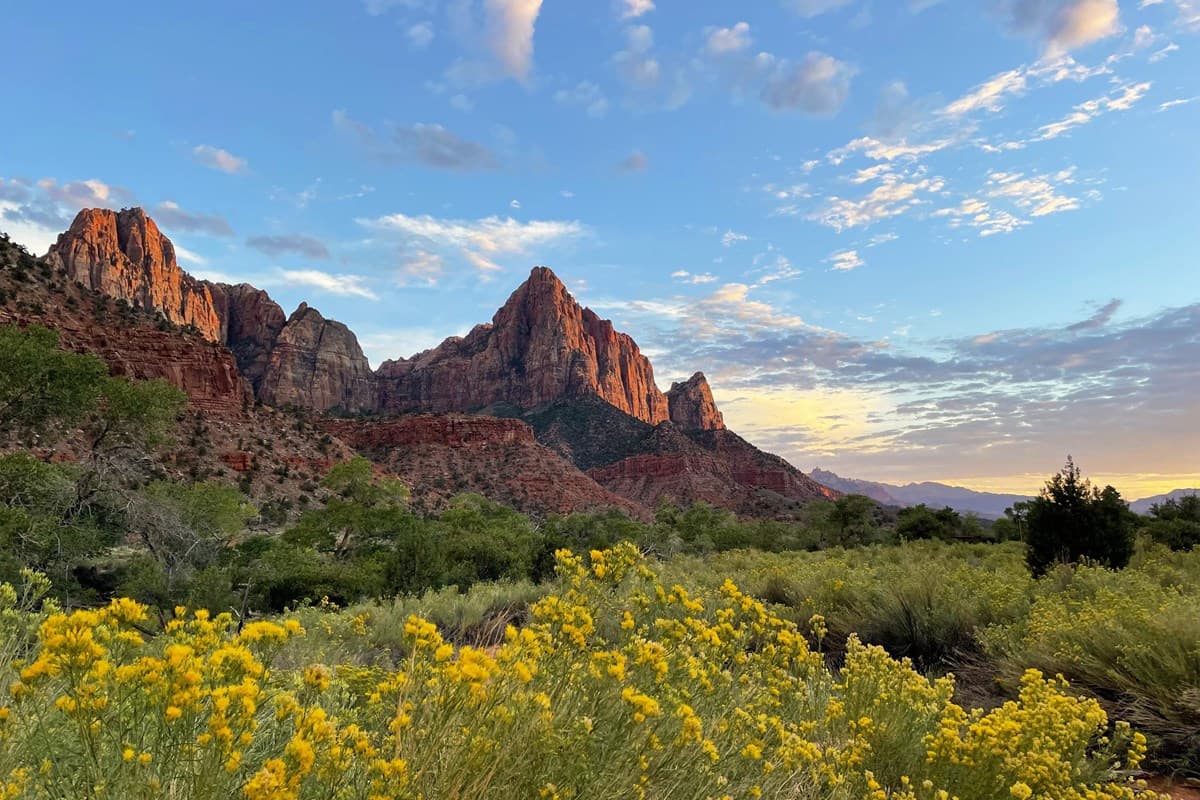
Best hikes in Zion National Park (2026)
Angels Landing, The Narrows, Observation Point and Canyon Overlook ranked by difficulty, permit requirements and best season.
Read more →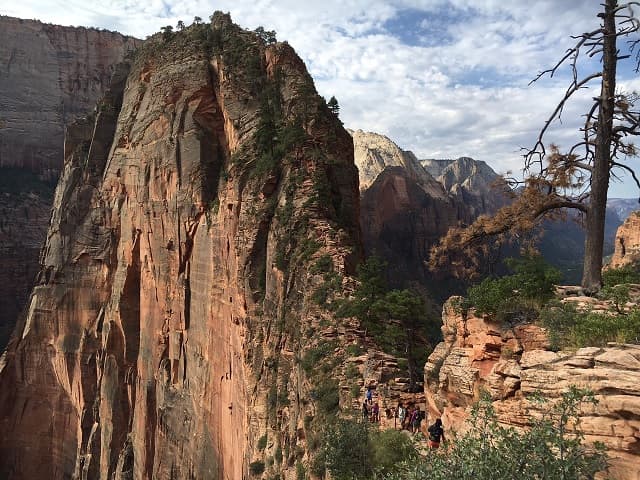
Angels Landing: permit, chain section and alternatives (2026)
How the lottery works, what the chain section actually looks like, and what to do if you do not get a permit.
Read more →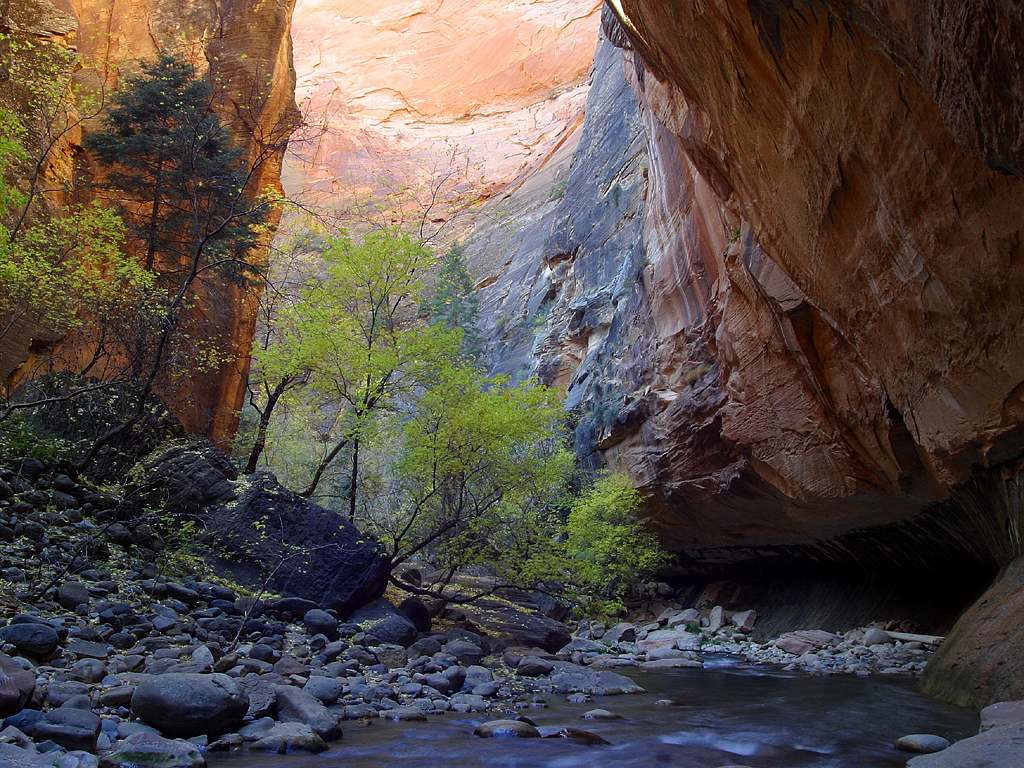
The Narrows: gear, depth and best entry times (2026)
No permit required for the bottom-up route. Gear rental guide, flash flood protocol, and what to expect at different water levels.
Read more →Zion National Park tours (2026)
Day trips from Las Vegas and guided canyoneering options compared, with prices and operator notes.
Read more →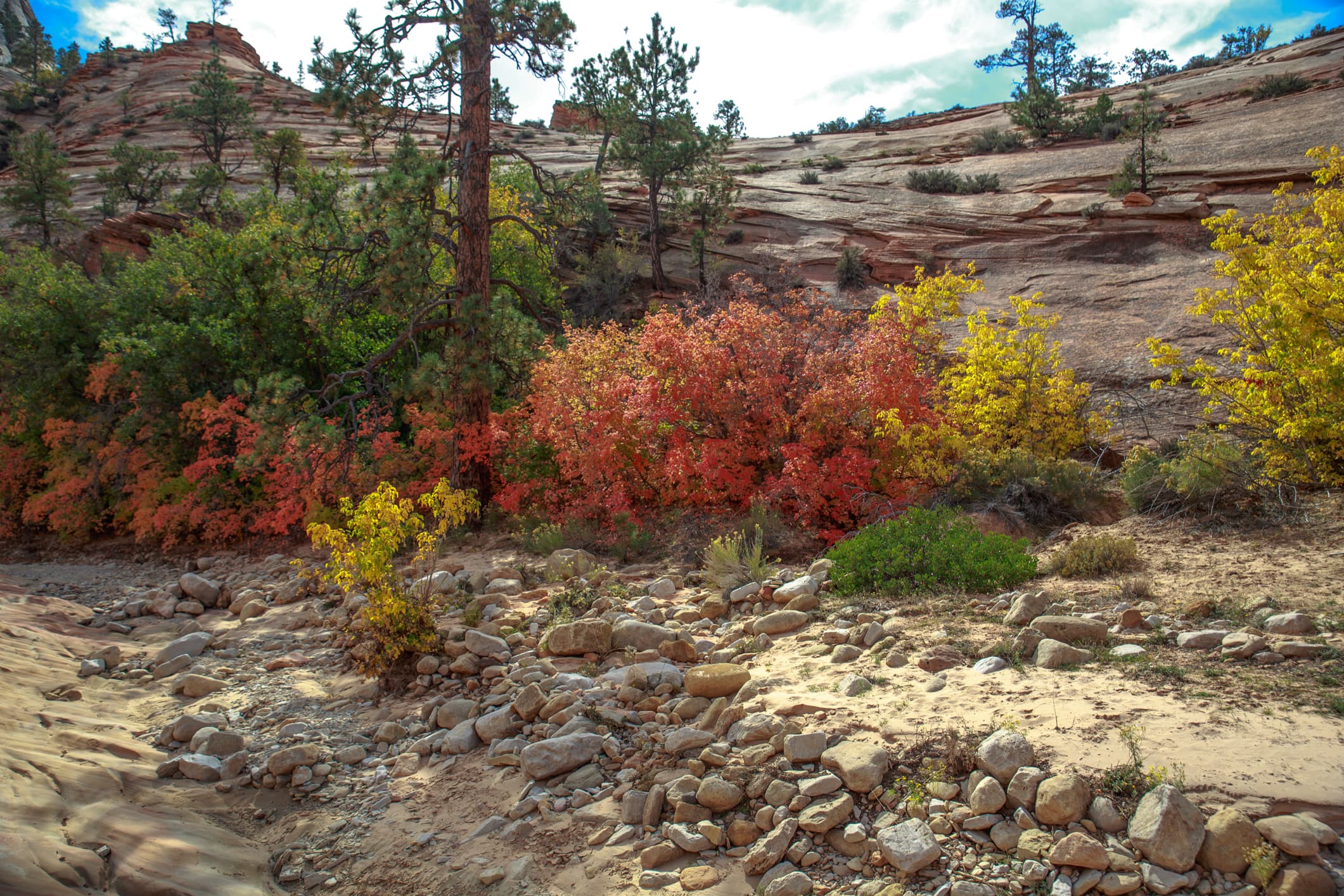
Best time to visit Zion National Park (2026)
Month-by-month temperature data, crowd levels, flash flood season and the October sweet spot.
Read more →Las Vegas to Zion National Park: drive guide and day-trip verdict
158 miles, 2.5 hours via I-15. Day trip feasibility, overnight recommendation and guided tour options.
Read more →Salt Lake City to Zion: drive, day trip and tours (2026)
300 miles via I-15 South with a free Kolob Canyons stop at Exit 40. Day trip verdict and overnight options.
Read more →