- 23.5-mile one-way route; most hikers travel North Rim to South Rim via North Kaibab and Bright Angel trails.
- No permit is needed for a day hike; a Backcountry Use Permit is required for any overnight stay.
- North Rim closes October 15 to May 15 each year; the best hiking windows are late May to early June or mid-September to October.
- Phantom Ranch must be booked through Recreation.gov, typically 13 to 15 months in advance; campsite permits open in a 4-month lottery.
- Plan two to three days for a safe crossing; experienced hikers complete the route in one day but it demands serious preparation.
Total distance
23.5 mi one-way (North to South)
Net elevation gain
5,200 ft (ascending to South Rim)
Canyon floor temp
25 to 30°F hotter than the rims
Difficulty
Expert (heat, distance, exposure)
Overnight permit
Backcountry Use Permit via Recreation.gov
Permit lottery opens
4 months before trip date
North Rim season
Mid-May to October 15
Best months
Late May to early June; September to mid-October
Trans-Canyon Shuttle
Twice daily each direction; book early
Phantom Ranch dorm
~$65 to $75 per person per night
Park entry fee
$35 per vehicle (7-day pass)
Route overview
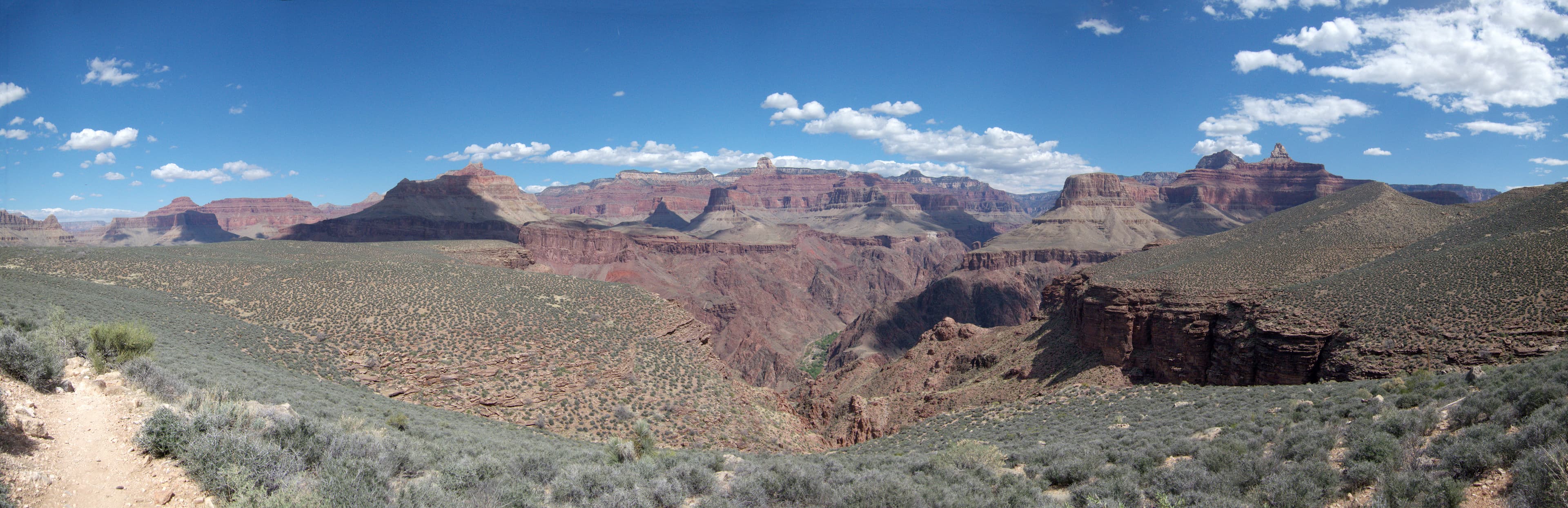
The rim-to-rim crossing links the North Kaibab Trail with Bright Angel Trail, dropping into the canyon from the North Rim (8,241 ft) and climbing out at the South Rim (6,860 ft). The most common direction is North to South: you begin at a higher, cooler elevation, follow a logical water plan, and finish at the more connected South Rim. The total distance via this route is 23.5 miles. Hiking South to North is shorter by about 2.5 miles if you take the South Kaibab Trail from the South Rim to the canyon floor before switching to North Kaibab, but it skips Havasupai Gardens and its water source.
Key waypoints, North to South
| Waypoint | Miles from N Rim | Elevation | Water |
|---|---|---|---|
| North Rim Trailhead | 0 | 8,241 ft | Yes (tap) |
| Supai Tunnel | 1.7 | 6,800 ft | Yes (seasonal) |
| Roaring Springs | 4.7 | 5,200 ft | Stream only |
| Cottonwood Campground | 6.8 | 4,080 ft | Yes (year-round) |
| Ribbon Falls junction | 10.7 | 3,560 ft | Stream only |
| Phantom Ranch | 13.6 | 2,480 ft | Yes; canteen with meals |
| Bright Angel Campground | 13.8 | 2,480 ft | Yes (year-round) |
| Havasupai Gardens | 19.0 | 3,840 ft | Yes (year-round) |
| 3-Mile Resthouse | 21.0 | 4,760 ft | Yes (May to Sept) |
| 1.5-Mile Resthouse | 22.0 | 5,760 ft | Yes (May to Sept) |
| South Rim (Bright Angel TH) | 23.5 | 6,860 ft | Yes (tap) |
North Rim Lodge update (2026): The Dragon Bravo Fire destroyed the historic North Rim Lodge in 2024. Hikers now use Kaibab Lodge, located about 20 minutes by shuttle from the North Kaibab Trailhead. Check recreation.gov for current lodge availability before booking.
Ribbon Falls at mile 10.7 adds a 0.5-mile round-trip detour but is worth it: a thin waterfall drops over a travertine dome into a shaded pool. It is one of the few genuinely cool spots between Cottonwood and Phantom Ranch.
One-day vs multi-day planning
The right approach depends on your fitness, experience, and the time of year. Here is how the three most common formats compare:
| One day | Two days | Three days | |
|---|---|---|---|
| Who it suits | Ultra-fit athletes with prior canyon experience | Experienced backpackers; good base fitness | Most fit adults with time; best for enjoyment |
| Start time | 3:30 to 4:30 AM from North Rim | 6:00 to 7:00 AM | Flexible |
| Day 1 mileage | 23.5 miles (all in one) | ~13.8 miles to Bright Angel Campground | ~6.8 miles to Cottonwood Campground |
| Day 2 mileage | n/a | ~9.7 miles to South Rim | ~7 miles to Bright Angel or Phantom Ranch |
| Day 3 mileage | n/a | n/a | ~9.7 miles to South Rim |
| Overnight permit | None needed | Backcountry Use Permit | Backcountry Use Permit |
| Typical permit cost | $0 | $10 + $8/person/night | $10 + $8/person/night (two nights) |
| Heat risk | High to extreme; avoid in summer | Moderate; manageable with early starts | Lower; can rest during midday heat |
Permits and booking
Backcountry Use Permit (overnight)
Any night spent below the rim requires a Backcountry Use Permit. Permits are allocated through a lottery on Recreation.gov that opens four months before the first requested date. Applications open on the first of the month, four calendar months ahead: for a May trip, apply on January 1. Competition is intense in spring and fall; off-season trips (November through February) are significantly easier to book.
Cost: $10 non-refundable permit fee plus $8 per person per night. A group of two hiking two nights pays $42 total. The permit specifies your exact campsites by name; you must stay where the permit says. Cottonwood Campground (mile 6.8) and Bright Angel Campground (mile 13.8) are the standard options for a rim-to-rim.
Walk-up permits: a small number of permits are held back for walk-up applicants at the Backcountry Information Center on the South Rim. The office opens at 8 AM; arrive before dawn to join the line. Walk-up permits for popular dates in peak season are rarely available; it is not a reliable strategy.
Phantom Ranch
Phantom Ranch is booked separately through Recreation.gov (formerly via Xanterra). Dorm bunks cost approximately $65 to $75 per person per night; private cabins run $165 to $195 per night. Bookings typically open 13 to 15 months in advance and sell out within minutes on release day. Set a calendar reminder and be ready at the booking window.
Cancellations sometimes appear on a 14-day advance notification list. Check Recreation.gov regularly in the two weeks before your target date if you want a last-minute spot.
Note: staying at Phantom Ranch does not eliminate the need for a Backcountry Use Permit if you also camp elsewhere in the canyon. The Phantom Ranch booking covers your Phantom Ranch nights only.
Water and resupply
Water access on the rim-to-rim is reliable if you plan for it. The longest dry stretch in the North-to-South direction is the 5.1 miles between the North Rim trailhead and Supai Tunnel. Carry at least 2 liters when you leave the trailhead.
Potable water is available at: Supai Tunnel (1.7 mi, seasonal), Cottonwood Campground (6.8 mi, year-round), Phantom Ranch canteen (13.6 mi, year-round), Bright Angel Campground (13.8 mi, year-round), Havasupai Gardens (19 mi, year-round), 3-Mile Resthouse (21 mi, May to September), 1.5-Mile Resthouse (22 mi, May to September), and the South Rim trailhead (23.5 mi). The NPS posts seasonal closures on its website; always verify before your trip.
Carry a filter or purification tablets as a backup. Stream water at Roaring Springs and Ribbon Falls is generally clear but should be treated. The Phantom Ranch canteen sells cold drinks, lemonade, snacks, and hot meals; dinner reservations must be made in advance as part of your Phantom Ranch booking.
Electrolytes are not optional. The combination of heat, perspiration, and large water intake without sodium creates real hyponatremia risk. Pack tablets, powder, or salty snacks for every day inside the canyon.
Where to sleep inside the canyon
Cottonwood Campground (mile 6.8)
Cottonwood sits at 4,080 ft and is shaded by cottonwood trees, making it noticeably cooler than the inner gorge. It has flush toilets (seasonal), potable water, and a ranger station. It is the logical first-night stop on a three-day rim-to-rim: you arrive after a manageable 6.8-mile descent and have 16.7 miles remaining over the next two days.
Bright Angel Campground (mile 13.8)
The most popular overnight stop for rim-to-rim hikers, Bright Angel sits right next to Phantom Ranch at the confluence of Bright Angel Creek and the Colorado River. It has composting toilets, year-round water, and pleasant tent sites among the cottonwoods. For a two-day crossing, you complete the hard 13.8-mile descent on day one and the gentler 9.7-mile ascent on day two. Permits sell out months in advance.
Phantom Ranch (mile 13.6)
The only lodging with a roof inside Grand Canyon. Dorm bunks (gender-separated, 10 people per dorm) and private cabins are available. The canteen serves breakfast, dinner, and bag lunches; beer, lemonade, and snacks are sold throughout the day. Dinner reservations are part of the Phantom Ranch booking and must be confirmed in advance. Book 13 to 15 months ahead or check the Recreation.gov cancellation list within two weeks of your trip.
Havasupai Gardens (mile 19)
Formerly called Indian Garden, Havasupai Gardens is closer to the South Rim and serves South-to-North hikers well as a first-night stop. It has year-round water, composting toilets, and shade. Hikers arriving from the South Rim via Bright Angel Trail reach it in 4.6 miles and can use it as a staging camp before the long push to the North Rim.
Trans-Canyon Shuttle
Because the North Rim and South Rim are 214 miles apart by road, one-way hikers need a plan for the return. The Trans-Canyon Shuttle is the standard solution: it runs twice daily in each direction between South Rim and North Rim, with a journey time of approximately 4 to 5 hours.
Most common logistics for a North-to-South hike: drive to the South Rim and park at Mather Campground or a hotel lot, board the morning shuttle to the North Rim the day before your hike, and hike back over two to three days. Your car waits for you at the South Rim when you finish.
Book the shuttle well in advance; it sells out in peak season. Tickets are available at the Bright Angel Lodge transportation desk or through the Xanterra booking system. The shuttle operates mid-May through mid-October, aligned with the North Rim road season.
Alternatives: arrange a private car shuttle (one person drives both cars to each rim before the hike starts), charter a small plane or helicopter between rims (available from Grand Canyon Airport at Tusayan), or hire a taxi or private driver between Page Airport and the North Rim.
Guided hiking tours near the South Rim
No commercial tour operator offers a guided end-to-end rim-to-rim trip through Viator; multi-day guided crossings (REI Adventures, Wildland Trekking) are specialty products booked directly with the outfitter. However, a half-day or full-day guided hike on the South Rim trails is excellent preparation: you learn the terrain, practice pacing in canyon heat, and confirm your readiness before committing to a multi-day crossing.
Half-Day Private Grand Canyon Guided Hiking Tour
Private guided descent below the South Rim with a certified guide. Geology narration, safety briefing, and pacing tailored to your group. Excellent shakedown hike before a rim-to-rim attempt.
Grand Canyon Sunset Hiking Adventure Deep Below the South Rim
A sunset-timed guided descent below the rim. Late-afternoon start avoids midday heat, and the canyon walls ignite in orange and red light. Private guide, safety equipment included.
Safety and training requirements
Grand Canyon kills hikers every year, primarily from heat and hyponatremia. The NPS stages dozens of rescues annually, mostly from hikers who underestimated the difficulty or started too late in the day. Helicopter rescues in Arizona are billed to the hiker and typically run $10,000 or more.
Heat
The inner canyon sits 25 to 30 degrees Fahrenheit hotter than the rims. Phantom Ranch has recorded temperatures above 130°F. From late June through August, plan to be at camp or in shade by 10:00 AM and do not start hiking again until late afternoon. For a summer one-day attempt, this is nearly impossible to manage safely over 23.5 miles; choose spring or fall instead.
Hyponatremia
Drinking large volumes of plain water without replacing sodium causes hyponatremia, a dangerous drop in blood sodium that can lead to seizures, coma, and death. Symptoms mimic dehydration: nausea, headache, confusion. Carry electrolyte tablets, powder packets, or salty snacks and consume them consistently throughout the day, not just when you feel thirsty.
Cold and hypothermia
The North Rim receives snow in May and again in October, and nighttime temperatures inside the canyon can drop sharply even in summer. Pack a warm mid-layer and a waterproof shell regardless of the season.
Training benchmarks
Before attempting a rim-to-rim, you should be able to complete 20 miles in a single day on trail with 4,000 ft of elevation gain. Train on real mountains or steep trails, not flat pavement. Carrying a loaded pack equivalent to your canyon pack weight is strongly recommended. If you cannot meet this benchmark, target a two or three-day crossing with generous camp stops rather than rushing.
Emergency signaling
Cell service is absent for most of the route below the rim. Carry a satellite communicator (Garmin inReach, SPOT, or similar) for emergencies. A signal mirror and whistle weigh almost nothing and are useful backups. Register your trip itinerary with a friend or family member before you start.
For full trail conditions and water-source updates, check the Grand Canyon planning hub or the NPS website before your trip. For a detailed look at the most popular inner-canyon accommodation, see the Phantom Ranch guide. If you are building up to the rim-to-rim with shorter hikes first, the Grand Canyon hikes overview covers all skill levels.
Do you need a permit to hike rim to rim Grand Canyon?
A day hike requires no permit at either rim. Any overnight stay inside the canyon requires a Backcountry Use Permit from Recreation.gov. The permit costs $10 plus $8 per person per night. Applications open in a lottery four months before your target date; demand far exceeds supply in spring and fall.
How long does the rim-to-rim Grand Canyon hike take?
Most hikers spread the crossing over two to three days. A two-day trip means roughly 12 miles on day one to Bright Angel Campground, then 11.5 miles out on day two. A three-day trip allows a rest night at both Cottonwood Campground and Bright Angel. Highly fit and experienced canyon hikers complete the route in 10 to 16 hours as a single-day push, starting before dawn.
Which direction is better: North to South or South to North?
North to South is recommended for first-timers. You start at higher elevation (8,241 ft vs 6,860 ft on the South Rim), which means a cooler morning descent. The North Kaibab Trail has reliable water at Supai Tunnel (1.7 miles in), Cottonwood Campground, and Phantom Ranch, making water planning straightforward. Finishing on the South Rim also puts you closer to hotels, shuttles, and services. South to North works well if you are catching the Trans-Canyon Shuttle back; the ascent to the North Rim is longer but shadier in the morning.
How difficult is the rim-to-rim hike?
It is rated expert. The distance alone (23.5 miles) is manageable for trained hikers, but Grand Canyon adds extreme heat at the bottom, significant elevation change (5,200 ft net gain), limited shade on many sections, and few bail-out options once you are inside. The National Park Service rescues dozens of hikers annually, and several die each year from heat illness. Do not attempt it without prior canyon hiking experience.
What is the best time of year to hike rim to rim?
Late May to early June and mid-September through October 14 offer the best conditions. Temperatures at the canyon floor drop below 100°F, crowds are lighter than summer, and both rims are open. Summer (July to August) is possible but dangerous: inner-canyon temperatures regularly exceed 110°F and the NPS strongly advises against daytime hiking. The North Rim closes October 15 and reopens around mid-May.
How do you get back to your starting point after the hike?
The Trans-Canyon Shuttle connects South Rim and North Rim twice daily in each direction. Many hikers drive to the South Rim, catch the morning shuttle to the North Rim the day before, hike back over one to three days, and pick up their car at the South Rim. You can also arrange a private car shuttle, book a charter flight between the rims, or have a second vehicle waiting at the finish.
Where can you sleep on a rim-to-rim hike?
Inside the canyon there are three main options: Cottonwood Campground at 6.8 miles from the North Rim (ideal first night on a three-day trip), Bright Angel Campground at 13.8 miles from the North Rim (main stop for two-day hikers), and Phantom Ranch at 13.6 miles (roofed dormitories and cabins, the only lodging inside the canyon). Havasupai Gardens at 19 miles is a useful stop for South-to-North hikers. All require a Backcountry Permit except Phantom Ranch, which has its own booking system.
Can you hike rim to rim Grand Canyon in one day?
Yes, but it demands serious preparation. The minimum benchmarks recommended by experienced rim-to-rim runners are: completing 20 miles in a single day on trail and managing 4,000 ft of elevation gain before your attempt. Start no later than 4:00 AM from the North Rim, carry at least 3 liters of water and electrolyte tablets, and plan your resupply stops at Cottonwood and Phantom Ranch. Avoid one-day attempts in July and August entirely.
Written by Diego Fresno, Travel writer and independent publisher specialising in the American Southwest. Latest research conducted on location in Page, Arizona during July 2025. Guides are verified quarterly — last review April 2026.. Verified quarterly: last review April 2026. About the author →