Lake Powell is at one of its lowest points on record in 2026, sitting roughly 180 feet below full pool with most boat ramps closed or restricted. That does not mean a visit is impossible, but it changes how you plan one. This page explains what the current elevation means for boat ramps, tours, houseboat access, and the overall experience, without making you decode a hydrology report.
Current elevation (Aug 2026)
~3,519 ft above sea level
Below full pool (3,700 ft)
~180 ft
Capacity
~21%
7-day trend
Declining (~1 ft/week)
Boat ramps fully open
0 of 8
Rainbow Bridge tours
Operating from Wahweap
Current Lake Powell water level (August 2026)
As of mid-August 2026, Lake Powell sits at approximately 3,519 feet above sea level. Full pool is 3,700 feet, so the lake is currently about 180 feet below where it would be when full and holds roughly 21% of its total capacity of 24.3 million acre-feet.
The Bureau of Reclamation confirmed on August 15, 2026 that the lake had reached a record low for that calendar date. The 7-day trend is still negative: the lake is dropping about one foot per week in mid-summer as evaporation and downstream releases outpace inflows from the Colorado River.
For a live reading updated daily, the two most reliable sources are the Bureau of Reclamation gauge at lakepowell.water-data.com and the NPS Glen Canyon current conditions page. The numbers on this page are accurate as of publication but water levels change daily.
What the water level means for boat ramps
At 3,519 feet, most of Lake Powell's public boat ramps are either closed or operating with significant restrictions. As of August 2026:
- Fully open ramps: 0. No ramp operates without restriction at current levels.
- Limited access: 3 ramps with vessel size or type restrictions, typically small boats only.
- Closed: the majority. Most ramps designed for higher water are out of reach of the current shoreline.
Wahweap Marina, the main visitor hub near Page, Arizona, has the most functional ramp access of any location on the lake. If you are arriving with your own boat, Wahweap is the only realistic launch option in 2026. Check the NPS Glen Canyon ramp status page before arrival, as conditions change after monsoon rain or extended dry spells.
Antelope Point Marina, about 8 miles east of Page, has limited ramp access depending on vessel type. Houseboat pick-up and drop-off still operates there, but self-launch for trailered boats is restricted.
Can you still do a Rainbow Bridge tour?
Yes, and this is the most important thing to know if you are visiting Lake Powell. Rainbow Bridge boat tours from Wahweap Marina continue to operate despite the low water, because the main navigation channel retains enough depth for tour vessels even at current levels.
The 6-hour round-trip covers about 50 miles each way and ends with a half-mile walk from the boat dock to Rainbow Bridge, the world's largest natural bridge at 290 feet high. The low water has actually uncovered canyon walls and formations that were submerged when the lake was fuller, making the boat passage through the side canyons visually distinct from what older trip reports describe.
One active caveat: the NPS has at various points restricted visitor access to the base of Rainbow Bridge for cultural preservation reasons requested by the Navajo Nation. The restriction has been applied and lifted multiple times since 2012. Confirm with Lake Powell Resorts whether the close-up walk is currently permitted before booking.
Rainbow Bridge Full-Day Boat Tour
The 6-hour tour from Wahweap Marina to Rainbow Bridge National Monument. Guided narration on geology and Navajo history, a half-mile walk to the arch, and canyon scenery on the 50-mile crossing each way. Operated by Lake Powell Resorts under NPS concessioner contract.
What activities still work at low water?
The low water limits some things and creates others. Here is what is realistically available in 2026:
- Rainbow Bridge boat tours: operating from Wahweap, advance booking recommended.
- Houseboat rentals: available through Aramark from Wahweap and Antelope Point. Navigation is limited to the main channel; shallow arms and coves used at higher water are inaccessible. The experience is still viable for a multi-day lake trip.
- Kayaking and paddleboarding: the receding water has exposed canyon walls and sandy beaches that were underwater for decades. Antelope Point Marina rents kayaks and paddleboards year-round. The flooded lower extension of Upper Antelope Canyon, accessible by kayak, remains one of the most unusual water experiences in the Southwest.
- Swimming: permitted in most areas outside marina no-swim zones. The exposed sandstone shoreline creates natural beach areas not accessible when water was higher.
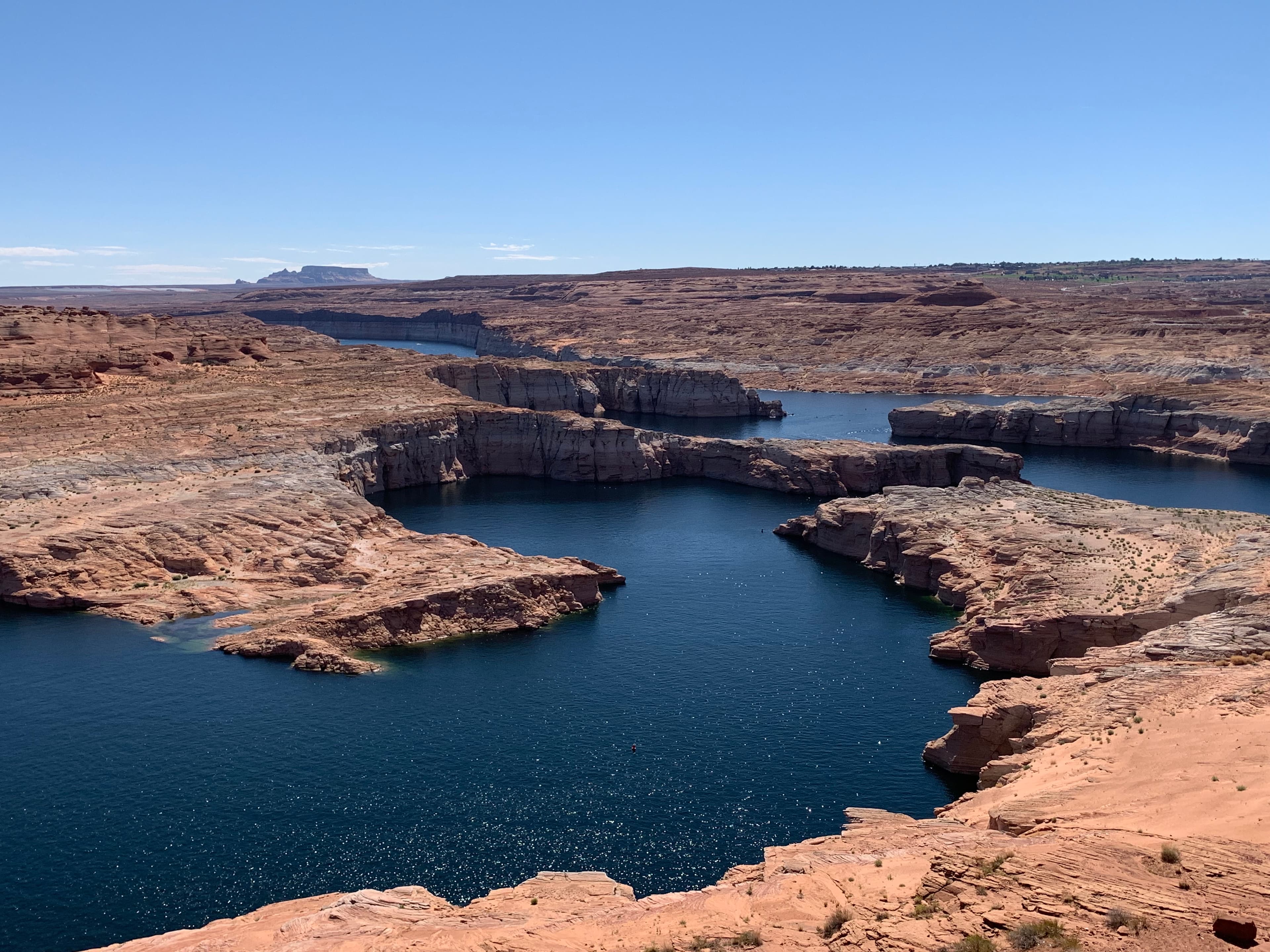
- Alstrom Point overlook (free, no boat needed): the best free view of Lake Powell requires a 3-mile drive on dirt road from Bigwater, Utah. The low water makes the panorama more dramatic, with exposed canyon walls visible that were hidden at higher levels. No permit, no fee.
What does not work well at current levels: self-launching trailered powerboats at most locations, exploring shallow arm canyons, and some houseboat anchorages that require deeper water.
Why is Lake Powell so low?
Lake Powell has been in gradual decline since 1999 because the Colorado River delivers less water annually than the amount consumed by the seven states and Mexico that share it. The 1922 Colorado River Compact allocated water based on measurements taken during an unusually wet period, and two decades of drought since 2000 has made the structural deficit worse.
The lake's recent low came in April 2023, when it dropped to approximately 3,522 feet before spring snowmelt brought partial recovery through 2023 and into 2024. The 2025 and 2026 seasons have been drier than average, pushing the lake back toward that mark.
The Bureau of Reclamation and the seven Colorado River Basin states have been implementing emergency demand reduction measures since 2022. The lake is not at risk of reaching dead pool (3,370 feet) in the near term, but recovery to anything close to full pool would require several consecutive above-average snowpack years in the Rockies.
When is Lake Powell at its highest?
Lake Powell peaks in late May or early June, fed by Colorado River snowmelt from the Rocky Mountains in Colorado, Wyoming and Utah. The lake accumulates water from roughly March through June before evaporation and downstream releases take over through summer.
Even in a good snowpack year, the current capacity deficit means the lake will not return to full pool. The 2023 recovery was the strongest in years, bringing the lake from 3,522 feet in April to roughly 3,591 feet by June, a gain of about 70 feet, but still more than 100 feet below full pool.
For visitors timing a trip around the best conditions: May and early June give the highest water of any year, plus mild temperatures before desert summer heat sets in. Those months offer the most ramp access and the widest range of activities.
Frequently asked questions
What is the current Lake Powell water level?
As of mid-August 2026, Lake Powell sits at approximately 3,519 feet above sea level, roughly 180 feet below full pool (3,700 ft) and around 21% of total capacity. The level is declining slowly through summer. For a reading updated daily, check the Bureau of Reclamation gauge at lakepowell.water-data.com.
Is Lake Powell still open to visitors?
Yes. Glen Canyon National Recreation Area remains open year-round. The low water affects boat ramp access and some marina services, but the lake is accessible and Rainbow Bridge boat tours still operate. Wahweap Marina remains the main visitor entry point.
What is full pool for Lake Powell?
Full pool is 3,700 feet above sea level, holding 26.12 million acre-feet of water. The lake has not been at full pool since 1999. The current level of around 3,519 feet represents roughly 21% of that capacity.
What is dead pool for Lake Powell?
Dead pool is 3,370 feet above sea level. Below that elevation, water can no longer flow through Glen Canyon Dam by gravity. The current level of 3,519 feet is approximately 149 feet above dead pool. Dead pool is not considered an imminent risk.
Which Lake Powell boat ramps are open in 2026?
As of August 2026, most boat ramps are closed or operating with restrictions. Wahweap Marina has limited ramp access and remains the most functional location on the lake. Always check the NPS Glen Canyon current conditions page before any boating trip, as ramp status changes frequently.
Is Rainbow Bridge still accessible at current water levels?
Yes. Rainbow Bridge boat tours from Wahweap Marina continue to operate. The main navigation channel retains enough depth for tour vessels even at current levels. The 6-hour round trip ends with a short walk from the boat dock to the monument. Advance booking is recommended, especially in summer.
When does Lake Powell typically have the most water?
Lake Powell reaches its annual peak in late May or early June, driven by Colorado River snowmelt from the Rocky Mountains. Even in a good snowpack year, the multi-decade drought deficit means the lake does not return to full pool. May and early June give the highest water and most ramp access of any time of year.
Can you houseboat on Lake Powell at current water levels?
Houseboat rentals through Aramark Lake Powell Resorts continue to operate from Wahweap Marina. Low water limits navigation to the main channels rather than shallow arm canyons. For current availability and conditions, contact the marina directly before booking.
Written by Diego Fresno, travel writer covering the American Southwest with a focus on practical conditions for visitors. Water level data sourced from Bureau of Reclamation daily gauge readings and NPS Glen Canyon National Recreation Area current conditions updates, August 2026.. Verified quarterly: last review April 2026. About the author →
Related guides
Lake Powell: Complete 2026 Visitor Guide
Rainbow Bridge tours, houseboat rentals, Wahweap Marina, and how to visit the lake from Page.
Read more →Lake Powell Boat Tours
Day cruises and multi-hour tours from Wahweap Marina, including Rainbow Bridge and canyon excursions.
Read more →Glen Canyon Dam
The dam that created Lake Powell. Free tours, the visitor centre, and what to see at the structure.
Read more →