Best overall months
September and October
Peak crowds
June, July, August
Quietest months
January and February
Fall foliage peak
Early-mid October
Summer storms
Afternoon thunderstorms July-August
Free snowshoe loans
December-March (NPS, weather permitting)
Park entrance fee
$35/vehicle (7-day pass)
Elevation at rim
8,000-9,115 ft (2,440-2,778 m)
Quick answer: the best months to visit Bryce Canyon
September and October are the best months for the majority of visitors. After Labor Day, crowd levels drop noticeably while conditions stay excellent: daytime highs sit between 59-71F (15-22C), skies are reliably clear, and the aspens in the amphitheater turn gold through October. You can reach viewpoints without fighting peak-summer parking and hike the main trails without long queues at trailheads.
If your schedule is fixed to summer, plan around the weather pattern rather than against it: early mornings (before 11 a.m.) are consistently fine in June-August. The problem is the afternoon thunderstorms that roll in almost daily from mid-July, not the heat itself. Bryce's 8,000-foot elevation keeps summer daytime highs in the 77-83F (25-28C) range rather than the triple-digit readings of lower Utah.
Winter is an underrated choice. Snow on the hoodoos produces some of the most striking images of any national park, crowds effectively disappear, and the NPS loans snowshoes free of charge. The trade-off is genuine cold: January nights can fall below -10F (-23C), and some trails become icy enough to require microspikes.
Season comparison at a glance
| Season | Months | Day temp (rim) | Night temp | Crowds | Best for |
|---|---|---|---|---|---|
| Spring | Mar-May | 48-66F (9-19C) | 21-36F (-6 to 2C) | Low to moderate | Wildflowers, fewer people |
| Summer | Jun-Aug | 77-83F (25-28C) | 44-52F (7-11C) | Peak season | Morning hikes, long days |
| Fall | Sep-Oct | 59-71F (15-22C) | 31-41F (-1 to 5C) | Light-moderate | Best overall: foliage, photography, hiking |
| Winter | Nov-Feb | 37-47F (3-8C) | 10-22F (-12 to -6C) | Very light | Snow photography, snowshoeing, solitude |
Spring at Bryce Canyon (March-May)
Spring at Bryce Canyon unfolds slowly at nearly 8,000 feet. March is still wintry: overnight temperatures dip well below freezing, and trails in the canyon can remain icy or snowy deep into the month. The flip side is that March visitors share viewpoints with almost no one, and a fresh snowfall on the hoodoos in March light is genuinely special.
April warms enough for full-day hiking in layers, though mud and patchy ice on shaded sections of trails like the Navajo Loop remain a factor until mid-month. Easter weekend in April brings an early-season spike in visitors; other April weekdays are quiet.
May is when Bryce shifts into spring proper. Wildflowers appear in the meadows along the rim, the shuttle system starts running (usually early May), and the main campgrounds open for reservations. Crowds grow steadily through May but have not yet reached the summer intensity. May is an excellent month for hiking, with the trails dry, the air cool and the park just waking up.
- Pack: Layers, waterproof boots for muddy trails, microspikes if visiting before mid-April
- Trail note: Check NPS.gov for current Wall Street closure dates (often March-April)
- Best spring activity: Wildflower walks along the Rim Trail in May
Summer at Bryce Canyon (June-August)
Summer is when most people visit Bryce Canyon, and the park earns its reputation for crowds. The Sunrise Point parking area fills by 8 a.m. on summer weekends. The shuttle system, which runs from early May through mid-October, handles the volume better than the parking lots do. If you visit in summer, take the shuttle.
The weather follows a predictable pattern. Mornings are reliably clear and excellent for hiking. From mid-July through August, afternoon thunderstorms build almost daily and typically arrive between noon and 3 p.m. Lightning on the exposed rim is a genuine hazard. The NPS advises descending from exposed ridges before noon when storms are forecast. Below-rim hikes in the canyon bottom are more sheltered but flash flood risk rises during heavy rain.
June is the sweet spot within summer: before the monsoon pattern establishes itself, days are long (sunset after 8 p.m.), temperatures peak around 77F (25C), and crowds are high but have not yet hit the August maximum. June also hosts the annual Bryce Canyon Astronomy Festival, a multi-day NPS event with free ranger-led telescope sessions and talks from astronomers that takes advantage of the park's International Dark Sky Park status. If you can only visit in summer, June is the best of the three months.
- Start hikes by: 7-8 a.m. to complete canyon descents before afternoon storms
- Parking tip: Use the shuttle from Ruby's Inn or the Visitor Center; rim lot fills by 8 a.m. in July-August
- Campground bookings: Reserve NPS sites exactly 6 months ahead at 8 a.m. Mountain Time on recreation.gov
Fall at Bryce Canyon (September-October)
Fall is the best season to visit Bryce Canyon, and October may be the single best month in the park's calendar. The reasons stack up: the afternoon monsoon thunderstorms end around Labor Day, crowds fall sharply, daytime temperatures in the 55-70F (13-21C) range are ideal for hiking, and the aspens in the amphitheater turn brilliant yellow-gold.
The aspen color typically peaks in the first two weeks of October. The groves are scattered through the canyon and visible from most of the main viewpoints. When the morning light hits a gold aspen stand against the rust-orange hoodoos, it photographs unlike any other time of year. Photographers who know Bryce Canyon often rank early October above any other date.
September is warmer than October and sees slightly more visitors, mostly families making use of the last school break. By late September, the park has noticeably fewer people than August and conditions are nearly identical. If you have flexibility, aim for the last two weeks of September or the first two weeks of October.
- Foliage peak: First two weeks of October (varies by year)
- Crowds: Drop significantly after Labor Day (first Monday of September)
- Pack: Layers that cover 30F nights and 65F afternoons; a light down jacket for evenings
Winter at Bryce Canyon (November-February)
Winter at Bryce Canyon is the park's best-kept secret. Snow transforms the hoodoos into something that looks rendered: the white caps sit on rust-red towers against a sky that is bluer in winter than in any other season. The crowds are gone. On a weekday in January, you can stand at Sunrise Point entirely alone.
The NPS makes winter easier than it sounds. The park road stays plowed and passable most of the time. The Visitor Center remains open. From December through March (weather permitting), the NPS loans snowshoes at no charge for exploring the Rim Trail and the snow-covered meadows. Ranger-led snowshoe walks run on weekends in winter. Certain trails, particularly the Wall Street section of the Navajo Loop, are closed due to ice and rockfall risk, but the full Rim Trail and Queen's Garden remain accessible with microspikes.
The cold is the honest trade-off. January and February are the coldest months: daytime highs average 37F (3C) and overnight lows fall to -10F (-23C) or below in cold snaps. Dress in true winter layers, not just a warm jacket. Wind chill on the exposed rim adds to the effective temperature. That said, the park sees roughly 100 inches of annual snowfall, and fresh powder on a clear January morning with the hoodoos lit by low-angle sun is among the most dramatic landscapes in the American Southwest.
- Free snowshoes: Available at the Visitor Center, December-March, no reservation needed
- Microspikes: Strongly recommended for rim hiking November-April
- Best winter moment: The first clear morning after a snowstorm, before the snow melts
- What's closed: Sunset Campground, some park facilities; Wall Street trail section; check NPS.gov for current closures
Month-by-month weather at Bryce Canyon
All temperatures are for the rim (approximately 8,000 ft elevation). The canyon floor runs a few degrees warmer in summer and a few degrees colder in winter than the rim figures below.
| Month | Avg high | Avg low | Conditions | Crowds |
|---|---|---|---|---|
| January | 37F (3C) | 10F (-12C) | Snow, cold | Very low |
| February | 41F (5C) | 14F (-10C) | Snow, cold | Very low |
| March | 48F (9C) | 21F (-6C) | Snow/mud mix | Low |
| April | 57F (14C) | 28F (-2C) | Variable, some rain | Low-moderate |
| May | 66F (19C) | 36F (2C) | Warming, wildflowers | Moderate |
| June | 77F (25C) | 44F (7C) | Clear mornings, storms building | High |
| July | 83F (28C) | 52F (11C) | Afternoon thunderstorms | Peak |
| August | 80F (27C) | 50F (10C) | Afternoon thunderstorms | Peak |
| September | 71F (22C) | 41F (5C) | Clear, ideal | Moderate |
| October | 59F (15C) | 31F (-1C) | Clear, fall colors | Low-moderate |
| November | 47F (8C) | 22F (-6C) | First snows | Low |
| December | 37F (3C) | 11F (-12C) | Snow | Very low |
Crowds, tickets and permits
Bryce Canyon does not require a timed-entry permit as of 2026. Entry costs $35 per vehicle for a 7-day pass, $30 for motorcycles, and $20 for walk-ins or cyclists. An America the Beautiful annual pass ($80) covers entry to all federal lands and pays for itself quickly if you plan to visit more than two national parks in a year.
The free shuttle system runs from early May through mid-October. It connects Ruby's Inn (outside the park entrance), the Visitor Center, and all the main viewpoints along the rim road. In summer, the shuttle is the most practical way to reach Sunrise, Sunset, Inspiration and Bryce Points without dealing with full parking lots. From the Visitor Center to Bryce Point and back, the full loop takes roughly 45 minutes without stops.
The park's busiest single days are 4th of July and holiday weekends in July-August. The quietest consecutive stretch is mid-January through mid-February. If you visit in peak season and want the morning light at Sunrise Point without company, arriving by 5:30 a.m. is the only reliable method.
Best time for photography and stargazing at Bryce Canyon
The amphitheater faces east, which means Bryce Canyon rewards early risers. Sunrise at Sunrise Point is among the best-timed natural light opportunities in the Southwest: the first rays hit the east-facing hoodoos and the color shifts from pale amber to deep orange-red within 10-15 minutes as the sun clears the rim. Photographers typically set up 20 minutes before the published sunrise time.
Sunset at Bryce Point and Inspiration Point works in the opposite direction: the low western light catches the same formations from a different angle. Blue hour, the 15-20 minutes after the sun drops below the horizon, shifts the color palette toward cooler purple-pink tones that are distinct from the golden-hour look and worth shooting separately.
The four highest-impact photography scenarios, ranked by the combination of conditions and uniqueness:
- Early October at sunrise: Aspen gold in the canyon, warm light, minimal people at the viewpoints
- First morning after winter snowfall: White hoodoos, clean blue sky, tracks in the snow from no one else
- July monsoon drama: Storm cells building over the amphitheater in the late afternoon (shoot from a covered viewpoint)
- May wildflowers on the Rim Trail: Foreground color with hoodoos behind, green meadow before summer turns it brown
Stargazing: Bryce Canyon as a Dark Sky Park
Bryce Canyon is one of the designated International Dark Sky Parks in the United States, with some of the lowest light-pollution readings of any accessible road in Utah. The combination of high elevation (8,000+ ft, reducing atmospheric haze), dry air and the nearest town being Tropic (population ~500) creates exceptional conditions after dark.
The Milky Way core is visible from April through September on moonless nights. Peak season for Milky Way photography is June-August, when the galactic core is highest in the sky, though summer crowds mean you will share dark-sky viewpoints in a way you will not in May or September. The NPS hosts a free Astronomy Festival each June, with ranger-led telescope sessions and talks from astronomers. Ranger-led stargazing programs also run on summer weekends at the Visitor Center.
For the darkest conditions, time your visit around the new moon (roughly one night either side works). A full moon, while dramatic on the hoodoos, washes out the fainter stars and the Milky Way. The Bryce Canyon Astronomy page on nps.gov lists the festival dates and current ranger program schedule.
Scenic Tour of Bryce Canyon
Three-hour guided tour of Bryce Canyon's main viewpoints with a knowledgeable local guide. Covers Sunrise, Sunset, Inspiration and Bryce Points with commentary on the geology, wildlife and park history. Runs daily and operates year-round, making it a reliable option regardless of when you visit.
Bryce Canyon Photography Tours
Three-hour guided photography tour of Bryce Canyon timed for the best light. Led by a local photographer who knows the optimal viewpoints and times for each season. Ideal for October fall-color shoots or winter snow sessions. Small group size ensures personal guidance on composition and camera settings.
What to pack by season
Bryce Canyon's elevation creates temperature swings of 30-40F (17-22C) between sunrise and mid-afternoon in spring and fall. Whatever season you visit, layering is the universal answer.
All seasons
- Sun protection: SPF 50+ sunscreen, sunglasses, hat. UV intensity is significantly higher at 8,000 ft.
- Layers: a fleece or down mid-layer and a windproof shell regardless of the season
- Water: at least 2 liters per person for canyon hikes (no water sources below the rim)
- Trekking poles: useful on the steep descents and ascents of the Navajo Loop and Peekaboo Trail
Spring and fall additions
- Waterproof hiking boots (mud in spring, possible light snow in April and October)
- Microspikes or traction devices for icy trail sections, especially April and late October
- Light down jacket for evenings, which cool quickly at altitude
Summer additions
- Rain jacket: afternoon thunderstorms July-August are fast-moving and heavy
- Early start: plan to be off exposed ridges and canyon floors by noon
- Lightning app: check weather before heading below the rim; storms can form quickly
Winter additions
- Microspikes or crampons: required for most below-rim trails; Rim Trail is manageable with microspikes
- Insulated waterproof boots (not just waterproof): the cold penetrates trail runners and light hikers
- Hand warmers: useful for photographers waiting for morning light
- Balaclava or neck gaiter: wind chill on the rim can be severe in January-February
- Snowshoes: borrow them free from the NPS Visitor Center rather than renting elsewhere
What is the best month to visit Bryce Canyon?
October is the single best month for most visitors. Crowds drop sharply after Labor Day, the aspens turn brilliant gold in the amphitheater, daytime temperatures sit in the comfortable 55-65F (13-18C) range, and the afternoon thunderstorms of summer are gone. September is almost as good and runs slightly warmer. Both months offer the rarest combination in any national park: photogenic conditions without peak-season crowds.
Is Bryce Canyon worth visiting in winter?
Yes, and arguably underrated. Snow transforms the rust-orange hoodoos into something otherworldly. The park stays open year-round, some roads close only temporarily after heavy snowfall, and the NPS runs a free snowshoe loan program (December through March, weather permitting). Crowds are minimal. The catch is cold: nighttime temperatures regularly fall below 0F (-18C) in January and February, and some trails become icy enough to require microspikes. Come prepared and you will have the hoodoos almost to yourself.
How hot does it get at Bryce Canyon in summer?
Bryce Canyon sits at 8,000 to 9,115 feet, so summer temperatures are far cooler than the desert floor. Daytime highs in July average 81-83F (27-28C) at the rim; down in the canyon itself it can feel warmer in direct sun. The bigger problem is not heat but the daily afternoon thunderstorms that roll in from mid-July through August. Plan to start hikes by 7-8 a.m. and be back at the rim before noon.
Can you visit Bryce Canyon without a timed-entry permit?
As of 2026, Bryce Canyon does not require a timed-entry permit beyond the standard park entrance fee ($35/vehicle for a 7-day pass, or covered by America the Beautiful). No additional slot reservation is needed. The free shuttle system runs from early May through mid-October and is the practical way to reach most viewpoints in summer without fighting for parking. Arrive before 8 a.m. if you plan to drive yourself in peak season.
What time of day is best for photos at Bryce Canyon?
Sunrise at Sunrise Point (appropriately named) is the classic shot: the low-angle light catches the east-facing amphitheater and turns the hoodoos from pale orange to deep red within minutes. Sunset at Inspiration Point and Bryce Point lights the west side of the formations. Blue hour, 15-20 minutes after sunset, adds a cooler palette that photographs differently from the golden hour. In winter, the hour after a fresh snowfall at any time of day produces images unlike any other season.
Does Bryce Canyon get crowded?
The park sees roughly 2.6 million visitors annually, with June through August accounting for the lion's share. Sunrise and Sunset Points in summer can have full parking lots by 8 a.m. The shuttle system takes most of the parking pressure off, but the viewpoints and trailheads themselves can feel busy. September and October see noticeably thinner crowds with the same (or better) conditions. November through March, you may share a viewpoint with just a handful of people.
Is the Navajo Loop open in winter?
Wall Street section of the Navajo Loop is typically closed from late November through April due to ice and rockfall risk. The shorter Two Bridges and Queen's Garden sections of the loop may be hikeable with microspikes when conditions allow, but check the current trail status at the Visitor Center on arrival. The Rim Trail remains open and walkable in winter and offers all the main viewpoints without descending into the canyon.
When do the aspens turn at Bryce Canyon?
The aspens in and around the Bryce Canyon amphitheater typically peak in early-to-mid October, usually the first two weeks of the month. The exact timing shifts by a week or two depending on summer rainfall and early-fall temperatures. Ponderosa pines dominate the higher elevations and stay green year-round; the golden color comes primarily from the aspen groves scattered through the canyon and along the rim road.
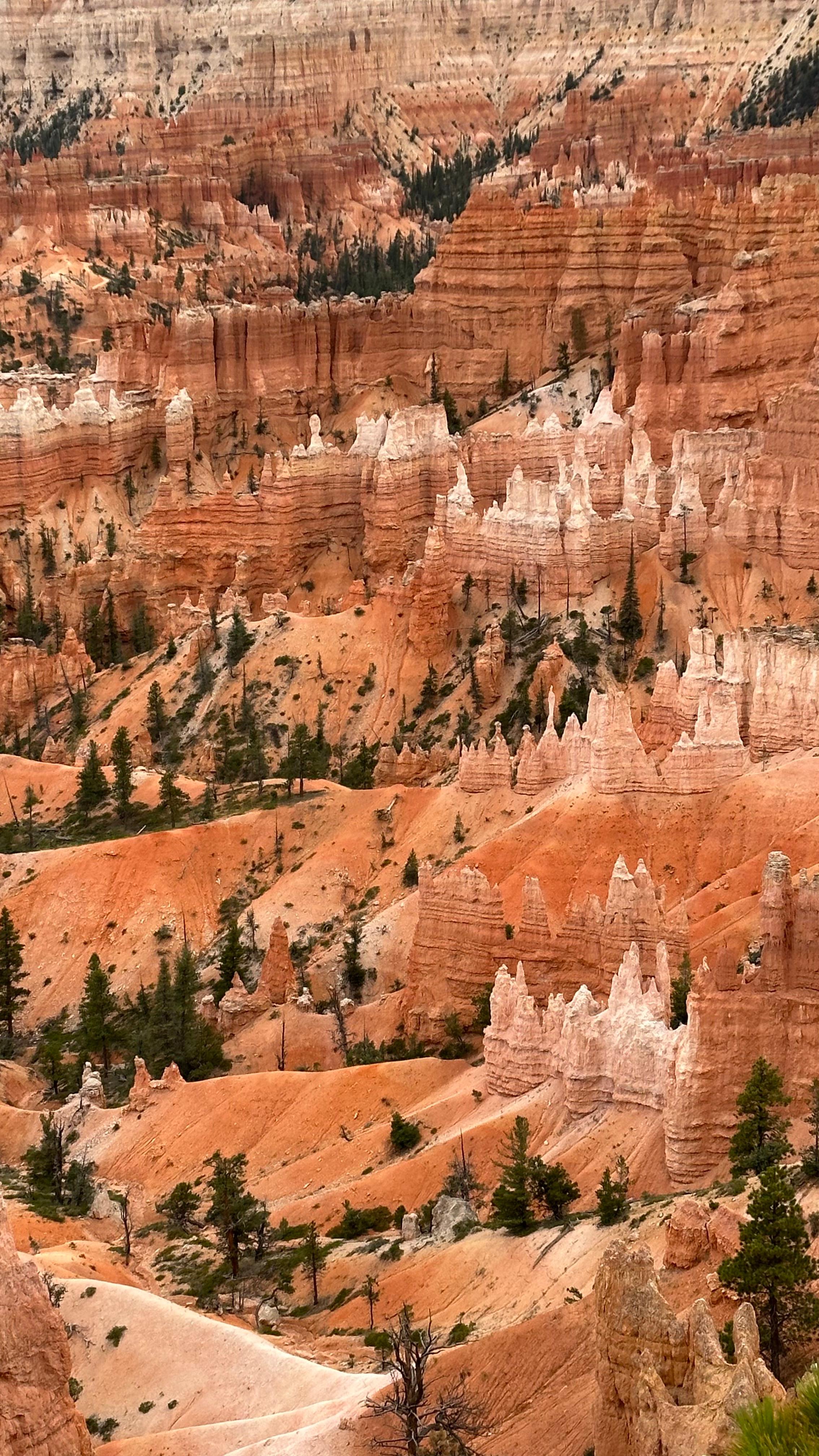
Bryce Canyon National Park
Overview, viewpoints, trails and planning essentials for Bryce Canyon National Park.
Read more →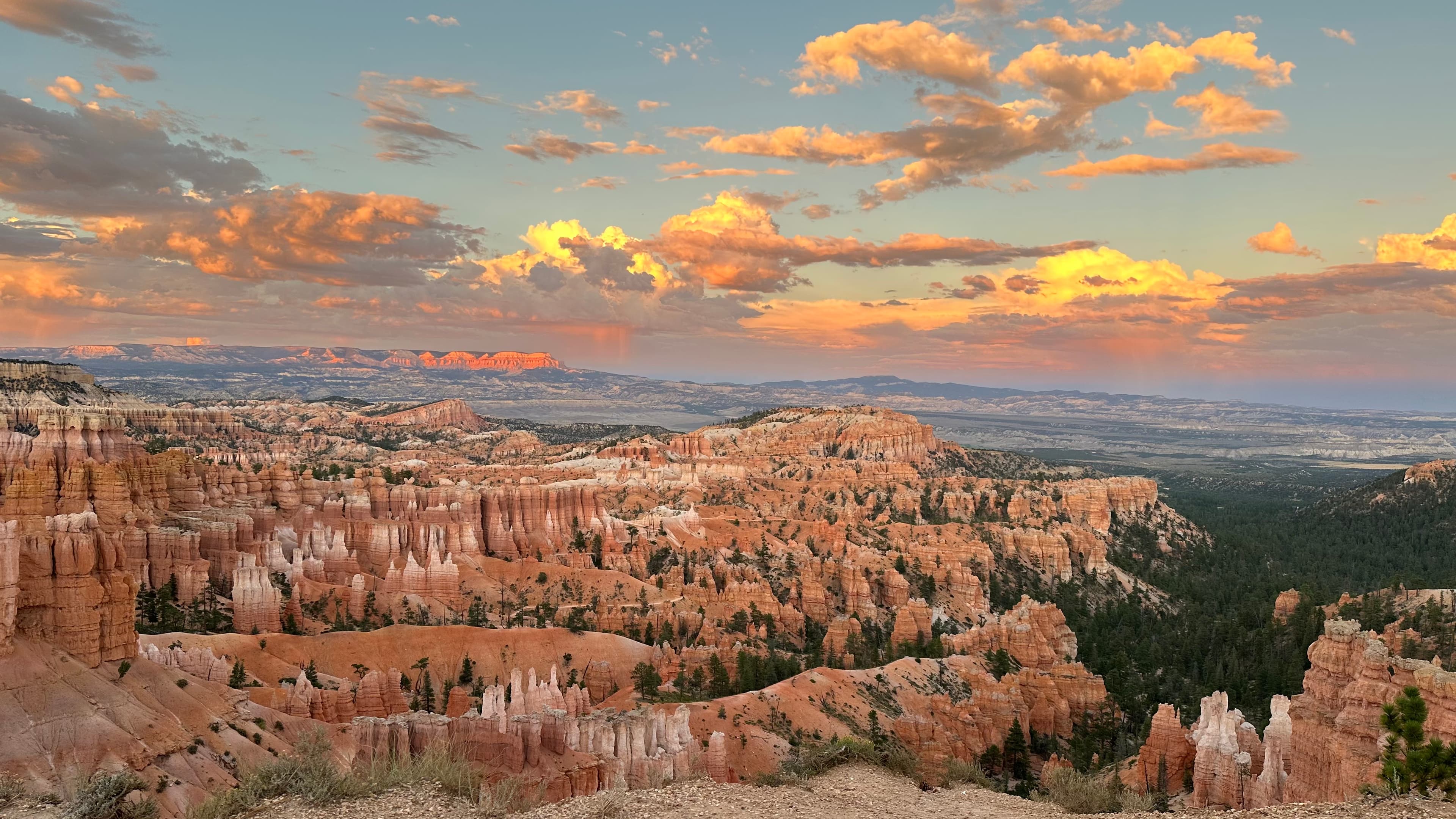
Best Hikes in Bryce Canyon
Nine trails ranked from the classic Navajo Loop to the 22-mile Rigg's Spring backcountry route.
Read more →Hotels Near Bryce Canyon
Where to stay near the park, from budget motels in Panguitch to The Lodge at Bryce Canyon.
Read more →
Written by Diego Fresno, Travel writer and independent publisher specialising in the American Southwest. Latest research conducted on location in Page, Arizona during July 2025. Guides are verified quarterly; last review April 2026.. Verified quarterly: last review April 2026. About the author →