Best month
September
Second best
April-May, October
Avoid midday
June-August (100°F+)
Best time of day
Sunrise or 1 hr before sunset
Entry fee
$10/person + $15/vehicle
Park hours (summer)
8am-7pm, last entry 4:30pm
Park hours (winter)
8am-5pm, last entry 2:30pm
Elevation
5,564 ft
Quick answer: the best months
September is the single best month to visit Monument Valley. The summer monsoons end in late August, clearing the air and reducing the risk of afternoon storms that close the Valley Drive. Temperatures drop to a comfortable 60-80°F during the day and 40-50°F at night. The crowds have thinned significantly from the July-August peak but the park runs at full capacity. Tour operators have full schedules. The View Hotel has availability.
October runs a close second. Temperatures cool further to 50-70°F. The light becomes even more dramatic in late October as the sun sits lower in the sky, throwing longer shadows across the buttes. November is still pleasant, though nighttime temperatures fall below freezing and some afternoon tours may have reduced availability.
April and May are the best spring months. Desert wildflowers bloom in late March and April. Temperatures are mild at 55-75°F. Spring can bring wind and occasional dust, but the light is excellent and the crowds are lighter than summer.
Season by season overview
| Season | Temp range | Crowds | Road conditions | Verdict |
|---|---|---|---|---|
| Spring (Mar-May) | 50-75°F (10-24°C) | Moderate | Good | Excellent |
| Summer (Jun-Aug) | 85-105°F (29-40°C) | Peak (heaviest) | Muddy after rain | Early starts only |
| Fall (Sep-Nov) | 45-80°F (7-27°C) | Light to moderate | Excellent | Best overall |
| Winter (Dec-Feb) | 25-55°F (-4-13°C) | Very light | Possible closures after snow | Underrated |
Month-by-month breakdown
| Month | High / Low | Crowds | Notes |
|---|---|---|---|
| January | 42°F / 18°F | Very light | Cold mornings, possible snow, peaceful |
| February | 50°F / 24°F | Very light | Warming up, clear skies, good photography |
| March | 60°F / 32°F | Light | Desert flowers start, windy days possible |
| April | 72°F / 40°F | Moderate | Wildflowers, comfortable temps, good light |
| May | 82°F / 49°F | Moderate-high | Warm but manageable, long days, popular |
| June | 93°F / 58°F | High | Hot middays, start early or go late |
| July | 97°F / 64°F | Peak | Monsoon storms afternoons, dramatic skies |
| August | 94°F / 62°F | Peak | Still monsoon season, muddy loop road risk |
| September | 82°F / 50°F | Moderate | Best month: clear air, golden light, fewer crowds |
| October | 68°F / 37°F | Light-moderate | Crisp air, exceptional photography light |
| November | 53°F / 26°F | Light | Cold nights, some operators reduce schedule |
| December | 44°F / 19°F | Very light | Occasional snow, park closed holidays |
Best time of day to visit
Time of day matters almost as much as month of visit at Monument Valley. The buttes are made of Navajo sandstone, which shifts from deep red to bright orange to near-purple depending on the angle of the light.
Sunrise
The East and West Mitten Buttes face roughly east and southeast. At sunrise, the low sun lights them directly while the rest of the valley is still in shadow. The best place to watch this is from The View Hotel, where every room has a private east-facing balcony. You do not need to be a guest: the outdoor terrace next to the Visitor Center is open before 8am and gives you the same view.
Late afternoon and sunset
Between 3pm and 6pm, the low western sun lights the faces of the formations and throws long shadows across the valley floor. This is when the buttes glow most intensely. Forrest Gump Point, on US-163 about 5 miles north of the Visitor Center, gives a wide panoramic view of the entire valley and catches this light perfectly. No entrance fee required from the highway overlook.
Midday
Midday light (10am-2pm) is harsh and flat. The formations lose their color depth and the heat is at its worst from May through September. If you arrive at midday, spend that time at the Visitor Center museum or resting, and get back out once the sun drops.
Monsoon season: July and August explained
Most guides tell you to avoid July and August. That is partly right and partly wrong. The Navajo Southwest monsoon season runs from roughly July 1 through mid-September, bringing afternoon thunderstorms most days. The storms typically build from noon and peak between 2pm and 5pm.
The reason to be cautious: the 17-mile Valley Drive is an unpaved dirt and sand road that becomes muddy and impassable after heavy rain. Jeep tours may be cancelled. Some sections flood temporarily. If you visit in July or August, plan your Valley Drive for the morning and be back at the Visitor Center before noon.
The reason not to completely write off summer: the monsoon thunderclouds produce some of the most dramatic skies in the American Southwest. Photographers who specifically chase storm light consider July the most visually interesting month of the year. Massive cloud towers over the Mittens, with shafts of light breaking through, are a Monument Valley photograph you rarely see in the tourist brochures. If weather photography is your goal, July delivers.
Winter visits: the underrated option
Monument Valley in winter is one of the most underrated experiences in the American Southwest. Visitor numbers drop dramatically. The View Hotel has rooms available. Navajo-guided tour operators still run morning and afternoon departures.
Occasional snowfall, most likely in January and February, dusts the red sandstone with white. The contrast between the snow and the deep red rock is striking. These conditions rarely last more than a day or two, so they are hard to plan for, but the aftermath of a snow storm is exceptional.
The practical constraint: morning temperatures below 30°F require warm layers, and the Valley Drive last entry is at 2:30pm in winter, giving you less afternoon time than in summer. Some smaller tour operators reduce their schedules in January and February. Book in advance to confirm availability.
Combining with Antelope Canyon and Horseshoe Bend
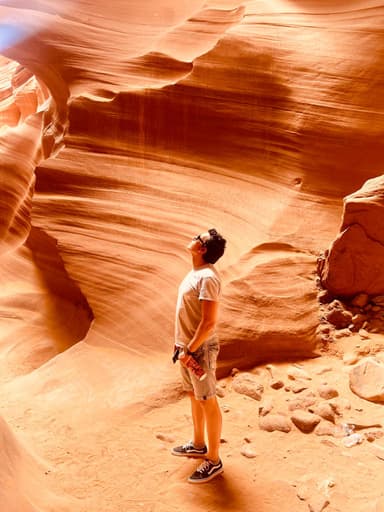
Monument Valley is 105 miles from Page, Arizona, about 1 hour and 45 minutes by car via US-160 and US-98. Most visitors who come to this part of the Southwest want to see Antelope Canyon, Horseshoe Bend, and Monument Valley. The timing question then becomes: in what order, and what time of year works for all three?
The standard two-day itinerary: Day 1 in Page for a morning Antelope Canyon tour (Upper or Lower) followed by Horseshoe Bend in the afternoon. Day 2 drive south to Monument Valley, arrive by 9am, do the Valley Drive and a Navajo-guided jeep tour, and catch the sunset from Forrest Gump Point before driving on.
Best time of year for all three: September. Antelope Canyon light beams (in Upper Canyon) are strongest from late March through early October around midday. Horseshoe Bend is good year-round but the late-afternoon light in September is exceptional. Monument Valley, as explained above, peaks in September. All three align perfectly for a September visit.
Monument Valley Navajo-Guided Jeep Tour (2.5 Hours)
A Navajo guide takes you inside the formations and off the public Valley Drive road, accessing restricted areas like Ear of the Wind, Big Hogan, and Totem Pole. Prices start around $65 per adult. Entry fee included.
Monument Valley Sunset Jeep Tour (3 Hours)
The 3-hour sunset tour leaves in the afternoon and is timed so you finish with the valley in golden hour light. Navajo guide, off-road access to restricted formations, return after dark.
Frequently asked questions
What is the best month to visit Monument Valley?
September is the single best month. The monsoon season ends in late August, leaving clear skies and crisp air. Temperatures sit between 55 and 80°F during the day. The summer crowds have thinned but the park is still fully operational, with all tour operators running full schedules. The golden-hour light in September is exceptional on the West and East Mitten Buttes.
Is Monument Valley worth visiting in summer?
Yes, with caveats. June is manageable if you stick to early mornings (before 10am) and late afternoons (after 4pm). July and August bring monsoon thunderstorms most afternoons, intense heat above 100°F at midday, and the heaviest crowds of the year. The 17-mile Valley Drive road can become muddy and difficult after rain. If you visit in July or August, come at sunrise and plan to be back at your hotel by noon.
Can you visit Monument Valley in winter?
Yes. December through February is the quietest time of year at Monument Valley. Daytime temperatures reach 45-55°F, which is comfortable for driving and short walks. Morning temperatures drop below freezing, and occasional snow covers the red buttes, creating some of the most dramatic photography conditions possible. Some unpaved roads may close temporarily after heavy snowfall. The View Hotel and Goulding's Lodge both operate year-round.
What time does Monument Valley open and close?
Summer hours (roughly May through October): 8am to 7pm, with last entry to the Valley Drive at 4:30pm. Winter hours (November through April): 8am to 5pm, with last entry at 2:30pm. The park is closed on Thanksgiving, Christmas, and New Year's Day in observance of Navajo Nation holidays. Always check navajonationparks.org for current hours before you visit.
How much does Monument Valley cost to enter?
Entry is $10 per person per day. The 17-mile Scenic Loop Drive adds a $15 vehicle fee. National Park passes (America the Beautiful, etc.) do not apply, because Monument Valley is managed by the Navajo Nation, not the National Park Service. Navajo-guided jeep tours are priced separately, starting around $65 per adult for a 2.5-hour tour.
How far is Monument Valley from Antelope Canyon?
Monument Valley is about 105 miles from Antelope Canyon in Page, Arizona, which is roughly 1 hour and 45 minutes by car via US-160 and US-98. Many visitors combine both sites over two days: one day in Page for Antelope Canyon and Horseshoe Bend, and the next day driving to Monument Valley.
Is sunrise or sunset better at Monument Valley?
Both are excellent, but for different reasons. Sunrise from The View Hotel is iconic: you watch the East and West Mitten Buttes emerge from darkness in warm red light without moving from your hotel window. Sunset from Forrest Gump Point (on US-163, north of the park entrance) gives a wide panoramic view of the valley turning orange and then deep red as the sun drops behind you. Photographers often prefer sunrise for the buttes and sunset for the panoramic.
Written by Diego Fresno, Travel writer and independent publisher specialising in the American Southwest. Latest research conducted on location in Page, Arizona during July 2025. Guides are verified quarterly — last review April 2026.. Verified quarterly: last review April 2026. About the author →