Buckskin Gulch is a crack in the ground you can walk down for the better part of a day. The walls are Navajo sandstone, 100 to 200 feet high, and for mile after mile they stay close enough that you can put a hand on each one. Light arrives second hand, bounced down from a strip of sky you have to tilt your head back to see. The floor is sand, gravel and, depending on when it last rained, pools of standing water with nowhere to drain to. It is generally described as the longest continuous slot canyon in the world, and it is a different proposition from Antelope Canyon: longer by an order of magnitude, wider in places, often muddy underfoot, and with nobody selling anything at the entrance.
What it is
Longest continuous slot canyon in the world
Length
Roughly 16 miles of narrows, per the BLM
Day-use permit
$6 per person, $6 per dog. No quota
Standard day hike
3.4 miles round trip from Wire Pass
Through-hike
About 20 miles to White House trailhead
Overnight limit
20 people a day, all trailheads combined
From Page, AZ
About 36 miles west, then 8.3 miles of dirt
From Kanab, UT
About 37 miles east, then 8.3 miles of dirt
Managed by
BLM, Kanab Field Office
Time zone
Utah, Mountain Time. Page, Arizona is not
What Buckskin Gulch actually is
Buckskin Gulch is the northern arm of the Paria Canyon-Vermilion Cliffs Wilderness, 112,500 acres that Congress protected in 1984. It drains into the Paria River, which drains into the Colorado at Lees Ferry. On a map it is a thin scratch. On the ground it is a corridor you walk inside rather than a canyon you look at from a rim.
Its length is quoted differently by the two bodies that ought to know. The BLM says roughly 16 miles. Visit Utah says 12.5 miles of gorge 100 to 200 feet deep. We have not found a reconciliation, and the likeliest explanation is that each one draws the start and end of the slot in a different place. For deciding what to do with a day, neither number is the useful one. These are:
| Leg | Distance one way | Source |
|---|---|---|
| Wire Pass trailhead to the Buckskin confluence | 1.7 miles | BLM |
| Wire Pass trailhead to the Paria confluence, through Buckskin | About 13 miles | BLM |
| Paria confluence to White House trailhead | About 7 miles | BLM |
| Buckskin Gulch trailhead, down House Rock Valley Road | 4.5 miles from US-89 | BLM |
| Wire Pass trailhead, down House Rock Valley Road | 8.3 miles from US-89 | BLM |
Mileages as published by the Bureau of Land Management on blm.gov, read on 24 November 2026. Adding the second and third rows gives the through-hike: about 20 miles from Wire Pass to White House.
The Wave’s trailhead, without the lottery
The thing most people have wrong about Buckskin Gulch is that they think they cannot get in. The confusion is understandable, because the canyon shares its access with the most heavily rationed hike in the American Southwest. The Wave is reached from the Wire Pass trailhead, the same gravel lot, and it runs on two lotteries that turn down the large majority of people who enter them. The Coyote Buttes trail branches off the Wire Pass path about 0.6 miles in. Up to that fork, Wave permit holders and Buckskin day hikers are walking the same sand.
After the fork the rules are completely different. The BLM’s permit page for Paria Canyon says it in one sentence: “There are no visitor use limits for day use for Paria Canyon.” No lottery, no cap, no reservation, nothing to win. You drive out, you pay $6 at a kiosk, you walk in.
That makes Buckskin Gulch the obvious thing to do on the day the lottery goes against you, and it is worth knowing before you go rather than after, because the Daily Lottery result arrives on your phone when you are already in the area. One of the two guided operators out here builds its entire pitch around that scenario.
Three ways in, and the one most people take
1. The Wire Pass day hike, which is probably what you are here for
From the Wire Pass trailhead it is 1.7 miles to the confluence with Buckskin Gulch. You walk down Coyote Wash for a bit over a mile, pass through two short stretches of narrows where the canyon closes to about three feet wide, and come out at a confluence with a petroglyph panel pecked into the wall a couple of feet above the streambed. That is 3.4 miles round trip and 1.5 to 2 hours for most people, with almost no climbing: the Grand Canyon Trust puts the trailhead at 4,850 feet and the low point at 4,740.
At the confluence you are standing in Buckskin Gulch, and you can turn either way and keep going for as long as you like before turning round. Most people wander fifteen or twenty minutes downcanyon and come back. Our guide to the Wire Pass trail covers that walk step by step, including the one obstacle and when the parking fills.
2. A long day in the narrows
Fit hikers extend the same trip by pushing further down Buckskin from the confluence. There is no fixed turning point and no official route, which is the attraction and the risk at the same time: the canyon simply continues, there are no mile markers, and the way back is however far you came. The sensible version is a time limit rather than a distance one. Fix an hour at which you turn round whatever you can see ahead, and keep to it.
3. The through-hike, which is a different sport
Adding the BLM’s own figures, Wire Pass to White House through Buckskin and the top of Paria Canyon is about 20 miles. It is done as an overnight, it needs the capped permit described below, and it involves wading, stagnant pools, a boulder jam that normally requires lowering packs on a rope, and carrying out every piece of your own waste. It is a serious wilderness trip and this page is not a route description for it.
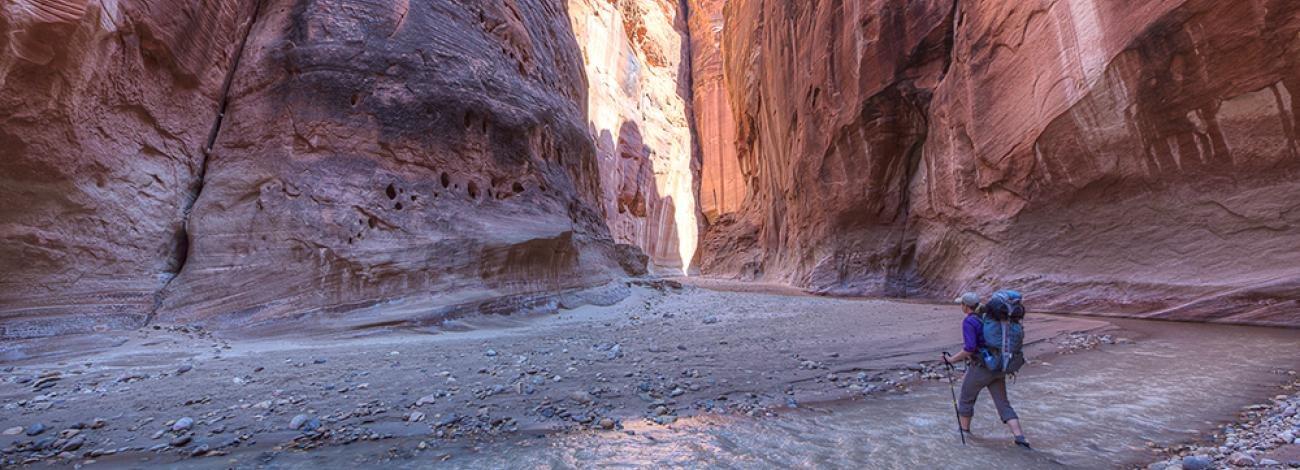
Bureau of Land Management photograph, public domain. This is Paria Canyon, not Buckskin Gulch: it is the canyon the through-hike continues into after the confluence, and it is wider and wetter than the slot above it.
The permit, in full
There are two permits with almost the same name and almost nothing in common. Mixing them up is the most common planning mistake here.
| Day use | Overnight | |
|---|---|---|
| Fee | $6 per person per day, $6 per dog | $5 per person per day, $5 per dog |
| Daily limit | None | 20 people a day, all four trailheads combined |
| How to get it | QR kiosk at the trailhead, or Recreation.gov in advance | Recreation.gov only, months ahead |
| Collection | Print it, or write the pass ID on a trailhead envelope | In person, no sooner than 10 days before |
| Group size | Maximum 10 affiliated people | Maximum 10 affiliated people |
| Covers The Wave? | No | No |
Fees, limits and procedures as published by the BLM and on the Wire Pass Day Use Pass listing at Recreation.gov, read on 24 November 2026.
Four things in that table catch people out.
The overnight permit is cheaper per day than the day-use one. Five dollars against six. It is not a misprint on either page, and it is the opposite of how fees usually work.
No pass of any kind gets you a discount. The BLM states that no permit exemptions, passes or discounts apply in Paria Canyon and Buckskin Gulch, and names the America the Beautiful series specifically: Annual, Senior, Access and Volunteer. Recreation.gov repeats it twice on the same page. Payment is by credit card only.
Children are the one point where the official sources disagree. Visit Utah’s trail page for this hike says no fee is required for children aged twelve and under. The BLM and the Recreation.gov pass listing both say $6 per person with no exemptions, and Recreation.gov’s booking instructions tell you to enter dogs under the number of children, which suggests that field is being used for something other than a child discount. We cannot reconcile the two, so budget $6 a head for everybody and you will not be caught short.
The permit has to be visible on your dashboard. Printed, or with the pass ID written on one of the fee envelopes at the trailhead. Recreation.gov also asks you to sign in and out at the trail register, which in a canyon with no phone signal is the mechanism by which anybody would notice you had not come back.
The road, and your rental agreement
The turnoff is House Rock Valley Road, which leaves US-89 between mileposts 25 and 26, unsigned, at the west end of a sharp curve just west of the Cockscomb. Coming from Page it is about 36 miles west. Coming from Kanab it is about 37 miles east. From the highway it is 4.5 miles of dirt to the Buckskin Gulch trailhead and 8.3 miles to Wire Pass. Both have a pit toilet. Wire Pass has the bigger parking area, room for about 30 cars, and it is the one that fills.
On the vehicle, the BLM is less alarmist than most of what is written about this road. Its wording: most of the time the trailhead is reachable in a two-wheel-drive, high-clearance vehicle; four-wheel drive with high clearance may be required when the road is wet; and during the rainy season and winter it can become impassable for all vehicles, including 4x4s. The question is less what you are driving than what the weather has been doing. Wet clay is the problem, not the gradient.
The other obstacle is a piece of paper. Most rental agreements written at the Page and Las Vegas desks prohibit driving on unpaved roads, which does not stop the car but does mean a puncture or a slide into the ditch is entirely your bill, recovery included, and recovery out there is not cheap. If that matters to you, the options are renting from somewhere that permits it, which our guide to renting a car in Page covers, or taking a guided trip that provides the vehicle.
Thirteen miles with one way out
Every slot canyon guide warns about flash floods and most of the warnings are interchangeable. The specific reason this one is different is the length of the trap.
From the Wire Pass confluence to the Paria confluence is about 13 miles, and within that stretch the canyon is 100 to 200 feet deep and often only a few feet wide. There is one exit, the Middle Route, and it is not an emergency exit in any useful sense. Visit Utah grades the Middle Route as very strenuous, with Class 3 and 4 downclimbing to enter the gulch, a descent down a sandy slickrock crack where one misstep could end in injury, and a 50-foot rope needed to lower packs. It also notes a boulder jam in Buckskin Gulch 3.5 miles below the Middle Route that normally needs a rope as well. You do not scramble up that in a hurry with water coming.
The trigger is small. Visit Utah puts it at a quarter of an inch of rain running off the slickrock, and the water does not have to fall on you: the watershed feeding the gulch is large, and a storm over country you cannot see from the trailhead will do it. The standard advice, which is the BLM’s and every guidebook’s, is not to enter if there is any chance of rain anywhere in the drainage, and this is one of the rare pieces of standard advice meant literally.
For the short Wire Pass day hike the exposure is much lower, because you are 1.7 miles from the car and the narrows are short. It is not zero. The same rain that fills Buckskin fills Wire Pass.
What you have to carry out
The wilderness rules here are stricter than most people expect and they are attached to the permit. Campfires are prohibited. Human waste bags are required throughout Buckskin Gulch and Paria Canyon, and all solid human waste has to be packed out along with every piece of trash, toilet paper and the bags themselves. Dog waste and dog waste bags come out too. Groups cannot exceed 10 affiliated people in the same permit area on the same day, and Recreation.gov notes that exceeding it can be cited. Drones are banned, as is any mechanical transport, for the plain reason that this is designated wilderness.
Waste bags are handed out with overnight permits at the Paria Contact Station, the Kanab Field Office and the Arizona Strip District office in St. George. If you are day hiking deep into the canyon, work out where you will get yours before you drive out.
When to go
Visit Utah’s seasons for this hike are April through early June and September through October, and they line up with the two things that can spoil it.
July to September is the monsoon, when the flash flood risk is at its annual peak. People do hike it then, in settled weather and early in the day, but it is the season in which to be willing to cancel at the trailhead. Winter is legal, quiet and cold in a particular way: a slot canyon holds cold air all day, the pools in Buckskin do not drain and do not warm up, and the Grand Canyon Trust warns that even on a sunny winter afternoon the narrow part can be freezing. Add that House Rock Valley Road is at its least reliable between November and March, and winter becomes a trip for people equipped for it rather than a casual stop.
Day use runs sunrise to sunset. There is no gate and no ranger checking you in, so the practical constraint is daylight and your own judgement.
Going with a guide
Nobody needs a guide to walk Wire Pass. It is 1.7 miles down a wash on a permit you buy with your phone, and the BLM publishes the route in two paragraphs. The reasons to pay somebody are narrower than that: getting a 4x4 and a driver for House Rock Valley Road without putting your rental agreement in breach, having someone who has seen the canyon this month rather than in a photograph, and, if you are going further than the confluence, not being alone in a place with no signal and one exit.
The market is small. Commercial trips need a Special Recreation Permit from the BLM on top of the ordinary one, which is why there are two operators selling this and not twenty. Both have excellent ratings on a thin number of reviews, and both numbers are given rather than rounded away.
Private Guided Buckskin Gulch Tour Via Wire Pass
Sundial Guiding, six hours, meeting at House Rock Valley Junction or Lone Rock Beach. Private, so the group is yours: minimum two people, maximum six, from age six. Permit fees and four-wheel-drive transport to the trailhead are included, which removes the kiosk problem and the rental agreement problem in one go. Guides are described as certified in emergency rescues. Their own booking note is worth reading twice: all tours start on Utah time, and Page, Arizona is an hour behind during daylight saving.
And the one we are not putting a button on. Kanab Tour Company sells a full day at $240, eight hours, leaving from Kanab, shared with up to nine people, with free cancellation. It is sold explicitly as the plan for people who lose The Wave lottery, and it pairs Buckskin and Wire Pass with an alternative Wave formation. On paper it is five stars, and it has three reviews. Three is not enough of a record for us to put our name behind an eight-hour day in a canyon with this hazard profile, so the figures are here and the decision is yours. Note also that its listing includes bottled water and air conditioning but does not mention the permit, so assume the $6 is on top.
Frequently asked questions
Do you need a permit to hike Buckskin Gulch?
Yes, but not a lottery permit. A day-use permit is required and costs $6 per person and $6 per dog. There is no quota and no advance booking: the BLM states that there are no visitor use limits for day use in the Paria Canyon and Buckskin Gulch permit area. You pay at a self-service kiosk at the trailhead by scanning a QR code with your phone, or you buy it on Recreation.gov beforehand. An overnight permit is a different thing entirely: it is capped at 20 people a day across all four trailheads and has to be reserved months in advance.
How long is Buckskin Gulch?
The two official sources do not agree, so here are both. The BLM says the gulch passes through roughly 16 miles of narrows. Visit Utah says the canyon is enveloped in a very narrow gorge for 12.5 miles. The difference is most likely where each one decides the slot begins and ends rather than a dispute about the ground. Either way it is the longest continuous slot canyon in the world, and the figure that matters for planning is a different one: from the Wire Pass trailhead to the Paria confluence is about 13 miles one way, with no road, no trail and no exit in between.
Can you day hike Buckskin Gulch?
Yes, and that is what the large majority of visitors do. The standard day hike starts at the Wire Pass trailhead, follows Coyote Wash for 1.7 miles through the Wire Pass narrows and reaches the confluence with Buckskin Gulch, where there is a petroglyph panel. That is 3.4 miles round trip and takes most people 1.5 to 2 hours. From the confluence you can walk as far up or down Buckskin as your legs and the forecast allow, then turn round and come back the same way.
Is Buckskin Gulch dangerous?
The canyon is not technically difficult for most of its length, but the flash flood exposure is unusually severe because of how long it stays narrow. Between the Wire Pass confluence and the Paria confluence, roughly 13 miles, the only way out is the Middle Route, and Visit Utah rates that as very strenuous Class 3 and 4 downclimbing where ropes are essential to lower packs. Visit Utah also puts a number on the trigger: as little as 0.25 inches of rain running off the slickrock can make these slots extremely dangerous. The watershed that feeds the canyon is large and a storm you cannot see from the trailhead is enough.
Do you need a 4x4 to reach Buckskin Gulch?
Usually not, and this is where a lot of advice is more cautious than the agency that owns the road. The BLM says that most of the time House Rock Valley Road can be driven to the Wire Pass trailhead in a two-wheel-drive, high-clearance vehicle. Four-wheel drive with high clearance may be needed when the road is wet, and in the rainy season and winter it can become impassable for every vehicle including 4x4s. The separate catch is contractual rather than mechanical: most rental agreements from the Page and Las Vegas desks forbid unpaved roads, so a breakdown out there is on you.
How much does the Buckskin Gulch permit cost?
Day use is $6 per person per day and $6 per dog. Overnight is $5 per person per day and $5 per dog, which means that per day on the ground, camping in the canyon is cheaper than walking in for the afternoon. No discounts apply to either: the BLM states that no permit exemptions, passes or discounts are accepted in Paria Canyon and Buckskin Gulch, and that explicitly includes the America the Beautiful annual, Senior, Access and Volunteer passes. Payment is by credit card only.
Can you bring a dog into Buckskin Gulch?
Yes. Dogs are allowed and have to be on the permit at $6 each for day use. Two practical notes. The first is that their waste has to be packed out, bags included, like everything else. The second is the boulder jam: Visit Utah flags it as the obstacle in Wire Pass and says negotiating it with a dog can be difficult, so a dog that cannot be lifted may not get past it.
How do you get an overnight permit for Buckskin Gulch?
Only online, on Recreation.gov, and only in advance. Entry is limited to 20 people per day counted across all four trailheads, dogs excluded. Applications open at noon on the first of the month for a permit three months later, so 1 January opens April. The permit has to be collected in person and no sooner than 10 days before the trip, from the Paria Contact Station between 15 March and 15 November, or the Kanab Field Office between 16 November and 14 March. The entry date cannot be changed afterwards and nothing can be changed within two weeks of entry.
Is Buckskin Gulch the same as The Wave?
No, although they share a car park. The Wave is in Coyote Buttes North, a separate permit area with a lottery that turns down the large majority of applicants, and it is open slickrock rather than a slot. Buckskin Gulch is a narrow canyon on a straightforward day-use permit with no quota at all. The Coyote Buttes trail branches off the Wire Pass path about 0.6 miles from the trailhead, which is where the two trips part company. A day-use permit for Buckskin and Wire Pass does not let you walk to The Wave.
When is the best time to hike Buckskin Gulch?
Visit Utah gives April through early June and September through October, and that matches the two hazards. July to September is the monsoon, when the flash flood risk is at its highest and is the reason to stay out. Winter is quiet and the canyon is legally open, but the narrows hold cold air and standing water all day, the pools do not drain, and House Rock Valley Road is at its least reliable. If you can only come in summer, go early and read the forecast for the whole watershed rather than for the trailhead.
Written by Diego Fresno, travel writer and independent publisher covering the American Southwest. The permit fees, quotas, distances, group limits and road descriptions in this guide were read on 24 November 2026 on the BLM pages for Buckskin Gulch, Wire Pass and Paria Canyon permits, and on the Wire Pass Day Use Pass listing at Recreation.gov. Where the BLM and Visit Utah give different figures, both are shown. Tour prices, ratings and review counts came from the Viator API the same day.. Verified quarterly: last review 24 November 2026. About the author →
Related guides
Wire Pass Trail: the 3.4-mile hike into Buckskin
The walk most people actually do, step by step: the parking, the Coyote Buttes fork, the boulder jam and the petroglyphs.
Read more →
The Wave: permits, the lottery and the hike
Both BLM lotteries explained, the three days a Daily Lottery attempt takes, and the time zone trap that voids permits.
Read more →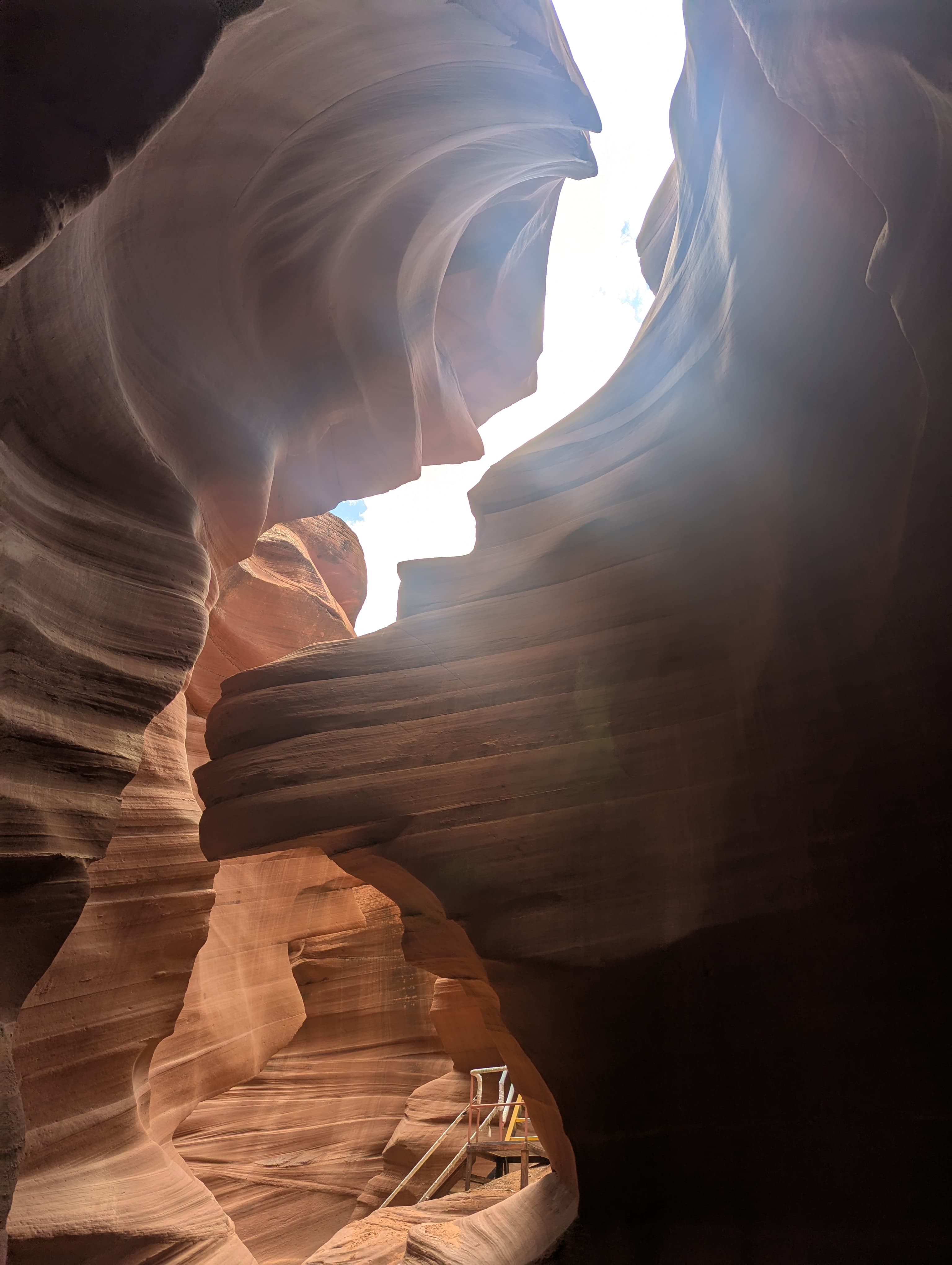
Slot canyons of Arizona and Utah compared
Upper and Lower Antelope, Canyon X, Buckskin, Waterholes, Spooky and the Narrows, side by side.
Read more →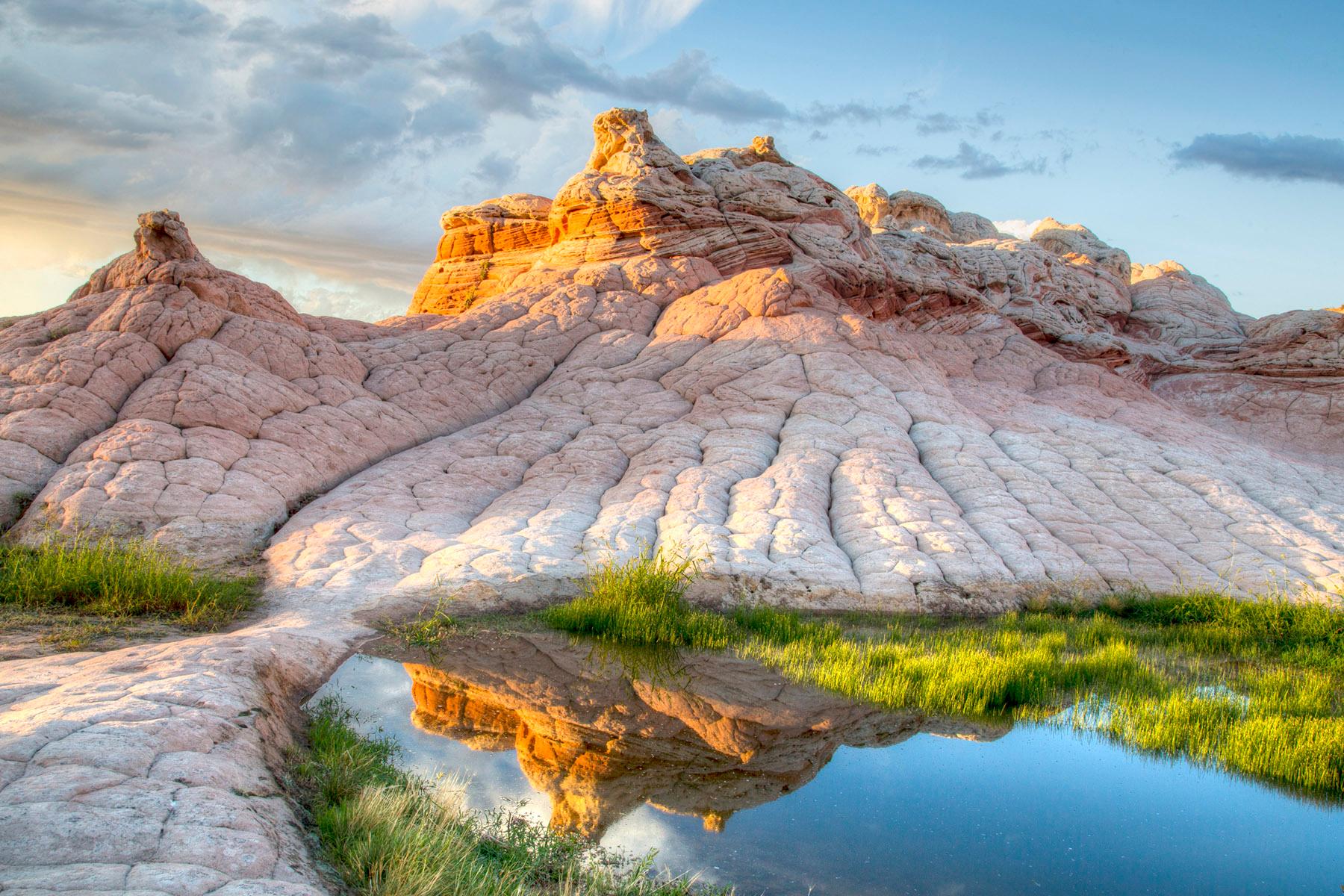
Vermilion Cliffs National Monument
The 280,000 acres this canyon sits in: White Pocket, both Coyote Buttes units and how the permit areas fit together.
Read more →