There is no single Grand Canyon temperature, and that is the whole problem. The South Rim stands at about 7,000 feet. Phantom Ranch, on the floor beside the Colorado River, stands at 2,460 feet. In July the rim averages a daytime high of 84°F, which is a pleasant day out, and the floor averages 106°F, which is the temperature that kills hikers in this park every summer. A single number for “the weather at the Grand Canyon” is worse than no number at all, because it is right for one of those places and dangerously wrong for the other.
Best overall
Late Sep – mid Oct
Best for spring
April
Busiest month
May (508,642 in 2025)
Quietest month
January (191,862)
South Rim
Open 24 h, 365 days
North Rim season
15 May – 30 Nov
Monsoon
Jul – early Sep
Hottest on the floor
July, 106°F average high
The short answer
Late September to mid-October. It is the only window in the year where four things line up at once: the monsoon thunderstorms have finished, the rim is in the 60s and 70s°F rather than the 80s, the summer crowds have gone home, and the North Rim is still open so you can see the canyon from both sides on the same trip. After 15 October the North Rim stops taking overnight visitors, and the second half of that window closes.
April is the spring equivalent and is nearly as good, with 60°F on the rim and 460,907 visitors against May’s 508,642. What April cannot give you is the North Rim, which does not open until 15 May. If seeing both rims matters, autumn beats spring and it is not close.
If your trip is about hiking below the rim, the calendar changes completely. The inner canyon is in the 80s°F in April and October, the 90s in May, and above 100 from June through September. Corridor hiking is an April or October activity. See our guide to the trails for which of them are realistic and when.
The rim and the floor are two different climates
Temperature rises about 5.5°F for every 1,000 feet you drop. Between the South Rim and the river that is roughly 4,500 feet, so the floor runs 20 to 25°F hotter than the rim in every month of the year. The North Rim, 1,300 feet above the South Rim, runs about 5°F cooler than it. Those three columns are the same park on the same day.
| Month | South Rim (7,000 ft) | Inner canyon (2,460 ft) | North Rim (8,300 ft) | Rain (in) |
|---|---|---|---|---|
| January | 41 / 18 | 56 / 36 | 37 / 16 | 1.32 |
| February | 45 / 21 | 62 / 42 | 39 / 18 | 1.55 |
| March | 51 / 25 | 71 / 48 | 44 / 21 | 1.38 |
| April | 60 / 32 | 82 / 56 | 53 / 29 | 0.93 |
| May | 70 / 39 | 92 / 63 | 62 / 34 | 0.66 |
| June | 81 / 47 | 101 / 72 | 73 / 40 | 0.42 |
| July | 84 / 54 | 106 / 78 | 77 / 46 | 1.81 |
| August | 82 / 53 | 103 / 75 | 75 / 45 | 2.25 |
| September | 76 / 47 | 97 / 69 | 69 / 39 | 1.56 |
| October | 65 / 36 | 84 / 58 | 59 / 31 | 1.10 |
| November | 52 / 27 | 68 / 46 | 46 / 24 | 0.94 |
| December | 43 / 20 | 57 / 37 | 40 / 20 | 1.64 |
Read the middle column before you plan anything that goes downhill. A June day that reads as 81°F on the rim is 101°F at the river, and the hottest temperature ever recorded at Phantom Ranch is 120°F. The park’s own advice is not to start a descent between 10 am and 4 pm in the summer months, and the reason is in that column.
The other thing the table shows is how big the daily swing is. The air is dry and the sky is usually clear, so the ground heats fast by day and loses it just as fast after dark. In the dry early summer the gap between the average high and the average low is more than 30°F at every weather station in the park. A May afternoon on the rim at 70°F becomes a 39°F night. People pack for the afternoon and then stand at Hopi Point for sunset in a t-shirt.
Snow is a rim phenomenon, not a canyon one. The South Rim averages 58 inches a year, the North Rim 142, and Phantom Ranch less than one. Winter precipitation usually falls as snow on the rims and melts to rain before it reaches the floor.
The busiest month is May, not July
The park received 4,430,653 recreation visits in 2025. The monthly split does not match the assumption that summer is the peak:
| Month | Visitors | What drives it |
|---|---|---|
| January | 191,862 | Quietest month of the year |
| February | 206,935 | Hermit Road open to cars |
| March | 350,351 | Spring break pushes it up late in the month |
| April | 460,907 | Best spring weather on the rim |
| May | 508,642 | Busiest month of the year |
| June | 455,209 | Driest month, inner canyon already lethal |
| July | 459,269 | Monsoon starts |
| August | 423,811 | Wettest month on the rim |
| September | 369,315 | Monsoon ends, crowds drop, both rims open |
| October | 399,670 | North Rim closes to overnight stays on the 15th |
| November | 296,325 | Highway 67 closes around the end of the month |
| December | 308,357 | Holiday weeks lift an otherwise quiet month |
May came first in 2025 and again in 2024, when its 551,570 visits beat July’s 538,554. Part of it is European and Asian tour groups, which travel before the northern summer rather than during it, and part is that the rim in May is simply better weather than the rim in July. The practical consequence is that a trip planned for late May to dodge the summer crush is landing in the busiest fortnight of the year.
The January figure is the one worth staring at. At 191,862 visits it is 38% of May. That is not a marginally quieter park, it is a different experience of the same place.
Month by month
January
The quietest month of the year and the coldest: 41°F by day on the South Rim, 18°F at night, with snow likely. Hermit Road is open to private vehicles, so you can drive the seven miles of west-side viewpoints at your own pace. Sunrise is at 07:38 and sunset at 17:37, which is a short day but a civilised one: you can see both without setting an alarm or eating dinner at ten.
February
Much like January with marginally more daylight and the same empty viewpoints: 206,935 visitors. Hermit Road is still open to cars until the 29th. The coldest temperature ever recorded in the park, minus 22°F, was on the North Rim on 1 February 1985, so pack for genuine cold rather than for the brochure.
March
The month the park wakes up. Visits jump from 206,935 to 350,351, mostly in the second half as spring break arrives. The rim reaches 51°F. Hermit Road closes to private vehicles on the 1st and stays closed until 30 November, so from here on the Red Route shuttle is the only way along it.
April
One of the two best months. 60°F on the rim, 32°F at night, and the driest stretch of the year beginning. The inner canyon is at 82°F, which makes April and October the two realistic windows for corridor hiking. The North Rim is still closed. Expect wind: spring is the windiest season here, with gusts over 40 mph not unusual.
May
The busiest month of the year, and good weather on the rim at 70°F. If you are going in May, book in-park lodging months ahead and do your viewpoint walking before 9 am. The North Rim opens on the 15th. Snow has been recorded in the park as late as mid-June, so a cold snap in May is unremarkable.
June
The driest month, 0.42 inches of rain, with relative humidity on the rim often below 10% during the day. The rim is at 81°F and perfectly pleasant. The inner canyon is at 101°F and is not. This is the month with the widest gap between what the rim feels like and what the canyon is doing, which is exactly why it catches people out.
July
The monsoon arrives and rainfall jumps from 0.42 to 1.81 inches. Days start clear and build cloud by mid-morning, with thunderstorms concentrated between 11 am and 6 pm. Lightning on exposed viewpoints is a real hazard, and flash floods can run through side canyons from rain falling miles away. 106°F average high at Phantom Ranch.
August
The wettest month on the rim at 2.25 inches, still monsoon, and slightly quieter than July at 423,811 visits. The afternoon storms are the defining feature: plan the day around them rather than hoping. The light after a storm clears is the best of the year, which is some compensation.
September
Where the year turns. The monsoon typically fades in mid-September, the rim drops to 76°F, visits fall to 369,315, and the North Rim is open until 15 October. The second half of the month is the single strongest fortnight in the calendar.
October
65°F on the rim and 84°F on the floor, which is the second of the two good hiking windows. The North Rim stops overnight operations on the 15th but the road stays open for day use until 30 November. Note that October 2025 recorded more visits than September, 399,670 against 369,315, so the quiet does not last the whole month.
November
The rim drops to 52°F and visits to 296,325. Highway 67 to the North Rim usually closes around the end of the month and does not reopen until mid-May. Sunset is at 17:21, which makes an afternoon arrival workable for the first time since summer.
December
Cold, quiet outside the holiday weeks, and the start of the Hermit Road driving season on the 1st. The 308,357 visits are concentrated in the last ten days of the month; the first three weeks are as empty as January. Sunset at 17:15 is the earliest of the year.
One practical consequence of that December sunset: a guided run along the rim that is timed to end at sunset finishes at a normal hour in winter, while the same tour in June does not get you back until the restaurants have closed.
Grand Canyon South Rim Sunset Tour with Dinner
Four hours along 20 miles of the South Rim with four or five viewpoint stops, timed to end at sunset, with dinner included. Groups capped at 14, English only. It fits the winter months particularly well: with sunset at 17:15 in December, the tour ends at a normal hour rather than running you into the night. The park entrance fee is not included and is paid on arrival. While the Grand Canyon Village water repairs continue, the operator picks up at Parking Lot D rather than at the hotels and serves the included meal outside the South Entrance.
What is actually open, and when
Temperature is the part people research. Access is the part that changes the trip, and some of it runs opposite to what you would guess.
| What | When | The catch |
|---|---|---|
| South Rim | Open 24 hours, 365 days | Includes Desert View. There is no season when the South Rim is shut. |
| Hermit Road, by car | 1 December – 29 February only | Closed to private vehicles 1 March – 30 November. Winter is the only time you can drive it, and the shuttle does not run on it then. |
| Hermit Road, by shuttle | 1 March – 30 November | Free Red Route. In winter there is no shuttle here because the road is open to cars. |
| Yaki Point and South Kaibab trailhead | Shuttle only, all year | Closed to private vehicles every month including winter. Orange Route only. |
| North Rim, full season | 15 May – 15 October | Lodging, campground, restaurants and fuel. This is the only window with services. |
| North Rim, day use | 16 October – 30 November | Dawn to dusk, no overnight parking, no services. |
| Highway 67 to the North Rim | Closed from around 1 December | Arizona DOT locks the gates for the winter and they stay shut until mid-May. |
The Hermit Road row is the one that changes plans. From March to November the only way to Hopi Point, Mohave Point and Pima Point is a shuttle you share with everyone else, and in high summer the queue at the Village Route Transfer stop is part of the day. In December, January and February you park at each of them. That single fact does more to make a winter visit worth considering than the temperature does to argue against it.
What is closed right now
Seasonal patterns are one thing; the state of the park on the day you read this is another. These are the active restrictions.
Both Colorado River bridges are closed, so the inner canyon corridor cannot be crossed on foot.
Closed on the day this page was last checked:
- North Kaibab Trail, from the trailhead down to Phantom Ranch
- Phantom Ranch
- Cottonwood Campground and Bright Angel Campground
- Black Bridge and Silver Bridge, the two Colorado River crossings
- River Trail between River Resthouse and Black Bridge
- South Kaibab Trail below the Tipoff
Still open: The South Rim, open 24 hours a day, year round; Bright Angel Trail down to Havasupai Gardens; South Kaibab Trail down to the Tipoff.
National Park Service, Status of the North Rim, read on 14 November 2026. Closures change: check it before you travel.
There is no drinking water in the inner canyon, the Bright Angel Trail resthouses included.
Closed on the day this page was last checked:
- 1.5 Mile Resthouse, no potable water
- 3 Mile Resthouse, no potable water
- Havasupai Gardens day use area and campground, no potable water
Carry everything you plan to drink, or carry filtration and treatment. From 18 November there are also intermittent delays just above 3 Mile Resthouse while a trail crew works on rockfall mitigation.
National Park Service, Alerts & Conditions, read on 14 November 2026. Closures change: check it before you travel.
The practical reading for anyone planning the next few months: a rim trip is unaffected, and any plan that involved walking to the river, crossing between the rims or staying at Phantom Ranch needs rethinking rather than rescheduling by a week. Our rim-to-rim page covers what that means for the crossing specifically.
The hour of the day does as much work as the month
Arizona does not observe daylight saving time, so these are the real clock times all year, with no spring or autumn shift to account for.
| Month | Sunrise | Sunset |
|---|---|---|
| January | 07:38 | 17:37 |
| February | 07:15 | 18:09 |
| March | 06:39 | 18:35 |
| April | 05:55 | 19:02 |
| May | 05:22 | 19:27 |
| June | 05:11 | 19:47 |
| July | 05:23 | 19:45 |
| August | 05:47 | 19:19 |
| September | 06:11 | 18:36 |
| October | 06:35 | 17:53 |
| November | 07:05 | 17:21 |
| December | 07:31 | 17:15 |
Two and a half hours separate the December sunset from the June one. That is not trivia, it is the shape of your day. In June, sunset at 19:47 means the best light of the day arrives when you have already been out for twelve hours, and you drive back to Tusayan or Williams in the dark with the restaurants closing. In December, sunset at 17:15 means you can watch the canyon turn red and still have a normal evening afterwards. Winter visitors get the single best hour at the canyon handed to them at a convenient time, which is a point almost nobody weighs when they rule out a cold-month trip.
Midday is the weakest light of the day in any month. The canyon flattens out when the sun is overhead, and the haze that builds through the afternoon in summer takes the far walls with it. If you only have a few hours, take the first or the last of the daylight, not the middle.
Frequently asked questions
What is the best month to visit the Grand Canyon?
Late September and early October for most visitors. The monsoon thunderstorms are over by mid-September, the South Rim averages 76°F by day in September and 65°F in October, and the park recorded 369,315 visitors in September 2025 against 508,642 in May. The North Rim is also still open until 15 October, so both rims are available in that window. April is the strongest spring alternative at 60°F and 460,907 visitors, but the North Rim does not open until 15 May.
Is the Grand Canyon too hot in summer?
That depends entirely on where you stand. The South Rim sits at about 7,000 feet and averages a high of 84°F in July, which is comfortable. Phantom Ranch, on the canyon floor at 2,460 feet, averages 106°F in the same month and has recorded 120°F. Temperature rises roughly 5.5°F for every 1,000 feet you descend. So a July trip that stays on the rim is pleasant, and a July hike below the rim is the single most dangerous thing you can do in this park.
Is the Grand Canyon open in winter?
The South Rim is open 24 hours a day, 365 days a year, including Desert View. The North Rim closes to all vehicle traffic once Arizona DOT shuts Highway 67, usually around 1 December, and does not reopen until mid-May. Winter on the South Rim means highs in the low 40s°F, lows below 20°F, and about 58 inches of snow a year on average, but it also means the quietest months of the year: 191,862 visitors in January 2025 against 508,642 in May.
When can you drive Hermit Road?
From 1 December to 29 February. For the rest of the year, 1 March to 30 November, Hermit Road is closed to private vehicles and the only way along it is the free Red Route shuttle, a bicycle or your own feet. Winter is therefore the only season when you can drive the seven miles of viewpoints west of Grand Canyon Village yourself, and the shuttle does not run on that road then. Yaki Point and the South Kaibab trailhead are different: they are closed to private vehicles all year round, winter included, and the Orange Route shuttle is the only way in.
When is the North Rim open?
The full season runs 15 May to 15 October, with lodging, the campground, restaurants and the gas station operating. From 16 October to 30 November the road stays open for day use only, from dawn to dusk, with no overnight parking and no services. Highway 67 then closes for the winter, usually around 1 December, and stays shut until mid-May. For 2026 specifically, the Park Service has the North Rim open through 30 November or the first major snowstorm, whichever comes first, with the campground and gas station already closed for the season.
When is monsoon season at the Grand Canyon?
July, August and early September. Days often start clear and clouds build by mid-morning, with thunderstorms concentrated between about 11 am and 6 pm. August is the wettest month on the South Rim at 2.25 inches of average rainfall. The practical risks are lightning on exposed viewpoints, flash floods in side canyons that can arrive without any rain falling where you are standing, and lightning-started fires. The practical response is to do your rim walking early and treat the afternoon as unreliable.
What is the cheapest time to visit the Grand Canyon?
January and February. They are the two quietest months of the year by a wide margin, which pushes down hotel rates in Tusayan, Williams and Flagstaff, and in-park lodging is easier to get at short notice. The park entrance fee does not change by season: it is a flat rate per vehicle valid for seven days. The trade-off is cold, short daylight and the chance of snow closing roads at short notice.
Written by Diego Fresno, travel writer specialising in the American Southwest. The monthly temperature, rainfall, visitation and road closure figures on this page come from National Park Service sources read on 16 November 2026; sunrise and sunset times are calculated for Grand Canyon Village and given in Mountain Standard Time.. Verified quarterly: last review April 2026. About the author →
Related guides
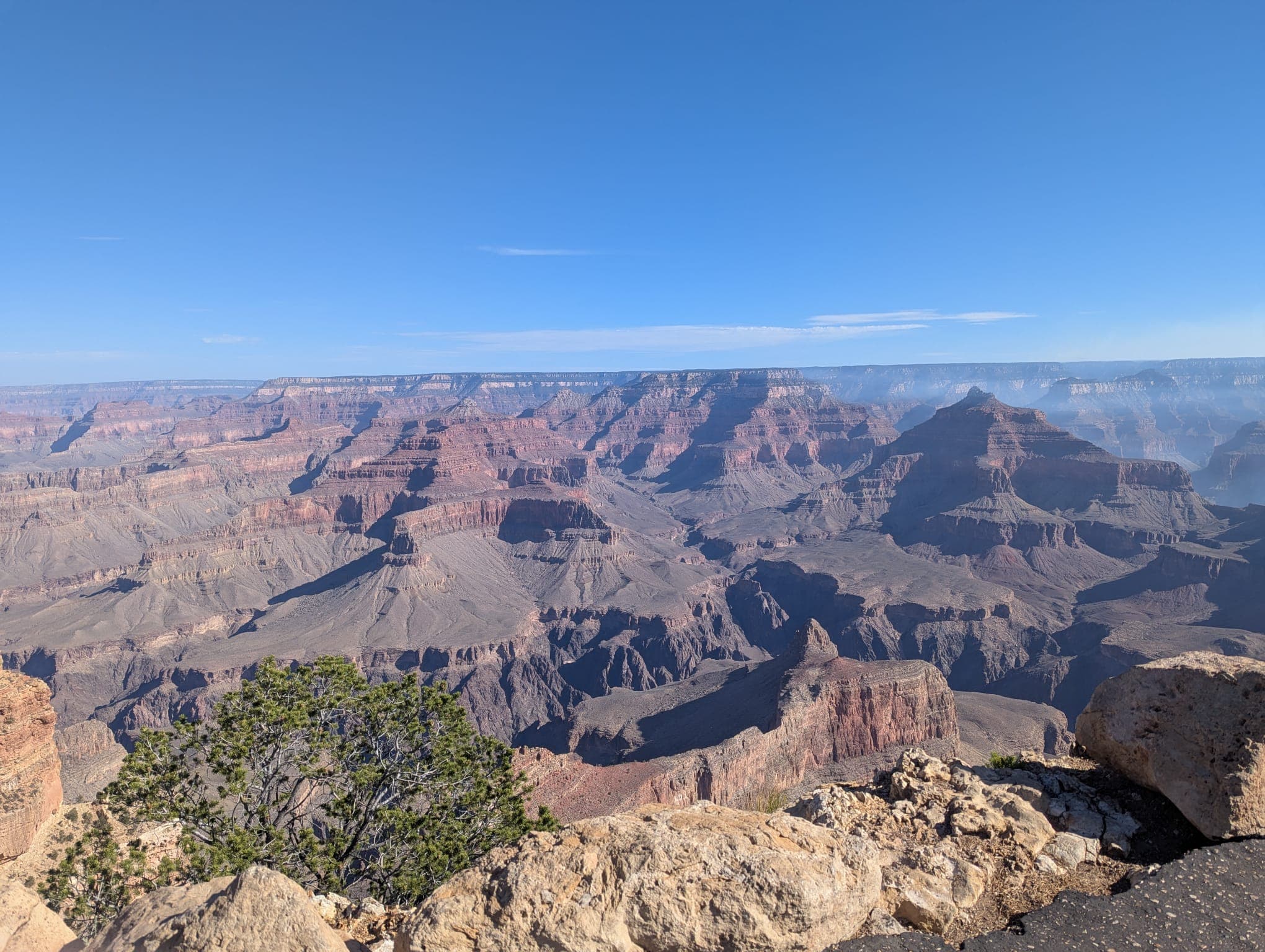
Grand Canyon: the complete guide
Which rim to choose, what it costs, how to get there and how long you actually need.
Read more →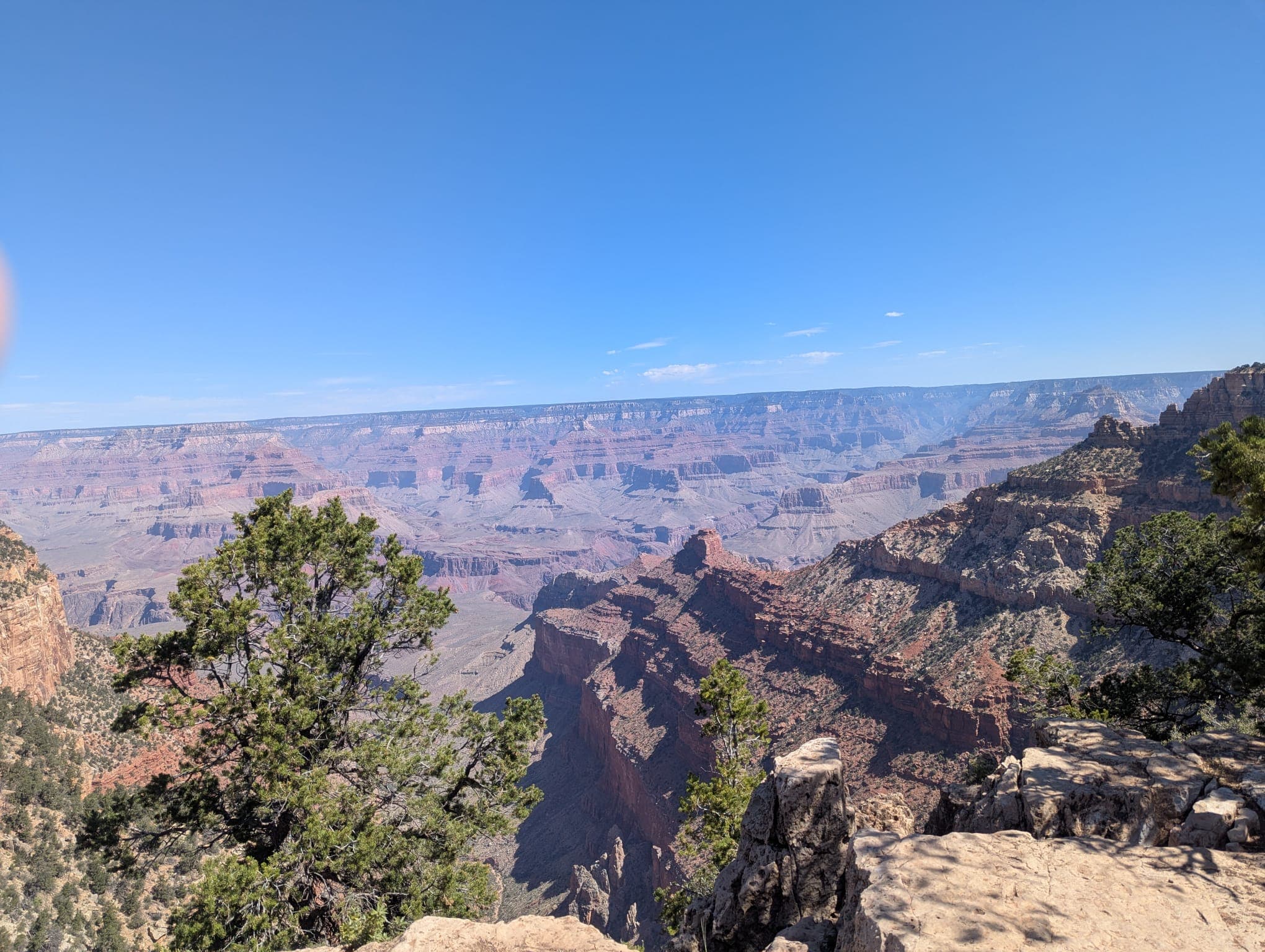
Grand Canyon hikes: 8 trails for every level
From the paved Rim Trail to the corridor descents, with the current water situation on each.
Read more →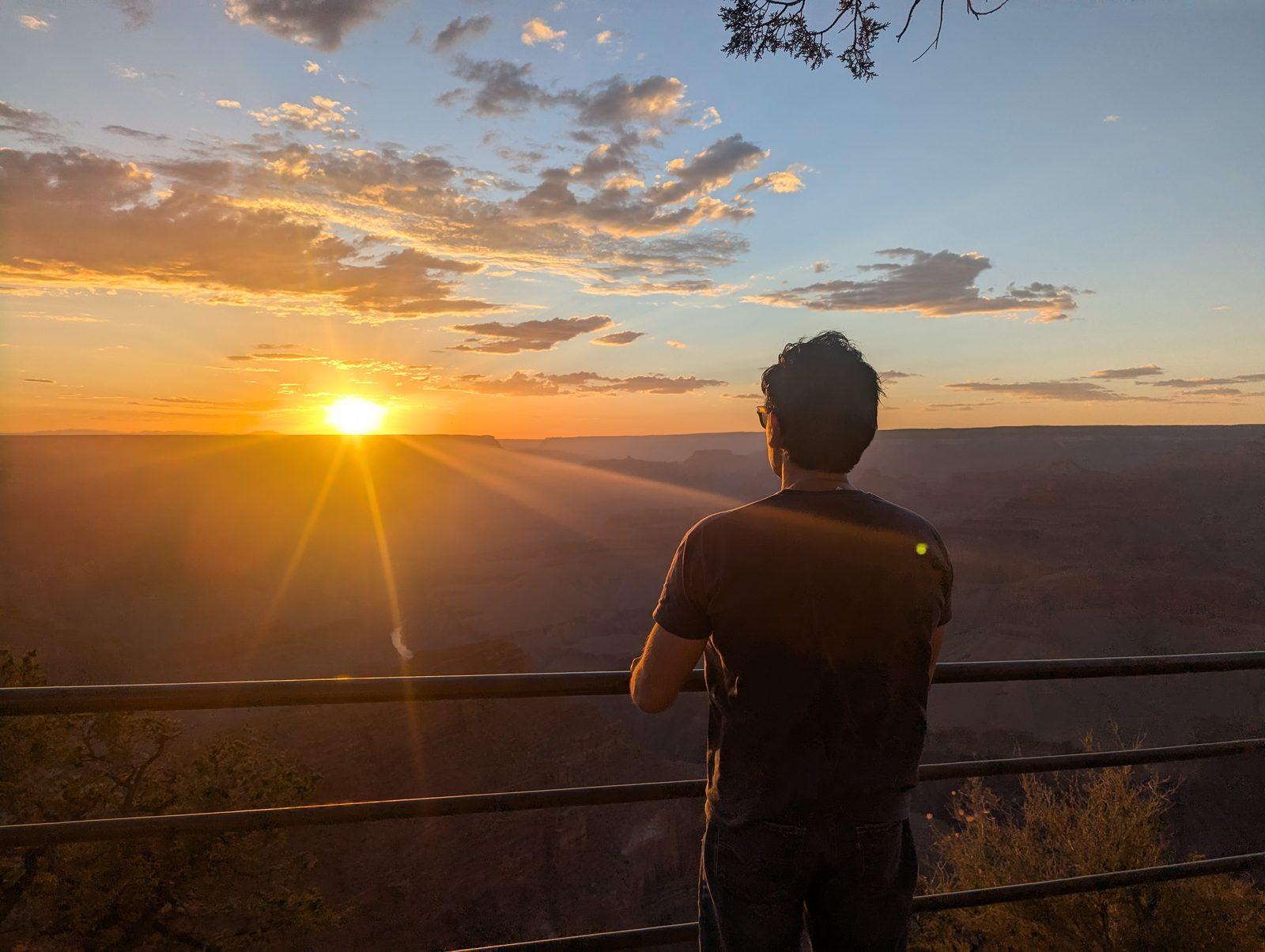
South Rim viewpoints
Which ones are worth the stop, which need the shuttle, and which you can drive to in winter.
Read more →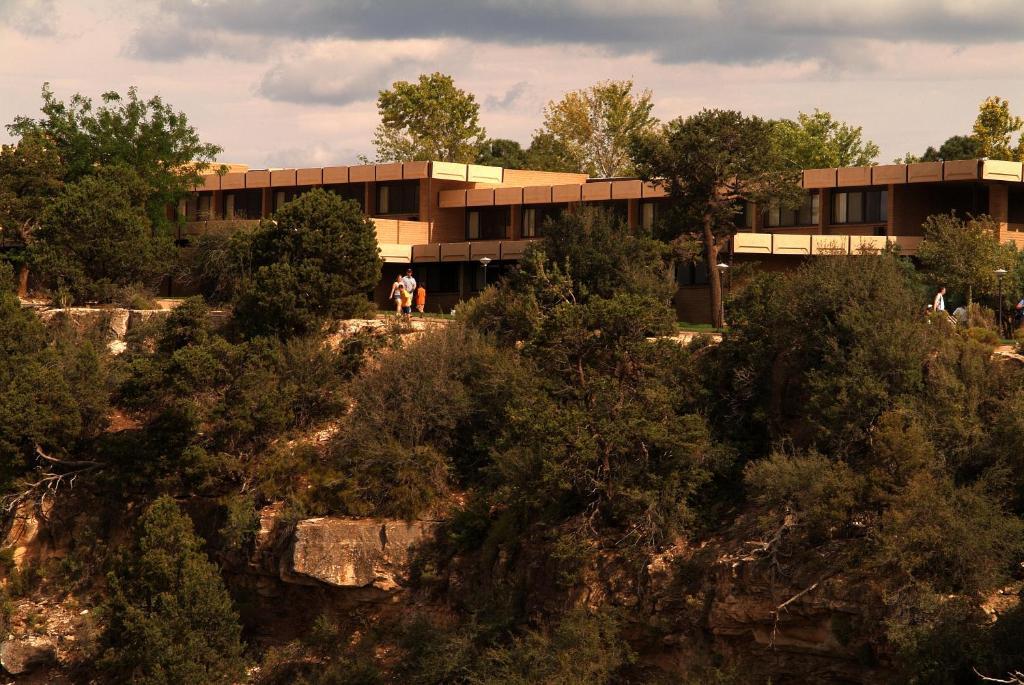
Grand Canyon lodges and cabins
Every option inside the park, with prices, booking windows and the current lodging suspension.
Read more →